Best Hotels Within Walking Distance of Busan Eye Clinics
Introduction
Choosing accommodation is an important part of planning eye surgery in Busan, especially for international patients.
After procedures such as LASIK, LASEK, PRK, SMILE Pro, or ICL, you may need postoperative examinations and may temporarily experience blurry vision, light sensitivity, dryness, or visual fluctuations. Staying reasonably close to your eye clinic can make those first few days easier.
For some patients, a hotel within walking distance can be especially convenient. You may be able to avoid complicated transfers, long subway journeys, or unnecessary travel immediately after surgery.
However, "walking distance" should not automatically mean the shortest distance on a map. A hotel with a simple route, comfortable room, elevator, quiet environment, and easy taxi access may be a better choice than a slightly closer property that requires navigating busy streets.
This guide explains how international patients can choose a hotel near Busan eye clinics and what to consider before booking accommodation for postoperative recovery.
Why Stay Near Your Busan Eye Clinic?
Convenience During Early Recovery
The first few days after eye surgery can be different from your normal travel experience.
You may experience:
- Temporary blurry vision
- Light sensitivity
- Dryness
- Mild irritation
- Glare or halos
- Visual fluctuations
- Eye fatigue
A nearby hotel can reduce the amount of travel you need to do while your eyes are recovering.
Walking Distance Can Be Useful
Shorter Travel May Mean Less Stress
If your hotel is genuinely close to your clinic, walking may be convenient once your surgeon allows normal walking.
You may not need to:
- Navigate a complicated subway route
- Change buses
- Spend extended periods in traffic
- Arrange transportation for every appointment
However, immediately after surgery, do not assume that walking is appropriate. Follow your surgeon's activity instructions.
The Best Location Depends on Your Clinic
There Is No Single Best Hotel for Every Patient
Busan has eye clinics across different neighborhoods.
A hotel that is ideal for one clinic may be inconvenient for another.
Before booking, identify:
- Your exact eye clinic
- The clinic entrance
- Your postoperative appointment schedule
- The walking route
- Alternative transportation options
This is especially important if the clinic operates from a building inside a busy commercial district.
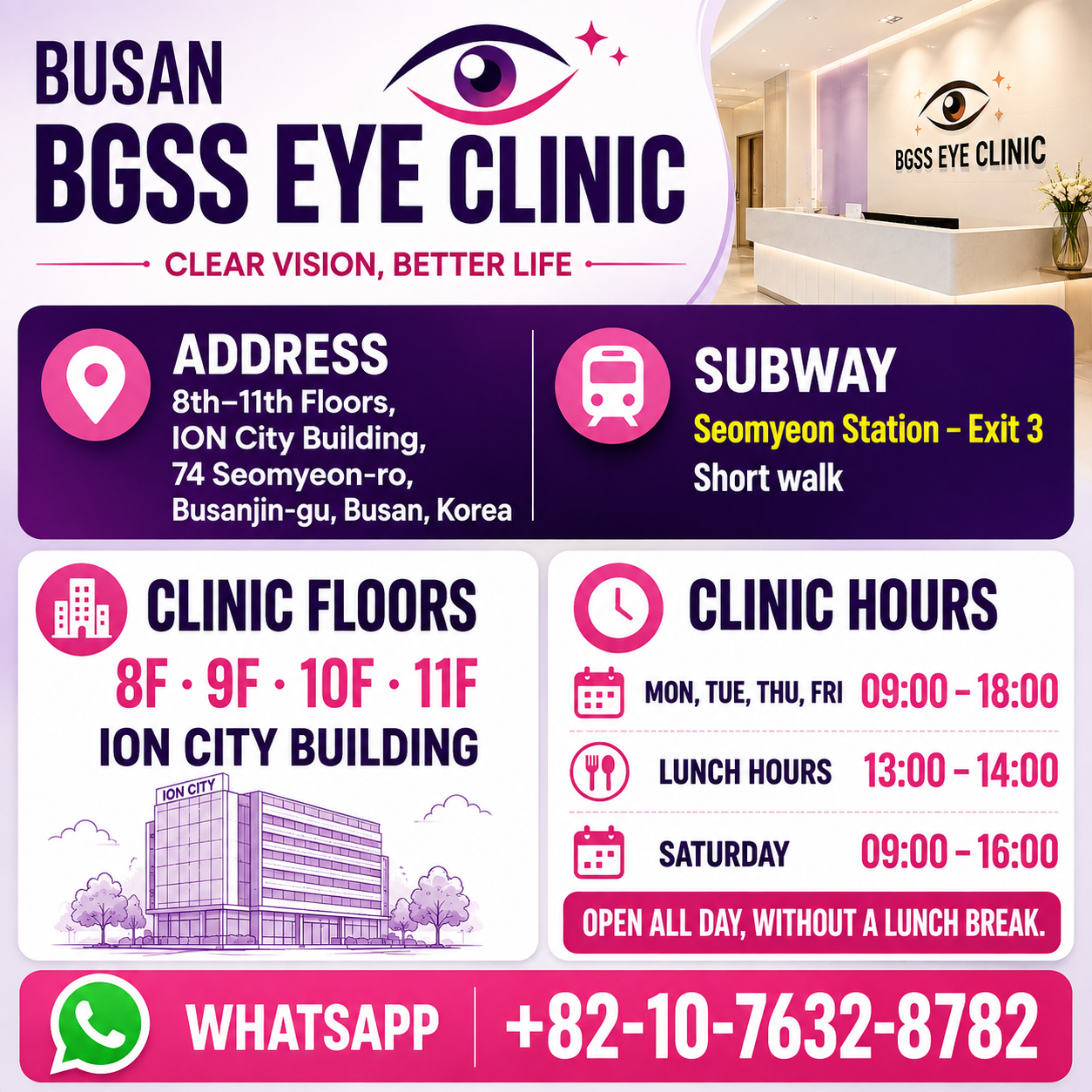
Seomyeon Is a Practical Base for Many Patients
Central Location and Transportation
Seomyeon is one of Busan's major commercial and transportation areas.
For international patients, the area can be convenient because it offers:
- Numerous hotels
- Restaurants
- Cafés
- Convenience stores
- Pharmacies
- Shopping
- Public transportation
- Easy taxi access
If your clinic is located in or near Seomyeon, staying nearby can make postoperative logistics simpler.
What Makes a Hotel Good for Eye-Surgery Recovery?
Distance Is Only One Factor
When comparing hotels, consider more than walking distance.
A suitable recovery hotel may offer:
- Quiet rooms
- Comfortable beds
- Blackout curtains
- Reliable air conditioning
- Elevator access
- Nearby food
- Easy taxi pickup
- Flexible check-in
- Convenient access to the clinic
- A smoke-free environment
A hotel that is 5 minutes farther away but significantly quieter may be more comfortable than the closest option.
How to Calculate Walking Distance
Don't Rely Only on the Hotel's Advertising
A hotel may describe itself as "near" a medical district without being particularly convenient for a patient recovering from surgery.
Check:
- Actual walking time
- Number of intersections
- Stairs
- Hills
- Road crossings
- Covered versus uncovered sections
- Weather conditions
- Crowded areas
A 10-minute walk on a flat, simple route can be very different from a 10-minute route involving stairs and heavy traffic.
Consider the Weather
Busan Can Be Hot, Cold, Wet, or Windy
Weather can affect how comfortable it is to walk after eye surgery.
Rain, strong sunlight, wind, humidity, or cold weather may make a short journey less comfortable.
Even if your hotel is technically within walking distance, keep a taxi option available.
Hotels Near Seomyeon Eye Clinics
What International Patients Should Prioritize
If your eye clinic is near Seomyeon, consider hotels that provide easy access to:
- The clinic
- Seomyeon Station
- Restaurants
- Pharmacies
- Convenience stores
- Taxi pickup points
Being close to a subway station is useful, but you may not need to use the subway immediately after surgery.
Staying Near Seomyeon Station
Convenient for Longer Trips
A hotel near Seomyeon Station can be useful if you plan to remain in Busan after your recovery.
You can potentially use the area as a base for later sightseeing once your ophthalmologist allows normal activity.
However, for the first few days, proximity to your eye clinic should be more important than access to tourist attractions.
What About Hotels Near Busan Station?
A Different Priority
Busan Station is convenient for transportation and longer-distance travel.
However, it may not be the most practical choice if your eye clinic is located in Seomyeon or another neighborhood.
If you choose a hotel near Busan Station, calculate the actual travel time to your clinic before booking.
Should You Stay Near Haeundae?
Great for Tourism, Not Always Ideal for Surgery Recovery
Haeundae is an attractive area for visitors because of its beach, restaurants, hotels, and coastal attractions.
But if your eye clinic is located elsewhere, staying in Haeundae may require longer daily travel.
For an eye-surgery trip, choose accommodation based on medical convenience first.
You can move to another hotel later if you want a beach-focused vacation.
Hotel Features That Matter After Eye Surgery
Blackout Curtains
Light sensitivity can occur after some eye procedures.
Blackout curtains can make resting more comfortable.
Quiet Rooms
Avoid rooms directly beside:
- Elevators
- Nightclubs
- Busy roads
- Construction
- Large gathering areas
Elevator Access
A hotel with an elevator can be more convenient if you are carrying luggage or feel uncomfortable navigating stairs.
Easy Bathroom Access
A comfortable room layout is useful when you are tired after surgery.
Reliable Air Conditioning
Avoid direct airflow toward your face if it makes your eyes feel dry or irritated.
Should You Book a Hotel With Breakfast?
Convenience Can Be Valuable
A hotel breakfast can reduce the need to travel for your first meal of the day.
However, breakfast is not essential.
A nearby restaurant or food-delivery option may be equally convenient.
Nearby Restaurants Matter
You May Not Want to Walk Far
After surgery, you may prefer to eat close to your hotel.
Look for accommodation near:
- Korean restaurants
- International restaurants
- Cafés
- Convenience stores
- Food-delivery services
This can make the early recovery period easier.
Pharmacy Access
Useful for Everyday Needs
A nearby pharmacy can be convenient, particularly for general travel needs.
However, postoperative medications should be obtained and used according to your ophthalmologist's instructions.
Do not substitute prescribed eye drops with another product without medical advice.
Can You Walk to Your Clinic Immediately After Surgery?
Ask Your Surgeon
Walking may be acceptable for some patients, but this depends on:
- Procedure type
- Immediate postoperative vision
- Weather
- Distance
- Individual recovery
- Surgeon instructions
If your vision is blurry or you are sensitive to bright light, a taxi or companion may be safer and more comfortable.
Do You Need Someone to Accompany You?
Consider Your Personal Circumstances
Having a companion can be useful after surgery.
They can help with:
- Transportation
- Hotel check-in
- Meals
- Medication reminders
- Navigation
- Communication
- Emergency assistance
If you are traveling alone, ask your clinic whether you need any additional support after the procedure.
Don't Drive From Your Hotel
Wait for Medical Clearance
Do not drive simply because your hotel is close to the clinic.
After refractive surgery, temporary changes in vision can make driving unsafe.
Wait until your ophthalmologist confirms that you are ready to drive.
Walking Tours Should Come Later
Don't Turn a Clinic Visit Into a City Tour
A common mistake is planning extensive sightseeing around postoperative appointments.
During early recovery, avoid turning a short clinic visit into:
- A long shopping trip
- A full-day walking tour
- A beach excursion
- A mountain hike
Give your eyes time to recover.
Can You Use Public Transportation?
Ask Your Clinic First
The subway and buses are convenient in Busan, but early postoperative travel may be uncomfortable.
Crowds, stairs, bright lights, and unfamiliar surroundings can be challenging if your vision is temporarily affected.
A taxi can be a useful alternative.
What Should International Patients Ask the Hotel?
Before Booking
Ask:
- Is the building smoke-free?
- Is there an elevator?
- Can I request a quiet room?
- Are blackout curtains available?
- Is late check-in possible?
- Can staff assist with transportation?
- Is taxi pickup easy?
- Is food delivery allowed?
- Is there a nearby pharmacy?
- Can the hotel store medication safely if necessary?
What Should You Ask the Eye Clinic?
Before Choosing Accommodation
Your clinic may be able to tell you:
- Exact clinic location
- Recommended nearby areas
- How many follow-up visits are expected
- Whether walking is appropriate after surgery
- When you can use public transportation
- When you can travel longer distances
- When you can fly home
These answers can help you choose the right hotel location.
How Long Should You Stay Near the Clinic?
Plan Around Follow-Up
There is no universal number of nights.
Your stay may depend on:
- Procedure
- Recovery
- Follow-up schedule
- Eye examination results
- Surgeon preference
- Potential complications
Ask your clinic for a recommended postoperative stay before booking a non-refundable hotel.
Consider a Flexible Hotel Reservation
Recovery Does Not Always Follow a Perfect Schedule
If possible, choose accommodation with flexible cancellation or modification policies.
This can be helpful if:
- Your surgery date changes
- Your follow-up takes longer
- Your surgeon wants another examination
- You need to extend your stay
Always read the hotel's actual cancellation terms.
A Recovery-Friendly Hotel Itinerary
First Day
Prioritize:
- Surgery
- Medication
- Rest
- Eye drops
- Transportation back to your accommodation
Following Days
Depending on your doctor's instructions:
- Attend follow-up appointments
- Take short walks
- Eat nearby
- Rest
- Gradually resume normal activities
Later in Your Trip
Once medically cleared, you can gradually add:
- Shopping
- Cafés
- Beaches
- Cultural attractions
- Longer walks
- Day trips
What Should You Pack?
Eye-Care Essentials
Bring:
- Prescribed medications
- Eye drops
- Sunglasses
- Previous eye records
- Current prescription
- Clinic contact information
- Comfortable clothing
- Travel documents
Keep your postoperative medication easily accessible.
What Symptoms Require Urgent Attention?
Know the Warning Signs
Contact your ophthalmologist promptly if you experience:
- Sudden significant vision loss
- Severe or increasing eye pain
- Marked redness
- Significant discharge
- Rapid worsening of vision
- New flashes
- Sudden increase in floaters
- Severe or worsening light sensitivity
Do not wait for your next routine appointment if your clinic has told you to seek urgent care.
What If Your Hotel Is Farther Than Expected?
Have a Backup Transportation Plan
Even after carefully choosing a hotel, walking may become uncomfortable due to weather, fatigue, or temporary visual symptoms.
Keep access to:
- Taxi services
- Hotel transportation assistance
- A companion
- Your clinic's emergency contact
This is one reason not to choose accommodation based only on walking distance.
Best Hotel Strategy for International Eye-Surgery Patients
Prioritize These Five Factors
When comparing hotels near Busan eye clinics, prioritize:
1. Clinic proximity
Choose a location that makes follow-up appointments easy.
2. Comfortable room
You may spend more time resting than sightseeing.
3. Easy transportation
Taxi access is particularly useful.
4. Nearby food and daily necessities
Restaurants, convenience stores, and pharmacies can reduce unnecessary travel.
5. Flexible booking
Your recovery schedule may change.
Conclusion
Finding a hotel within walking distance of a Busan eye clinic can make an international eye-surgery trip more convenient, particularly during the early recovery period.
However, the closest hotel is not automatically the best hotel.
Patients should consider the actual walking route, room comfort, noise levels, transportation options, nearby restaurants, pharmacy access, and flexibility of the booking.
Seomyeon can be a practical base for patients whose clinics are located in or around the area, while other Busan neighborhoods may be more appropriate depending on the exact location of the eye clinic.
Most importantly, accommodation should support your medical recovery rather than encourage you to rush back into sightseeing.
Before surgery, confirm your clinic's follow-up schedule and ask when you can safely walk, use public transportation, exercise, swim, drive, and travel.
With a convenient hotel, flexible itinerary, and appropriate postoperative planning, international patients can make their Busan eye-surgery experience much more comfortable.
FAQs About Hotels Near Busan Eye Clinics
1. Is it better to stay within walking distance of a Busan eye clinic?
It can be convenient, particularly for postoperative appointments. However, the best location depends on your clinic and recovery requirements.
2. Is Seomyeon a good area to stay after eye surgery?
Seomyeon can be practical because of its central location, hotels, restaurants, transportation, and medical facilities. Check how close your specific clinic is before booking.
3. Can I walk to my eye clinic after surgery?
Ask your ophthalmologist. Walking may be appropriate for some patients, but immediate postoperative vision, weather, distance, and procedure type can affect what is comfortable and safe.
4. Should my hotel have an elevator?
An elevator can make recovery easier, especially when carrying luggage or if you are uncomfortable using stairs.
5. Should I choose a quiet hotel room?
Yes. A quiet room can make resting easier, particularly if you experience light sensitivity, eye fatigue, or discomfort.
6. Should I stay near Busan Station or Seomyeon?
Choose based primarily on your eye clinic's location and follow-up schedule. Seomyeon may be more convenient for clinics located there, while Busan Station may be better for patients prioritizing rail travel.
7. Can I stay in Haeundae after eye surgery?
You can stay in Haeundae if it is practical for your clinic and follow-up schedule. If your clinic is far away, another neighborhood may be more convenient during early recovery.
8. How many nights should I book near the clinic?
There is no universal number. Your ophthalmologist should recommend a suitable postoperative timeline based on your procedure and recovery.
9. Can I use the subway after eye surgery?
Ask your surgeon. Immediately after surgery, a taxi or companion may be more comfortable if your vision is temporarily blurry or your eyes are sensitive to light.
10. What is the most important factor when choosing a hotel after eye surgery?
Prioritize convenient access to your clinic, comfortable recovery conditions, easy transportation, and enough flexibility to accommodate changes in your postoperative schedule.