Eye Surgery Recovery Tips While Exploring Busan, Korea
Introduction
Busan is an appealing destination for international patients combining eye surgery with a Korea vacation. From Seomyeon and Haeundae to Gwangalli, Jagalchi, and Gamcheon Culture Village, there are plenty of places to explore.
However, recovering from eye surgery while traveling requires a different approach from an ordinary vacation.
After procedures such as LASIK, LASEK, PRK, SMILE, SMILE Pro, or ICL, your eyes may temporarily experience dryness, light sensitivity, blurry vision, glare, halos, or visual fluctuations. The timing and severity of these symptoms vary by procedure and by patient.
The safest approach is to make recovery the priority and sightseeing the secondary activity.
You do not necessarily need to stay inside your hotel for your entire trip. Once your ophthalmologist allows normal activity, gentle sightseeing can often be incorporated into your itinerary. The key is to avoid rushing, protect your eyes from environmental irritation, attend every required follow-up appointment, and know which symptoms require medical attention.
This guide explains how international patients can explore Busan while following a sensible postoperative recovery routine.
Can You Explore Busan After Eye Surgery?
It Depends on Your Recovery
Some patients can resume light activities relatively quickly, while others need more rest.
Your ability to explore Busan depends on:
- The type of eye surgery
- Your immediate postoperative vision
- Your surgeon's instructions
- Your healing progress
- Dry-eye symptoms
- Light sensitivity
- Medication requirements
- Follow-up findings
Do not use another patient's recovery timeline as your own.
Why Sightseeing Can Be Challenging After Eye Surgery
Travel Adds Extra Demands
Sightseeing may involve:
- Walking long distances
- Bright sunlight
- Wind
- Dust
- Crowds
- Public transportation
- Stairs
- Screens
- Photography
- Late nights
These activities are not necessarily dangerous for every patient, but they may make early recovery less comfortable.
A flexible itinerary is usually better than an ambitious one.
Your First Priority: Postoperative Follow-Up
Do Not Schedule Sightseeing Around Your Appointment
Your eye clinic should determine when you need follow-up examinations.
These appointments may evaluate:
- Visual acuity
- Corneal healing
- Eye pressure
- Inflammation
- Lens position after ICL
- Dry-eye symptoms
- Overall recovery
Schedule sightseeing around your medical appointments rather than the other way around.
The First Few Days Should Be Flexible
Avoid a Packed Busan Itinerary
If you are traveling specifically for eye surgery, do not plan major sightseeing immediately after the procedure.
Instead, leave time for:
- Rest
- Medication
- Eye drops
- Follow-up appointments
- Meals
- Short walks if permitted
- Unexpected changes in recovery
If your recovery is going well, you can gradually add activities.
Stay Near Your Eye Clinic
Seomyeon Can Be Convenient
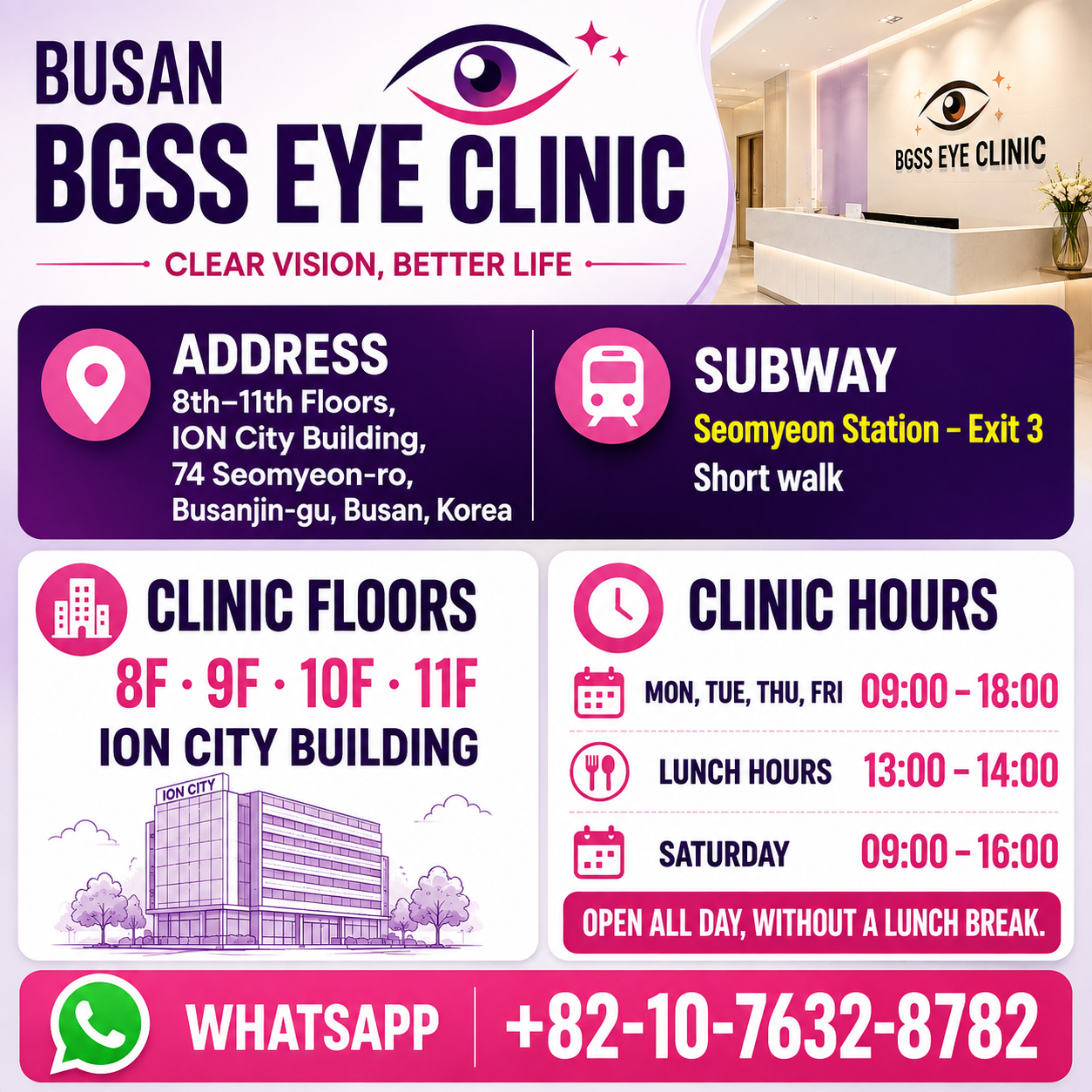
If your clinic is located in or around Seomyeon, staying nearby can make recovery easier.
A nearby hotel can reduce:
- Long subway journeys
- Repeated taxi rides
- Excessive walking
- Travel time between appointments
Choose accommodation based on your clinic's location rather than assuming that every tourist area will be equally convenient.
Start With Short Walks
Don't Try to See Everything
Once your ophthalmologist permits normal walking, begin gradually.
A short walk near your hotel can be a better first activity than a full-day sightseeing tour.
If you develop:
- Eye fatigue
- Dryness
- Blurry vision
- Increasing light sensitivity
- Headaches
return to your accommodation and rest.
Protect Your Eyes From Bright Sunlight
Sunglasses Can Improve Comfort
Busan can be bright, particularly near the coast.
If your ophthalmologist recommends sunglasses, use a comfortable pair that provides appropriate UV protection.
Sunglasses may help with:
- Light sensitivity
- Glare
- Outdoor comfort
Do not press sunglasses tightly against your eyes or wear anything that causes discomfort.
Avoid Wind, Dust, and Sand
Outdoor Environments Can Irritate Recovering Eyes
Wind can increase evaporation from the eye surface and make dryness more noticeable.
Dust and sand can also irritate the eyes.
If you visit outdoor locations:
- Avoid particularly windy areas during early recovery
- Do not rub your eyes if something feels irritating
- Use prescribed or recommended lubricating drops when appropriate
- Follow your surgeon's instructions
Be Careful Around Beaches
Haeundae and Gwangalli Can Wait
Busan's beaches are major attractions, but beach environments can expose recovering eyes to:
- Bright sunlight
- Wind
- Sand
- Saltwater
- Crowds
You do not need to avoid the coast for your entire trip, but ask your surgeon when beach visits are appropriate.
Most importantly, do not swim until your ophthalmologist says it is safe.
Haeundae Beach
Enjoy the Area Without Rushing
Haeundae offers restaurants, cafés, hotels, and waterfront scenery.
If your surgeon allows outdoor activity, you may be able to enjoy a short visit.
During early recovery, avoid turning it into a long beach day.
Gwangalli Beach
Watch Nighttime Lighting
Gwangalli is particularly attractive after dark.
However, some patients experience temporary glare or halos following refractive surgery.
Bright signs, headlights, and city lights may therefore feel uncomfortable.
If nighttime vision is difficult, avoid prolonged evening sightseeing and contact your clinic if symptoms are severe or worsening.
Gamcheon Culture Village
Consider the Terrain
Gamcheon Culture Village includes hills, stairs, and uneven walking surfaces.
It may not be the best first destination immediately after surgery.
If your surgeon has cleared longer walking and you feel comfortable, consider visiting later in your recovery.
Take breaks rather than trying to complete the entire area quickly.
Jagalchi Market
Crowds Require Extra Awareness
Markets can be crowded and busy.
If your eyes are sensitive to dust, strong smells, or crowded environments, consider visiting later rather than during the earliest postoperative period.
Keep your hands clean and avoid touching your eyes.
Busan Tower and Yongdusan Park
Take a Relaxed Approach
A short visit to Yongdusan Park may be possible once your surgeon permits normal activity.
Avoid combining several attractions into one long day.
If you experience visual fatigue, return to your hotel.
Cafés in Seomyeon
A More Relaxing Activity
A quiet café can be easier than an outdoor sightseeing attraction.
However, avoid:
- Smoke
- Excessive screen use
- Very bright environments
- Crowded spaces if they make you uncomfortable
If you use your phone or laptop, take regular breaks.
Coffee During Recovery
Moderation Is Usually the Practical Approach
Coffee is not automatically prohibited after eye surgery.
If your ophthalmologist permits caffeine, moderate coffee consumption may fit into your recovery routine.
However, prioritize:
- Water
- Sleep
- Meals
- Prescribed medications
- Eye drops
If caffeine worsens headaches, sleep problems, or discomfort, reduce your intake.
Screen Use While Traveling
Don't Spend the Entire Trip on Your Phone
Travel naturally encourages screen use for:
- Maps
- Translation
- Messaging
- Photography
- Social media
- Travel planning
After eye surgery, prolonged screen use may make dryness or visual fatigue more noticeable.
If your surgeon permits screen use:
- Take frequent breaks
- Blink regularly
- Reduce unnecessary screen time
- Adjust brightness for comfort
- Stop if your eyes become uncomfortable
Photography After Eye Surgery
You Don't Have to Stop Taking Photos
Photography itself is not necessarily a problem.
The issue is how much time you spend looking at a phone or camera screen.
Avoid spending hours editing photos immediately after surgery.
If light sensitivity is present, avoid staring directly toward very bright scenes or light sources.
Using Your Phone for Navigation
Keep It Simple
Use your phone when necessary, but do not continuously stare at the screen.
Consider:
- Downloading offline maps
- Using voice navigation
- Asking hotel staff for directions
- Taking screenshots before leaving
- Keeping your itinerary simple
This reduces unnecessary screen time.
Can You Use Public Transportation?
Ask Your Surgeon First
Busan's subway and bus systems are convenient, but early postoperative travel may involve:
- Crowds
- Stairs
- Bright lighting
- Long walking distances
- Transfers
If your vision is temporarily blurry, a taxi may be more comfortable.
Don't Drive Yourself
Wait for Medical Clearance
Do not drive in Busan until your ophthalmologist confirms that your vision meets the necessary requirements.
Temporary:
- Blurry vision
- Glare
- Halos
- Light sensitivity
can make driving unsafe.
International patients should arrange alternative transportation.
Avoid Long Day Trips Early in Recovery
Keep Your First Excursions Short
Long day trips can involve several hours of transportation and walking.
During early recovery, choose nearby activities instead.
Once your surgeon confirms that you can resume normal activity, you can gradually expand your travel plans.
What About Day Trips Outside Busan?
Wait Until You Are Ready
If you want to visit nearby destinations, consider doing so later in your recovery.
Before leaving Busan, make sure:
- Your follow-up appointments are complete or scheduled appropriately
- Your vision is stable enough for the planned activity
- You have your medications
- You know how to contact your clinic
- You understand your emergency instructions
Swimming and Water Activities
Do Not Rush Back Into the Water
Swimming pools, beaches, hot tubs, and other water activities may not be appropriate immediately after eye surgery.
Follow your surgeon's specific restrictions.
This is particularly important for international patients who may be tempted to combine surgery with a beach vacation.
Exercise During Your Busan Trip
Follow Procedure-Specific Restrictions
Your ophthalmologist may temporarily restrict:
- Running
- Weightlifting
- High-intensity workouts
- Contact sports
- Activities involving dust or sweat
Do not restart exercise simply because you feel comfortable.
Avoid Rubbing Your Eyes
One of the Most Important Precautions
Travel can expose you to situations where your eyes become itchy or irritated.
Do not rub them with:
- Hands
- Towels
- Tissues
- Clothing
If your eyes feel dry, use only the drops recommended by your ophthalmologist.
Avoid Smoke and Dusty Environments
Protect Your Comfort
Smoke can irritate the eyes.
During recovery, avoid:
- Smoking
- Secondhand smoke
- Smoky restaurants
- Dusty construction areas
Choose clean, comfortable environments when possible.
Eating While Recovering in Busan
Choose Convenient Meals
You do not need a special Busan diet after most eye procedures.
Prioritize a balanced diet containing:
- Protein
- Vegetables
- Fruits
- Whole grains
- Healthy fats
- Adequate fluids
If you have other medical conditions requiring dietary restrictions, follow those instructions.
Alcohol During Recovery
Ask Your Surgeon
Alcohol may interact with medications and can interfere with your recovery routine.
Do not assume it is safe simply because you feel well.
Follow your clinic's recommendations.
Sleep Is Part of Recovery
Don't Turn Your Trip Into a Nightlife Vacation
Busan has plenty of nightlife, but late nights may make recovery less comfortable.
Prioritize:
- Adequate sleep
- Regular medication schedules
- Rest periods
- Comfortable room conditions
If your eyes feel tired, return to your hotel rather than extending the evening.
What Should You Carry During Sightseeing?
Keep Your Recovery Kit Simple
Depending on your doctor's instructions, consider carrying:
- Prescribed eye drops
- Sunglasses
- Water
- Medication
- Clinic contact information
- Phone
- Identification
Keep eye drops clean and follow the storage instructions provided by your clinic.
What Should You Avoid Carrying?
Don't Overload Yourself
Heavy bags can make walking uncomfortable.
If you are still recovering, consider a small day bag rather than carrying a large backpack.
How to Plan a Recovery-Friendly Busan Day
Morning
Have breakfast, follow your medication schedule, and check whether you have a postoperative appointment.
Late Morning
If your ophthalmologist has cleared outdoor activity, take a short walk near your accommodation.
Afternoon
Have lunch and return to your hotel for rest.
Evening
If your eyes feel comfortable and your doctor permits normal activity, enjoy a short dinner or café visit.
This is generally more manageable than planning a full day of continuous sightseeing.
When Should You Return to Your Hotel?
Listen to Your Eyes
Return to your accommodation if you notice:
- Increasing dryness
- Eye fatigue
- Blurry vision
- Light sensitivity
- Headache
- General discomfort
You do not have to complete an itinerary just because it was planned.
When Should You Contact Your Eye Clinic?
Don't Assume Every Symptom Is Normal
Contact your ophthalmologist promptly if you experience:
- Sudden significant vision loss
- Severe or increasing eye pain
- Marked redness
- Significant discharge
- Rapidly worsening vision
- New flashes
- Sudden increase in floaters
- Severe or worsening light sensitivity
If your surgeon provides different emergency instructions, follow those instructions.
Traveling Alone After Eye Surgery
Consider Extra Planning
International patients traveling alone should think carefully about the first postoperative period.
A companion can help with:
- Transportation
- Medication reminders
- Navigation
- Hotel check-in
- Communication
- Emergency situations
If traveling alone, ask your clinic whether they recommend having someone accompany you after surgery.
What Should You Ask Your Korean Eye Surgeon Before Sightseeing?
Important Questions
Ask:
- When can I walk normally?
- When can I use public transportation?
- When can I go outside?
- When can I visit the beach?
- When can I swim?
- When can I exercise?
- When can I use screens normally?
- When can I drive?
- When can I fly home?
- What symptoms require urgent attention?
These answers will help you create a safer itinerary.
Recovery Tips by Procedure
LASIK
Recovery can be relatively rapid for many patients, but dryness and fluctuating vision may occur.
Follow your surgeon's instructions about screens, exercise, swimming, and outdoor activities.
LASEK and PRK
The surface-healing process can make early recovery more demanding for some patients.
Give yourself more flexibility and avoid assuming that your recovery will match someone else's LASIK timeline.
SMILE and SMILE Pro
Many patients experience relatively quick functional recovery, but temporary dryness or visual fluctuations can still occur.
Follow your clinic's specific activity restrictions.
ICL
ICL involves implantation of a lens inside the eye, so postoperative monitoring is particularly important.
Attend all scheduled examinations and follow your surgeon's instructions carefully.
How Long Should You Stay in Busan?
Plan Around Medical Follow-Up
There is no universal number of days for every patient.
Your recommended stay may depend on:
- Procedure
- Preoperative findings
- Recovery
- Follow-up requirements
- Surgeon preference
- Any unexpected postoperative findings
Do not book a tightly scheduled return flight before confirming the recommended timeline with your clinic.
What Should International Patients Bring?
Prepare Before Flying to Korea
Bring:
- Previous eye records
- Current glasses prescription
- Contact lens information
- Medication list
- Previous surgical records
- Sunglasses
- Prescribed medications
- Clinic contact information
Keeping copies of important medical records can make communication easier.
Keep Your Return Journey Flexible
Don't Rush to the Airport
Before leaving Busan, confirm with your ophthalmologist that you are medically ready to travel.
Ask when it is safe to:
- Fly
- Take long train journeys
- Resume normal activities
- Return to work
- Exercise
- Swim
Conclusion
Exploring Busan after eye surgery can be possible for many international patients, but the experience should be approached differently from a normal vacation.
The most important principle is simple: let your recovery determine your itinerary.
Stay near your clinic during the early recovery period, attend every postoperative appointment, protect your eyes from excessive sunlight, wind, dust, smoke, and water exposure, and gradually increase your activity as your ophthalmologist allows.
Seomyeon, Haeundae, Gwangalli, Gamcheon Culture Village, Jagalchi Market, and other Busan attractions can be enjoyable parts of your trip—but you do not need to visit them all immediately after surgery.
A successful medical-tourism trip should leave enough time for rest, follow-up care, and unexpected changes in recovery.
If you develop sudden vision loss, severe eye pain, marked redness, significant discharge, or rapidly worsening vision, stop sightseeing and contact your eye clinic or seek urgent ophthalmic care.
FAQs About Eye Surgery Recovery While Exploring Busan
1. Can I go sightseeing after eye surgery in Busan?
You may be able to do light sightseeing once your ophthalmologist permits normal activity. Start gradually and avoid long, demanding activities during early recovery.
2. Can I visit Haeundae after eye surgery?
You may be able to visit Haeundae later in recovery when outdoor activity is permitted. Avoid swimming and prolonged exposure to bright sunlight, wind, or sand until your surgeon clears these activities.
3. Can I visit Gamcheon Culture Village after eye surgery?
Gamcheon involves hills, stairs, and uneven walking surfaces. Consider visiting later in recovery after your surgeon allows longer walks.
4. Can I use the Busan subway after eye surgery?
Ask your surgeon. Public transportation may be convenient later in recovery, but immediately after surgery a taxi or companion may be more comfortable.
5. Can I take photos after eye surgery?
Photography is generally not the main concern, but prolonged phone or camera-screen use can contribute to visual fatigue and dryness. Take regular breaks.
6. Can I drink coffee while recovering in Busan?
If your ophthalmologist allows caffeine, moderate coffee consumption may be acceptable for many patients. Prioritize hydration and reduce caffeine if it affects sleep, headaches, or comfort.
7. Can I swim in Busan after eye surgery?
Do not swim until your ophthalmologist confirms that it is safe. This applies to pools, beaches, and other water activities.
8. Can I drive around Busan after eye surgery?
Do not drive until your ophthalmologist confirms that your vision is adequate and driving is safe.
9. How long should I stay in Busan after eye surgery?
The appropriate stay varies according to the procedure and postoperative findings. Ask your clinic for a recommended travel and follow-up timeline before booking flights.
10. What symptoms require urgent eye care during my Busan trip?
Sudden significant vision loss, severe or increasing eye pain, marked redness, significant discharge, rapidly worsening vision, new flashes, or a sudden increase in floaters should receive prompt ophthalmic assessment.