Laser Cataract Surgery and Multifocal Lens in Busan Korea
Laser cataract surgery and multifocal lens treatment in Busan, Korea can help patients improve cloudy vision while also reducing dependence on glasses for distance, intermediate, and near vision. At BGSS Eye Clinic Busan, patients receive a comprehensive eye exam to determine whether standard cataract surgery, laser-assisted cataract surgery, multifocal IOL, toric IOL, or extended depth of focus lens is most suitable.
For international patients, careful lens selection is one of the most important steps before cataract surgery. The best intraocular lens depends on cataract severity, corneal shape, astigmatism, retina health, lifestyle, night-driving needs, and visual goals.
Why Choose Laser Cataract Surgery in Busan Korea?
Busan is becoming a trusted destination for eye surgery in Korea, offering modern medical systems, advanced diagnostic technology, and convenient access for international patients. Cataract surgery is not only about removing a cloudy lens; it is also an opportunity to improve overall vision quality with the right intraocular lens.
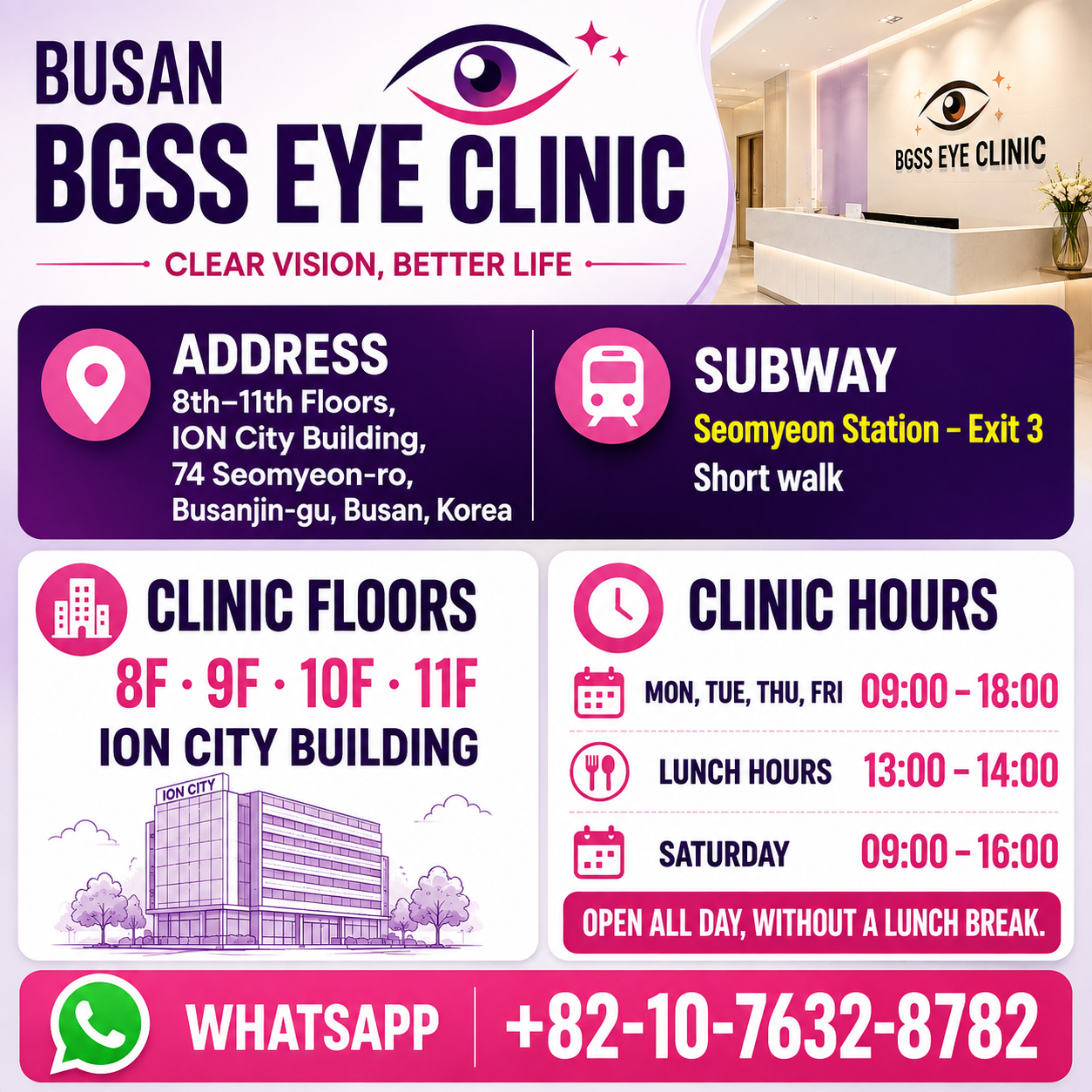
BGSS Eye Clinic Busan focuses on precise diagnosis, personalized lens planning, and safe surgical care for patients who want clearer vision and improved daily comfort.
What Is Laser Cataract Surgery?
Laser cataract surgery uses advanced laser technology to assist key steps of cataract removal. The cloudy natural lens is removed and replaced with a clear artificial intraocular lens.
This approach may help improve precision during certain parts of the procedure, but suitability depends on the patient’s eye condition and doctor’s evaluation.
What Is a Multifocal Lens?
A multifocal intraocular lens is a premium lens designed to provide vision at more than one distance. It may help patients see far objects, computer-distance objects, and near reading tasks with less dependence on glasses.
Not every patient is a good candidate for multifocal lenses. Patients with certain retina conditions, severe dry eye, irregular corneas, or high night-vision sensitivity may need other lens options.
Multifocal Lens vs Monofocal Lens
A monofocal lens usually focuses vision at one main distance, commonly distance vision. Patients may still need reading glasses after surgery.
A multifocal lens is designed to provide a broader range of vision. However, some patients may notice glare, halos, or contrast sensitivity changes, so careful screening is essential.
Multifocal Lens vs EDOF Lens
Extended depth of focus lenses are designed to provide a continuous range of vision, often with strong distance and intermediate function. Multifocal lenses may provide stronger near vision for some patients.
The best choice depends on daily habits, reading needs, computer use, night driving, eye anatomy, and tolerance for visual side effects.
Toric Lens for Cataract and Astigmatism
Patients with cataracts and astigmatism may benefit from a toric intraocular lens. A toric lens can help correct astigmatism while replacing the cloudy cataract lens.
For some patients, toric multifocal or toric EDOF lenses may be considered after detailed measurements.
Who Is a Good Candidate?
A good candidate for laser cataract surgery and multifocal lens treatment usually has cataracts affecting daily life and healthy eye structures that support premium lens use. Patients should have realistic expectations and understand the benefits and limitations of each lens type.
A complete exam is necessary to check cornea condition, retina health, eye pressure, astigmatism, pupil size, dry eye, and lens calculation accuracy.
Comprehensive Eye Exam Before Surgery
Before surgery, BGSS Eye Clinic Busan may evaluate visual acuity, cataract density, corneal shape, corneal thickness, astigmatism, eye pressure, retina health, tear film quality, pupil size, and intraocular lens power measurements.
These tests help determine whether a multifocal lens, toric lens, EDOF lens, or monofocal lens is most appropriate.
Recovery After Laser Cataract Surgery
Many patients notice clearer vision within a short time after cataract surgery, but healing and adaptation can vary. Premium lenses such as multifocal lenses may require a period of neuroadaptation as the brain adjusts to the new visual system.
Patients receive prescription eye drops, aftercare instructions, and follow-up guidance to support safe healing.
Laser Cataract Surgery for International Patients
BGSS Eye Clinic Busan welcomes international patients seeking cataract surgery, premium lens consultation, and vision care in Korea. Patients are encouraged to bring previous eye records, prescription history, medication lists, and information about existing eye conditions.
International patients should plan enough time for examination, lens consultation, surgery, and follow-up care during their stay in Busan.
Why Choose BGSS Eye Clinic Busan?
BGSS Eye Clinic Busan focuses on careful diagnosis, personalized lens selection, and patient-centered cataract care. Instead of using one lens for every patient, the clinic evaluates each eye carefully to recommend the safest and most suitable option.
Patients can consult about laser cataract surgery, multifocal lenses, toric lenses, EDOF lenses, monofocal lenses, presbyopia correction, astigmatism correction, and other eye care options in Busan, Korea.
Frequently Asked Questions
What is laser cataract surgery?
Laser cataract surgery uses laser technology to assist key steps of cataract removal. The cloudy natural lens is removed and replaced with a clear artificial intraocular lens.
What is a multifocal lens?
A multifocal lens is a premium intraocular lens designed to provide vision at multiple distances. It may reduce dependence on glasses for distance, intermediate, and near tasks.
Is a multifocal lens right for everyone?
No. Multifocal lenses are not suitable for every patient. Eye health, retina condition, corneal shape, dry eye, night-driving needs, and lifestyle must be evaluated first.
Can cataract surgery correct presbyopia?
Yes. Cataract surgery with certain premium lenses, such as multifocal or EDOF lenses, may help reduce dependence on reading glasses for suitable patients.
Can cataract surgery correct astigmatism?
Yes. If the patient has astigmatism, a toric intraocular lens may be considered. The doctor will determine suitability after corneal measurements and eye examination.
Can international patients get laser cataract surgery in Busan?
Yes. BGSS Eye Clinic Busan welcomes international patients seeking cataract surgery, multifocal lens consultation, and premium IOL care in Korea.