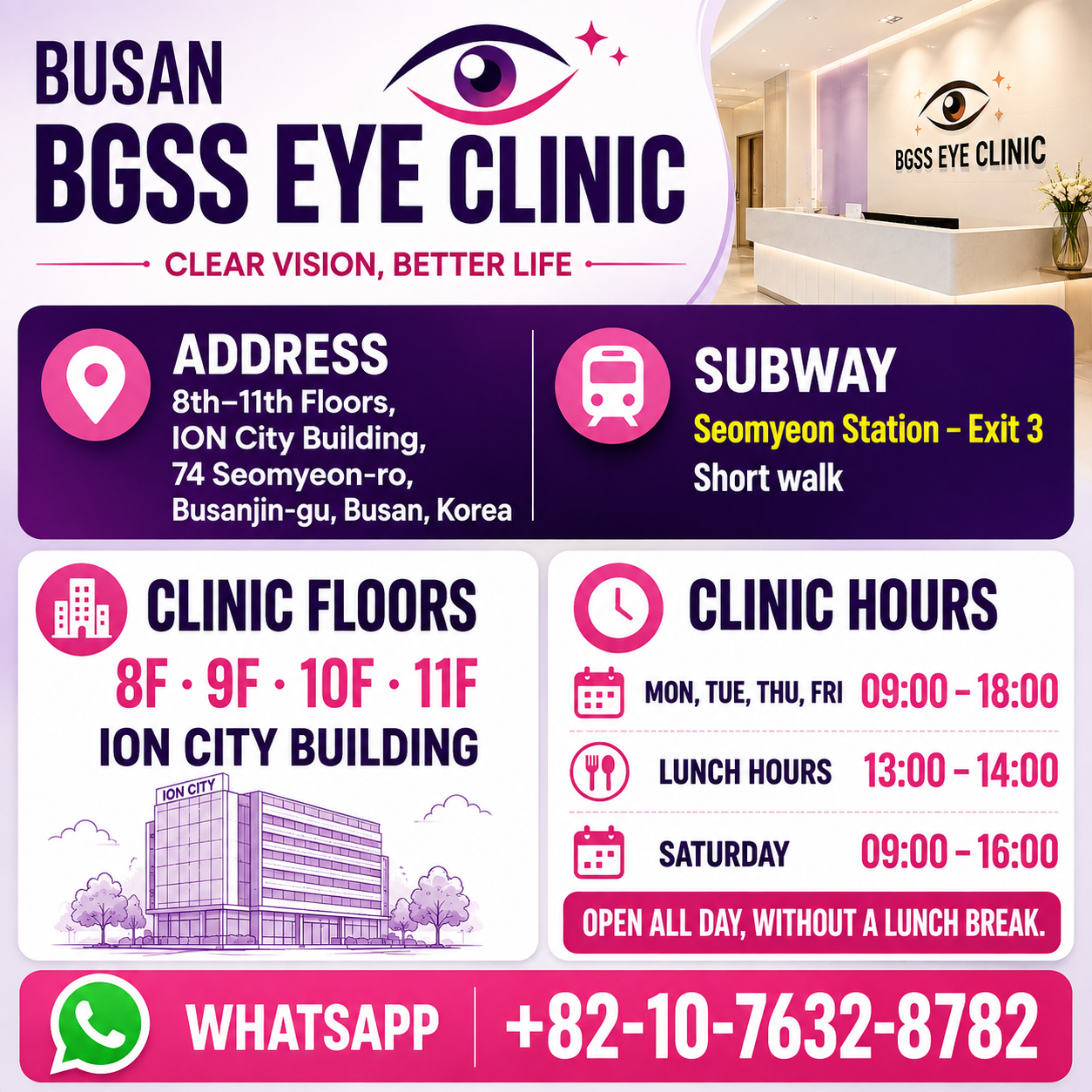
Why Seomyeon Is Busan’s Eye Care Hub for Vision Correction
Introduction
For patients researching vision correction in Busan, one neighborhood appears frequently in clinic searches: Seomyeon.
Located in the heart of Busan, Seomyeon is a major commercial and transportation district with a dense concentration of medical facilities, shopping areas, restaurants, hotels, and public transportation connections. This combination makes the area particularly convenient for patients seeking eye examinations and vision-correction consultations.
For international patients, Seomyeon can be especially practical because a single neighborhood can provide access to ophthalmology clinics, accommodation, transportation, dining, and everyday services.
But is Seomyeon actually the best place for vision correction?
Not automatically.
The most important factor is still the quality and suitability of the individual ophthalmology clinic and surgeon. Location can make treatment more convenient, but it should not replace proper medical evaluation.
This guide explains why Seomyeon has become an important destination for eye care in Busan, what types of vision-correction services patients may find there, and how international patients can choose a clinic wisely.
Why Is Seomyeon Important in Busan?
A Central Urban District
Seomyeon is one of Busan's busiest central areas.
It is known for its:
- Major transportation connections
- Shopping streets
- Restaurants and cafés
- Hotels and accommodations
- Medical facilities
- Commercial centers
- Entertainment options
For patients visiting Busan for medical care, this concentration of services can reduce the practical challenges of navigating an unfamiliar city.
Instead of traveling long distances between an eye clinic, hotel, restaurants, and transportation, patients can often find many essential services within or around the Seomyeon area.
Seomyeon and Vision Correction
Access to Refractive Eye Care
Patients researching vision correction in Seomyeon may encounter clinics offering procedures and diagnostic services related to:
- LASIK
- LASEK
- PRK
- SMILE
- SMILE Pro
- ICL
- Toric ICL
- Comprehensive eye examinations
- Corneal imaging
- Retinal examinations
- Dry-eye evaluations
Availability varies between clinics.
Not every clinic offers every procedure, and a particular treatment should only be considered after appropriate diagnostic testing.
Why Do Patients Choose Seomyeon for Eye Surgery?
Convenience Is a Major Advantage
One of Seomyeon's biggest advantages is convenience.
Vision correction usually requires more than the surgery itself.
Patients may need:
- Initial consultation
- Diagnostic testing
- Surgical planning
- The procedure
- Postoperative examination
- Additional follow-up
For international patients, having these services in a well-connected district can make the overall experience easier.
A Convenient Location for International Patients
Easy Access Around Busan
International patients may prefer Seomyeon because it is centrally located within Busan and connected to major transportation routes.
This can be useful for visitors who need to travel between:
- Airport
- Hotel
- Eye clinic
- Shopping areas
- Restaurants
- Tourist attractions
A central location can also make it easier for companions to find accommodation and daily necessities while the patient attends appointments.
Seomyeon Transportation
Why Location Matters After Eye Surgery
Transportation is particularly important after vision-correction procedures.
Depending on the surgery, patients may experience temporary:
- Blurred vision
- Light sensitivity
- Watery eyes
- Glare
- Visual fluctuations
Immediately after surgery, patients may not want to navigate complicated transportation routes.
Staying relatively close to the clinic can make postoperative travel more comfortable.
Patients should still follow their surgeon's instructions regarding transportation and activity after surgery.
What Vision Correction Procedures Are Available in Seomyeon?
LASIK
LASIK reshapes the cornea to correct refractive errors.
It may be considered for selected patients with:
- Myopia
- Hyperopia
- Astigmatism
Candidate suitability depends on factors such as corneal thickness, corneal shape, prescription stability, ocular-surface health, and overall eye health.
LASEK and PRK
LASEK and PRK are surface-based laser procedures.
They may be considered for patients whose corneal characteristics or other factors make certain flap-based procedures less appropriate.
Recovery can differ from LASIK, so patients should discuss expected discomfort, visual recovery, and activity restrictions with their surgeon.
SMILE and SMILE Pro
SMILE is a minimally invasive corneal refractive procedure that removes a small lenticule from within the cornea.
SMILE Pro is a newer version of the technology available at selected centers.
However, newer technology does not automatically mean better treatment for every patient.
A comprehensive examination should determine whether SMILE or SMILE Pro is appropriate.
ICL
ICL is an implantable lens procedure that corrects refractive error without intentionally reshaping the cornea.
It may be considered for selected patients with moderate to high myopia or for patients who are not ideal candidates for certain corneal laser procedures.
ICL requires its own anatomical assessment, including evaluation of the anterior segment and other eye structures.
Why Diagnostic Testing Matters in Seomyeon
The Consultation Is More Important Than the Advertisement
Patients sometimes begin their search by comparing procedure names.
However, a better starting point is diagnostic testing.
Before recommending a procedure, an ophthalmologist may evaluate:
- Refraction
- Corneal topography
- Corneal tomography
- Corneal thickness
- Tear-film health
- Eye pressure
- Pupil size
- Anterior chamber measurements
- Retinal health
- Optic nerve
- Prescription stability
The exact tests depend on the procedure being considered.
Corneal Topography Before Laser Surgery
Understanding Corneal Shape
Corneal topography provides information about the shape and curvature of the cornea.
This can be important before LASIK, LASEK, PRK, and other corneal refractive procedures.
A surgeon needs to determine whether the cornea has characteristics compatible with the planned treatment.
A glasses prescription alone cannot establish candidacy.
Corneal Thickness Testing
Why Pachymetry Matters
Pachymetry measures corneal thickness.
For laser vision correction, the surgeon needs to consider how much corneal tissue is present and how much tissue would be affected by treatment.
The importance of corneal thickness depends on the procedure and the patient's overall corneal anatomy.
Retinal and OCT Testing
Looking Beyond the Cornea
Vision correction does not only involve the cornea.
An eye clinic may recommend retinal examination or OCT when clinically appropriate.
This can be particularly relevant for patients with:
- High myopia
- Diabetes
- Retinal symptoms
- Age-related eye changes
- Known retinal disease
The exact diagnostic plan should be individualized.
How to Choose an Eye Clinic in Seomyeon
Don't Choose Based on Location Alone
Being located in Seomyeon does not automatically mean that a clinic is the right choice.
When comparing providers, consider:
- Ophthalmologist qualifications
- Experience with your procedure
- Preoperative testing
- Diagnostic equipment
- Patient-selection process
- Postoperative monitoring
- Emergency arrangements
- International patient communication
- Pricing transparency
The clinic's medical standards should come before convenience.
Look for Comprehensive Testing
A Good Clinic Should Explain Its Testing
Ask the clinic:
- Which tests are included?
- Why are they necessary?
- Who interprets the results?
- Will the ophthalmologist review the findings with me?
- Will I receive copies of my results?
A clinic that clearly explains its diagnostic process can make it easier to understand your treatment options.
Compare More Than One Procedure
Don't Assume You Need LASIK
One advantage of visiting an established ophthalmology center is the ability to discuss multiple treatment options.
Depending on your eyes, your doctor may discuss:
- LASIK
- LASEK
- PRK
- SMILE
- SMILE Pro
- ICL
- Toric ICL
- Continuing with glasses or contact lenses
The goal is not to find the most technologically advanced procedure.
The goal is to identify the safest and most appropriate option.
Seomyeon for Medical Tourists
A Practical Base for a Busan Eye-Surgery Trip
International patients often need to plan more than the medical appointment itself.
Seomyeon can be convenient because patients may find nearby:
- Hotels
- Restaurants
- Cafés
- Pharmacies
- Convenience stores
- Public transportation
- Shopping facilities
This can simplify the logistics of staying in Busan during the consultation and recovery period.
Where Should You Stay After Eye Surgery?
Choose Convenience Over Tourism
After eye surgery, patients may prefer accommodation that is:
- Close to the clinic
- Easy to reach
- Quiet
- Comfortable
- Equipped with basic amenities
- Convenient for meals and medication
A hotel farther away may offer attractive sightseeing opportunities, but convenience can be more important during early recovery.
Things to Do in Seomyeon During Recovery
Keep Activities Simple
Patients should follow their surgeon's postoperative restrictions.
Depending on the procedure and recovery stage, it may be reasonable to choose low-intensity activities such as:
- Resting at the hotel
- Short walks when permitted
- Quiet cafés
- Simple meals
- Shopping only when comfortable and allowed
Avoid assuming that sightseeing is safe immediately after surgery.
Your surgeon should determine when you can resume activities such as exercise, swimming, prolonged outdoor exposure, or other strenuous activities.
Can You Travel Around Busan After Eye Surgery?
Follow Your Clinic's Advice
Patients may want to visit areas such as Haeundae, Gwangalli, Nampo-dong, or other Busan attractions.
However, recovery comes first.
Factors such as:
- Bright sunlight
- Wind
- Dust
- Crowded areas
- Long walking distances
- Fatigue
may make extensive sightseeing uncomfortable during early recovery.
Ask your surgeon when normal tourism activities can safely resume.
How Much Does Eye Surgery Cost in Seomyeon?
Prices Vary by Procedure and Clinic
There is no single price for vision correction in Seomyeon.
Cost can depend on:
- Procedure type
- Laser platform
- Diagnostic testing
- Surgeon experience
- Prescription complexity
- Whether both eyes are treated
- Medications
- Follow-up visits
- International patient services
A low advertised price should not be the only reason to choose a clinic.
Ask for an itemized quotation that explains what is included.
Does Seomyeon Offer English-Speaking Eye Clinics?
Confirm Language Support Before Booking
Some Busan clinics provide services for international patients, but language support varies.
If you are not fluent in Korean, ask whether:
- English consultation is available
- A medical interpreter is available
- Written instructions are provided in English
- Prescription instructions can be explained clearly
- Postoperative communication is available in English
Clear communication is an important part of safe medical care.
What Should International Patients Bring?
Bring Your Eye History
If you are traveling to Seomyeon for vision correction, bring:
- Current glasses prescription
- Contact lens prescription
- Previous eye examination results
- Previous surgical records
- Medication information
- Contact lens history
- Previous corneal imaging if available
If your prescription has changed recently, tell the ophthalmologist.
Contact Lens Wear Before Eye Testing
Ask When to Stop Wearing Lenses
Contact lenses can affect corneal measurements.
The appropriate period for stopping contact lens use before diagnostic testing depends on the lens type and clinic protocol.
Ask the clinic before your appointment:
- When should I stop wearing soft lenses?
- When should I stop wearing toric lenses?
- What about rigid gas-permeable lenses?
- Do I need to repeat measurements after stopping lenses?
Following the clinic's instructions can improve the reliability of preoperative measurements.
How Long Should International Patients Stay in Busan?
Allow Time for Testing and Follow-Up
Avoid planning a trip around surgery alone.
Depending on the procedure, you may need time for:
- Initial consultation
- Diagnostic testing
- Surgery
- Early postoperative examination
- Additional follow-up
Your clinic should provide a recommended timeline.
Do not book a return flight before confirming when it is safe to travel.
What Happens If You Have a Problem After Returning Home?
Plan Follow-Up Before Leaving Korea
International patients should ask:
- Who do I contact if I have a problem?
- Can the clinic provide postoperative records?
- Can my local ophthalmologist communicate with the Korean surgeon?
- What symptoms require urgent care?
- How quickly should I be examined if vision changes?
Having a follow-up plan is especially important for medical tourists.
Why Seomyeon Can Be Convenient for a One-Trip Eye Surgery Plan
Medical Care and Daily Services in One Area
For patients who want to combine eye treatment with a short Busan trip, Seomyeon can provide a practical base.
The area allows patients to combine medical appointments with access to everyday services without necessarily traveling across the entire city.
However, a "one-trip" approach should never mean rushing the medical process.
Diagnostic testing and postoperative care should determine the schedule.
Seomyeon vs Other Areas of Busan
Location Is Only One Factor
Busan has several areas with medical facilities and transportation connections.
Seomyeon may stand out because of its central location and concentration of services, but another neighborhood may be more convenient depending on where you stay and which clinic you choose.
Instead of asking:
"Is Seomyeon the best area?"
consider asking:
"Which clinic provides the most appropriate treatment and follow-up for my eyes?"
Questions to Ask a Seomyeon Eye Clinic
Before Booking Surgery
Ask:
- Which procedure is suitable for my eyes?
- Why do you recommend it?
- What diagnostic tests will I undergo?
- Is my cornea suitable for laser surgery?
- Do I have dry eye?
- Is my prescription stable?
- Would ICL be an alternative?
- What are the risks?
- How experienced is the surgeon with this procedure?
- How many postoperative visits are required?
- How long should I stay in Busan?
- When can I fly home?
- What happens if I develop a complication after returning home?
- Are English-language services available?
- What is included in the quoted price?
Conclusion
Seomyeon has become an important location for eye care in Busan because of its central position, transportation connections, medical facilities, and convenient access to hotels, restaurants, and everyday services.
For patients considering LASIK, LASEK, PRK, SMILE Pro, ICL, or other vision-correction procedures, the neighborhood can be a practical base for consultations and treatment.
However, Seomyeon's reputation as an eye-care hub should not be the deciding factor by itself.
The quality of your treatment depends much more on the ophthalmologist, diagnostic evaluation, patient selection, surgical planning, technology, and postoperative care.
For international patients, the ideal clinic is one that can clearly explain why a particular procedure is appropriate for your eyes and provide a realistic plan for recovery and follow-up.
If you are considering vision correction in Busan, Seomyeon can be a convenient place to begin your search—but the final decision should always be based on medical suitability, safety, and quality of care rather than location or promotional pricing alone.
FAQs About Eye Surgery in Seomyeon, Busan
1. Why is Seomyeon popular for eye care in Busan?
Seomyeon is a central Busan district with strong transportation connections and a concentration of medical, commercial, accommodation, and dining facilities, making it convenient for patients attending eye appointments.
2. Can I get LASIK in Seomyeon?
LASIK and other refractive procedures are available through selected ophthalmology providers in Busan. Patients should confirm the specific procedure and complete a comprehensive eye examination before treatment.
3. Is SMILE Pro available in Seomyeon?
SMILE Pro may be available at selected clinics, but availability can change. More importantly, patients should first determine whether their corneal anatomy and prescription make them suitable candidates.
4. Can foreigners have eye surgery in Seomyeon?
International patients can seek ophthalmology services in Busan, but language support, international patient services, and documentation policies vary between clinics.
5. Is Seomyeon better than Haeundae for eye surgery?
Neither area is automatically better. The surgeon, clinic, diagnostic testing, procedure suitability, and follow-up care are more important than the neighborhood.
6. How long should I stay in Busan after eye surgery?
The recommended stay depends on the procedure and your individual recovery. Ask your surgeon when your postoperative checks should occur and when it is safe to fly.
7. Can I go sightseeing after eye surgery in Busan?
Your surgeon should determine when sightseeing and outdoor activities are appropriate. During early recovery, rest and postoperative care should take priority.
8. How much does LASIK cost in Seomyeon?
Prices vary by clinic, procedure, equipment, testing, surgeon, and included services. Request an itemized quotation before booking.
9. Should I choose a clinic based on its location?
Location is useful for convenience, but it should not be the primary selection criterion. Surgeon experience, diagnostic quality, procedure suitability, and postoperative care are more important.
10. What should international patients ask before eye surgery in Seomyeon?
Ask about candidacy, diagnostic testing, procedure options, risks, surgeon experience, total cost, recovery time, follow-up, emergency contact, language support, and arrangements after returning home.