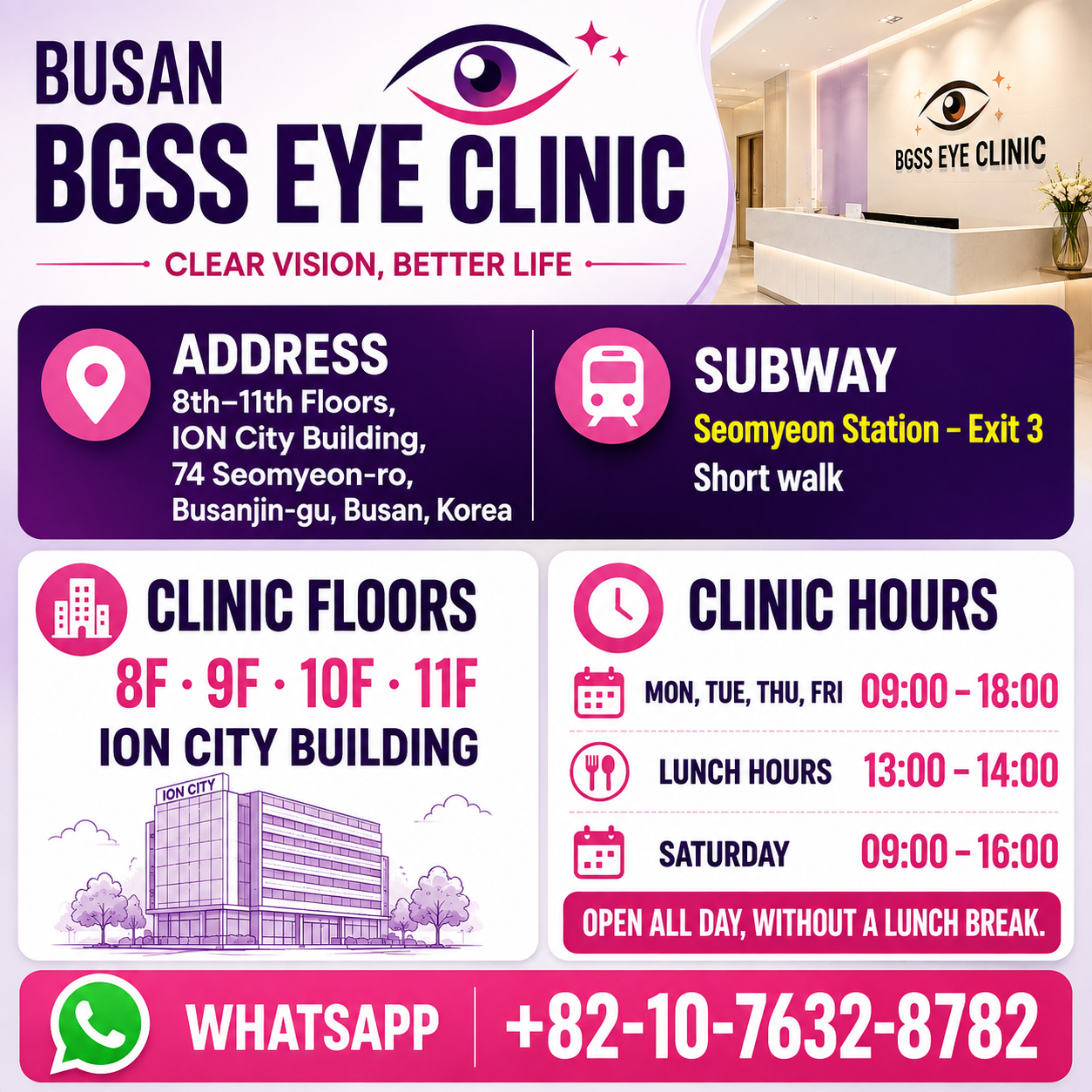
International Eye Clinic in Central Busan, Korea
Introduction
Finding the right international eye clinic in central Busan, Korea can make eye care easier for expats, medical tourists, business travelers, and foreign visitors.
International patients may seek ophthalmic care for many reasons, from routine eye examinations and prescription updates to glaucoma screening, retinal evaluation, cataract consultations, dry-eye treatment, LASIK, SMILE, SMILE Pro, and ICL consultations.
For international patients, however, choosing a clinic involves more than finding a convenient location. Clear communication, appropriate diagnostic testing, ophthalmologist qualifications, treatment options, postoperative care, and access to medical records can all affect the quality of the experience.
Central Busan can be particularly convenient because areas such as Seomyeon provide access to transportation, hotels, restaurants, shopping, and healthcare services.
This guide explains what international patients should look for when choosing an eye clinic in central Busan and how to prepare for an ophthalmology appointment in Korea.
What Is an International Eye Clinic?
Eye Care Designed to Support Foreign Patients
An international-friendly eye clinic is generally a medical facility that can accommodate patients who may not speak Korean fluently or who are receiving care away from their home country.
Depending on the clinic, international services may include:
- English-language communication
- International patient coordination
- Assistance with appointment scheduling
- Medical interpretation
- Foreign-patient registration
- Assistance with medical records
- International payment support
- Postoperative communication
Services vary between clinics.
A clinic that accepts international patients does not necessarily provide complete English communication at every stage, so confirm the details before booking.
Why Choose Central Busan for Eye Care?
Convenient Transportation
Central Busan offers convenient access to:
- Busan Subway
- Hotels
- Restaurants
- Shopping areas
- Business districts
- Pharmacies
- Medical facilities
For international patients, staying near a central medical district can reduce unnecessary transportation during a medical trip.
This can be particularly useful if you need several appointments.
What Types of Eye Care Are Available?
Routine Eye Examinations
An international eye clinic may provide comprehensive examinations involving:
- Visual acuity
- Refraction
- Eye pressure measurement
- Slit-lamp examination
- Corneal evaluation
- Optic nerve assessment
- Retinal examination
Additional testing depends on your symptoms and risk factors.
Vision Correction
LASIK, SMILE and SMILE Pro
International patients may visit Busan for refractive surgery consultations.
Possible procedures include:
- LASIK
- PRK
- LASEK
- SMILE
- SMILE Pro
- ICL
Each procedure has different eligibility requirements.
A comprehensive preoperative examination is necessary before selecting a treatment.
ICL Consultation
An Intraocular Vision-Correction Option
ICL involves placing an implantable lens inside the eye while the natural crystalline lens remains in place.
An ICL evaluation may involve:
- Refraction
- Anterior-chamber measurements
- Corneal measurements
- Eye length
- Endothelial-cell assessment
- Eye pressure
- Overall ocular-health evaluation
International patients should understand the benefits, risks, alternatives, and follow-up requirements before proceeding.
Cataract Care
Cataract Evaluation and IOL Planning
International patients may seek cataract evaluation when experiencing:
- Blurred vision
- Glare
- Difficulty driving at night
- Faded colors
- Difficulty reading
- Frequent prescription changes
A cataract assessment may include examination of the lens, retina, cornea, optic nerve, and eye pressure.
Additional measurements may be needed to select an appropriate intraocular lens.
Glaucoma Screening
More Than an Eye-Pressure Test
Glaucoma can develop gradually and may cause few symptoms in its early stages.
Depending on your risk factors, an international eye clinic may provide:
- Tonometry
- Optic nerve examination
- OCT
- Visual field testing
- Corneal assessment
- Gonioscopy when appropriate
A single eye-pressure measurement does not diagnose glaucoma.
Retina and Diabetic Eye Care
For Patients With Diabetes or Retinal Concerns
Patients with diabetes, high myopia, previous retinal disease, flashes, floaters, or visual distortion may need retinal evaluation.
Possible tests include:
- Dilated retinal examination
- Retinal photography
- OCT
- Visual field testing when appropriate
- Other retinal imaging
If you suddenly develop flashes, many new floaters, a curtain-like shadow, or significant vision loss, seek urgent retinal assessment.
Dry-Eye Evaluation
Common Among Digital Workers and Contact-Lens Users
International patients may seek treatment for:
- Burning
- Grittiness
- Eye fatigue
- Fluctuating vision
- Redness
- Excessive tearing
- Contact-lens intolerance
An ophthalmologist may evaluate the tear film, cornea, eyelids, and meibomian glands.
Treatment depends on the underlying cause.
English-Speaking Eye Consultations in Busan
Confirm Exactly What English Support Means
If you prefer English, ask whether English is available for:
- Appointment booking
- Registration
- Medical history
- Diagnostic testing
- Ophthalmologist consultation
- Surgical consent
- Medication instructions
- Follow-up visits
Some clinics may use English-speaking coordinators or interpreters rather than having every doctor communicate fluently in English.
For important treatment decisions, make sure you understand the information before consenting.
How to Choose an International Eye Clinic
Look Beyond Language Support
English communication is useful, but medical quality should remain the priority.
Consider:
- Ophthalmologist qualifications
- Relevant clinical experience
- Diagnostic equipment
- Range of procedures
- Preoperative testing
- Postoperative care
- Emergency arrangements
- Medical-record access
- Transparent pricing
- International-patient coordination
A clinic should explain why a particular procedure is appropriate for your eyes rather than simply promoting a technology.
Diagnostic Equipment to Consider
Testing Should Match Your Needs
Depending on the reason for your appointment, useful diagnostic capabilities may include:
For refractive surgery:
- Corneal topography
- Corneal tomography
- Pachymetry
- Refraction
- Tear-film assessment
For glaucoma:
- Eye pressure measurement
- OCT
- Visual field testing
- Optic nerve imaging
For retinal care:
- Dilated retinal examination
- OCT
- Retinal photography
- Other retinal imaging
You do not necessarily need every test.
Medical Records for International Patients
Bring Previous Eye Information
If you have previous eye records, bring:
- Current glasses prescription
- Previous prescriptions
- Contact-lens information
- OCT scans
- Retinal photographs
- Visual field results
- Previous surgical reports
- Medication list
- Allergy information
Previous records can help the ophthalmologist compare current findings with older results.
Should You Translate Your Medical Records?
English or Korean Can Be Helpful
If your records are written in another language, ask the clinic whether translation is required.
For important surgical reports or complex medical information, professional translation may be preferable to relying entirely on automatic translation.
Keep secure digital copies as a backup.
Planning Eye Surgery as an International Patient
Do Not Build Your Trip Around Surgery Alone
A medical-tourism schedule may involve:
Consultation → Diagnostic testing → Treatment decision → Surgery → Follow-up → Return home
Do not assume that surgery can safely be performed immediately after arrival.
The surgeon may need additional testing before confirming eligibility.
How Long Should You Stay in Busan?
The Procedure Determines the Timeline
Your required stay depends on:
- Type of treatment
- Preoperative testing
- Surgery
- Early recovery
- Follow-up
- Individual healing
Ask the clinic for a recommended timeline before booking flights.
If you are undergoing surgery, leave enough flexibility for an additional examination if needed.
Staying Near the Eye Clinic
Accommodation Can Make Follow-Up Easier
For medical tourists, staying near central Busan can simplify transportation.
Consider accommodation with:
- Easy subway access
- Elevator access
- Quiet rooms
- Nearby restaurants
- Pharmacy access
- Flexible check-in
- Convenient transportation
You do not necessarily need to stay within walking distance of the clinic.
Transportation After Eye Surgery
Do Not Assume You Can Drive Immediately
Vision may be temporarily blurred or light-sensitive after eye surgery.
Ask your ophthalmologist when you can safely:
- Drive
- Use public transportation
- Travel independently
- Fly home
If your vision is impaired, arrange appropriate transportation.
Medical Tourism and Tax Refunds
Confirm Current Rules
Some eligible foreign visitors may qualify for medical tax-refund arrangements under applicable Korean regulations.
Eligibility may depend on:
- Visitor status
- Provider participation
- Specific medical service
- Documentation
- Current regulations
Do not assume that every eye examination or surgery qualifies.
Ask the clinic before treatment whether your specific service is eligible and what documents you need.
How Much Does an International Eye Consultation Cost?
Prices Vary by Clinic and Testing
Costs may depend on:
- Consultation
- Diagnostic tests
- OCT
- Corneal imaging
- Retinal imaging
- Procedure type
- Medication
- Follow-up
- International-patient services
Ask whether the quoted consultation price includes diagnostic testing or whether tests are billed separately.
For surgery, request an itemized quotation.
Same-Day Eye Consultations
Prompt Appointments May Be Available
Some international patients may need an eye consultation quickly because of a short stay in Korea.
A clinic may offer same-day appointments depending on availability.
However, same-day consultation does not necessarily mean same-day surgery.
If you are considering LASIK, SMILE, SMILE Pro, or ICL, additional testing may be required before treatment.
Urgent Eye Symptoms
Know When to Seek Emergency Care
Do not wait for a routine international-patient appointment if you develop:
- Sudden vision loss
- A curtain-like shadow
- Sudden flashes with many new floaters
- Severe eye pain
- Significant eye trauma
- Chemical exposure
- Sudden double vision with neurological symptoms
These symptoms can require urgent ophthalmic or emergency medical assessment.
What Should You Ask an International Eye Clinic?
Before Booking
Ask:
- Do you accept international patients?
- Is English consultation available?
- Is an interpreter available if necessary?
- Which eye procedures do you provide?
- What diagnostic tests are available?
- Are OCT and retinal imaging available?
- Do you perform corneal topography and tomography?
- How long should I stay in Busan?
- How many follow-up visits will I need?
- Can I receive medical reports in English?
- What is included in the quoted price?
- What should I do if I develop a problem after returning home?
What Should International Patients Bring?
Prepare Before You Travel
Bring:
- Passport
- Glasses
- Previous prescriptions
- Contact-lens information
- Previous eye records
- OCT or retinal scans
- Visual field results
- Previous surgery records
- Medication list
- Allergy information
Keep digital backups in secure storage.
A Simple Eye-Care Itinerary for International Patients
Example Schedule
Day 1 — Arrival
Check into your hotel and rest.
Day 2 — Eye Consultation
Complete the initial examination and diagnostic testing.
Day 3 — Treatment or Additional Evaluation
Proceed only if the ophthalmologist confirms that treatment is appropriate.
Day 4+ — Follow-Up
Attend postoperative or diagnostic follow-up as recommended.
This is only an example. The actual schedule depends on the procedure and your individual medical needs.
Conclusion
Choosing an international eye clinic in central Busan, Korea can make ophthalmic care more convenient for expats, tourists, business travelers, and medical tourists.
Central Busan offers practical advantages such as transportation, accommodation, restaurants, and access to healthcare. However, convenience and English communication should not be the only factors considered.
Whether you need a routine eye examination, glaucoma screening, retinal evaluation, cataract consultation, dry-eye care, LASIK, SMILE, SMILE Pro, or ICL, choose a clinic based on qualified ophthalmologists, appropriate diagnostic testing, transparent communication, safety, and follow-up care.
International patients should confirm language support, treatment availability, appointment timing, medical records, pricing, postoperative arrangements, and any applicable tax-refund documentation before traveling.
Most importantly, choose medical care based on your individual eye health rather than simply choosing the closest or most heavily advertised clinic.
FAQs About International Eye Clinics in Central Busan
1. Can foreigners visit an eye clinic in central Busan?
Yes. International patients, expats, and tourists can seek ophthalmic care in Busan. Confirm that the clinic accepts international patients before booking.
2. Are English-speaking eye clinics available in Busan?
Some clinics provide English-language services, but the level of support varies. Confirm whether English is available for the doctor consultation, testing, consent, medication instructions, and follow-up.
3. Can international patients get LASIK in Busan?
International patients may seek LASIK consultations in Busan. A comprehensive preoperative evaluation is necessary before determining whether LASIK is appropriate.
4. Can I get SMILE or SMILE Pro in central Busan?
Some clinics may provide SMILE or SMILE Pro consultations and treatment. Availability varies, and eligibility depends on your individual eye measurements.
5. Can foreigners get ICL in Busan?
International patients may seek ICL consultations in Busan. The surgeon must evaluate internal eye anatomy, prescription, and overall ocular health before recommending treatment.
6. Can I get an OCT eye scan in central Busan?
OCT may be available at ophthalmology clinics in central Busan. Ask whether it is clinically appropriate for your symptoms or condition.
7. Can international patients get glaucoma testing in Busan?
Yes. Depending on the clinic, glaucoma evaluation may include eye pressure measurement, OCT, visual field testing, optic nerve assessment, and other examinations.
8. Can tourists get emergency eye care in Busan?
Yes, but severe symptoms should be treated as urgent. Sudden vision loss, severe eye pain, a curtain-like shadow, serious trauma, or neurological symptoms may require emergency evaluation rather than a routine appointment.
9. Can I get my eye records in English?
This depends on the clinic. Ask whether examination reports, prescriptions, imaging results, and treatment records can be provided in English.
10. How should international patients prepare for an eye consultation in Korea?
Bring your passport, glasses, previous prescriptions, eye records, imaging, medication list, and relevant surgical history. Confirm language support and appointment details before traveling.
11. Can I stay near Seomyeon while receiving eye care?
Yes. Central Busan and Seomyeon can be convenient bases because of transportation, accommodation, restaurants, and access to medical services.
12. What should I do if I suddenly lose vision while in Busan?
Do not wait for a routine appointment. Sudden significant vision loss requires urgent medical assessment through an appropriate ophthalmic or emergency medical service.