Eye Surgery During Your Korea Vacation: What to Know
Eye Surgery During Your Korea Vacation: What to Know
Combining a vacation with eye surgery in Korea can be an attractive option for international visitors who want to correct their vision while already traveling in South Korea. Procedures such as SMILE Pro, LASIK, LASEK, and ICL are available at ophthalmology clinics, including centers that provide services for international patients.
However, eye surgery should not be treated like another sightseeing activity. Your eyes need proper preoperative testing, an appropriate recovery period, and postoperative monitoring. The best medical-tourism itinerary leaves enough flexibility for your ophthalmologist to determine whether you are suitable for surgery and when it is safe to continue traveling.
Can You Have Eye Surgery During a Korea Vacation?
Yes, some international patients travel to Korea specifically for vision correction.
Short-Stay Treatment Can Be Possible
Procedures such as SMILE Pro and LASIK may be completed during a relatively short stay, depending on your examination results and recovery. Busan Vision Clinic states that international patients can undergo consultation, evaluation, and vision correction treatment after completing a detailed eye examination.
However, the exact schedule should never be guaranteed before your eyes have been examined.
Your Vacation Should Accommodate Your Surgery
Instead of planning surgery around a fixed sightseeing schedule, plan your vacation around the medical appointments.
A practical itinerary may include:
- Arrival in Korea
- Preoperative examination
- Surgery
- Early recovery
- Postoperative examination
- Light sightseeing
- Return home
Which Eye Surgery Procedures Are Available in Korea?
The appropriate procedure depends on your prescription, corneal condition, eye health, lifestyle, and personal preferences.
SMILE Pro
SMILE Pro is a minimally invasive laser vision correction procedure primarily used for myopia and astigmatism.
Busan Vision Clinic notes that many patients experience improved vision within a few days, although visual stabilization continues during the healing period.
LASIK
LASIK reshapes the cornea using an excimer laser after creating a corneal flap. It has been widely used for refractive correction and may be appropriate for many patients after comprehensive screening.
LASEK
LASEK is another laser vision correction option. It may be considered when certain corneal characteristics make other procedures less suitable.
Its early recovery can be more demanding, so tourists considering LASEK should generally allow additional recovery time.
EVO ICL
EVO ICL is an implantable lens procedure rather than a corneal laser procedure. It may be considered for selected patients who are not ideal candidates for laser vision correction.
Your ophthalmologist should determine which procedure is appropriate after examining your eyes.
Why Is a Preoperative Eye Examination Important?
A consultation is not simply a formality before surgery.
Your Eyes Need to Be Properly Evaluated
Before refractive surgery, your ophthalmologist may evaluate:
- Refractive error
- Corneal thickness
- Corneal shape
- Eye pressure
- Tear-film condition
- Retinal health
- Pupil characteristics
- Prescription stability
The FDA recommends a thorough baseline evaluation before LASIK to determine whether a patient is a suitable candidate and to discuss risks, benefits, alternatives, and expectations.
Surgery May Be Delayed
If your measurements are not stable or your eyes are not suitable for the planned procedure, your doctor may recommend waiting or choosing another treatment.
This is why international patients should avoid booking a tightly packed itinerary that assumes surgery will definitely happen on a particular day.
What Should You Do Before Traveling to Korea?
Preparation should begin before you board the airplane.
Check Your Contact Lens Requirements
If you wear contact lenses, ask your clinic when you need to stop wearing them.
Contact lenses can temporarily change corneal shape. The FDA recommends stopping soft lenses for two weeks before a baseline LASIK evaluation, while toric soft and RGP lenses generally require at least three weeks and hard lenses at least four weeks.
Your clinic may provide different instructions based on your individual circumstances.
Bring Your Eye Records
If possible, bring:
- Previous prescriptions
- Contact-lens information
- Previous eye examination reports
- Details of previous eye surgery
- Relevant medication information
These records can help your ophthalmologist understand your eye history.
How Many Days Should You Stay in Korea?
There is no universal number of days that applies to every procedure or patient.
SMILE Pro and LASIK
Some suitable patients may experience useful visual improvement within the first few days, but recovery varies. Busan Vision Clinic states that many SMILE Pro patients experience improved vision within several days.
LASEK
LASEK generally requires more early recovery time, so a longer stay may be more appropriate.
ICL
ICL has different postoperative considerations because an implantable lens is placed inside the eye. Your surgeon will provide a specific follow-up schedule.
Build in Extra Time
If possible, avoid scheduling your return flight immediately after surgery.
An extra day or two can provide flexibility if your doctor wants an additional examination or your recovery is slower than expected.
What Does a Typical Medical Vacation Itinerary Look Like?
A carefully planned trip can combine treatment with a relaxed vacation.
Day 1: Arrive in Korea
Arrive and settle into your hotel.
Avoid planning an exhausting sightseeing schedule immediately after a long international flight.
Day 2: Eye Examination
Complete your comprehensive eye examination.
Your ophthalmologist can determine whether you are a suitable candidate and discuss the available procedures.
Day 3: Surgery
If your clinic confirms that surgery is appropriate, undergo the planned procedure.
Keep the rest of the day relatively quiet.
Day 4: Postoperative Examination
Attend your scheduled follow-up.
Your ophthalmologist can assess early healing and provide further instructions.
Following Days: Light Activities
If your doctor approves, you can gradually return to appropriate sightseeing and other activities.
Can You Sightsee After Eye Surgery in Korea?
Yes, but the type and timing of sightseeing matter.
Choose Low-Impact Activities
During early recovery, consider:
- Cafés
- Restaurants
- Indoor shopping
- Museums
- Relaxed walks
- Quiet cultural attractions
The goal is to avoid unnecessary eye irritation and physical strain.
Avoid a Packed Schedule
A vacation itinerary with multiple attractions every day may not be ideal immediately after surgery.
Give yourself time to rest.
What Activities Should You Avoid?
Your surgeon's instructions should always take priority.
Swimming
Swimming pools, hot tubs, and other water activities may need to be avoided during early recovery.
For LASIK, the FDA advises patients to avoid swimming and hot tubs for a period determined by their doctor, with guidance noting that this can be around one to two months.
Contact Sports
Activities involving potential impact to the eye should be postponed.
The FDA recommends avoiding strenuous contact sports for at least four weeks after LASIK.
Dusty or Irritating Environments
Dust, smoke, and other irritants can make recovering eyes uncomfortable.
If you are visiting outdoor attractions, consider environmental conditions before spending extended periods outside.
Can You Use Your Phone After Eye Surgery?
You may be able to use your phone after surgery, but prolonged screen use can make your eyes feel dry or tired.
Use Screens in Moderation
During early recovery:
- Take frequent breaks
- Blink regularly
- Avoid excessive screen sessions
- Reduce glare
- Use recommended artificial tears if instructed
Your doctor may provide specific guidance based on your procedure.
Can You Wear Makeup During a Korea Vacation After LASIK?
Avoid rushing back to eye makeup.
Why Eye Makeup Can Be a Problem
Cosmetics around the eyes can introduce debris or bacteria during early healing.
The FDA advises avoiding creams, lotions, makeup, and perfume around the eyes before surgery and recommends waiting after surgery until the doctor says it is appropriate.
If your Korea itinerary includes beauty shopping or photography, remember that purchasing cosmetics is different from applying them around healing eyes.
Can You Travel Between Seoul and Busan After Eye Surgery?
It may be possible, but timing matters.
Avoid Unnecessary Transfers Immediately After Surgery
If you have surgery in Busan, remaining in Busan during the initial recovery period may be simpler.
Similarly, if you have surgery in Seoul, consider staying nearby until your first postoperative examination.
Plan Intercity Travel Carefully
If you need to take the KTX or another form of transportation, ask your ophthalmologist whether your planned travel is appropriate.
Your medical follow-up should take priority over your sightseeing schedule.
Can You Fly Home After Eye Surgery in Korea?
Many patients can eventually fly home after uncomplicated vision correction, but the timing should be confirmed by the treating ophthalmologist.
Complete Your Follow-Up First
The FDA recommends an early postoperative examination after LASIK, typically within 24–48 hours, followed by additional follow-up.
International patients should therefore avoid assuming that they can have surgery and immediately head to the airport.
Long-Haul Flights Need Extra Planning
Long flights can be uncomfortable because airplane cabins are dry.
If your doctor clears you to fly, keep your prescribed eye drops accessible and follow the clinic's instructions during the journey.
What Should You Pack for Eye Surgery in Korea?
A small medical travel kit can be useful.
Essential Items
Consider bringing:
- Prescription glasses
- Eye drops prescribed by your doctor
- Artificial tears if recommended
- Sunglasses
- Medical records
- Contact-lens information
- Postoperative instructions
- Clinic contact details
Keep essential medication in your carry-on rather than checked luggage.
Should You Book a Hotel Near Your Eye Clinic?
For medical tourism, staying close to the clinic can make your trip easier.
Why Location Matters
A nearby hotel can reduce:
- Walking after surgery
- Transportation time
- Stress during follow-up visits
- Risk of getting lost
- Time spent outdoors immediately after treatment
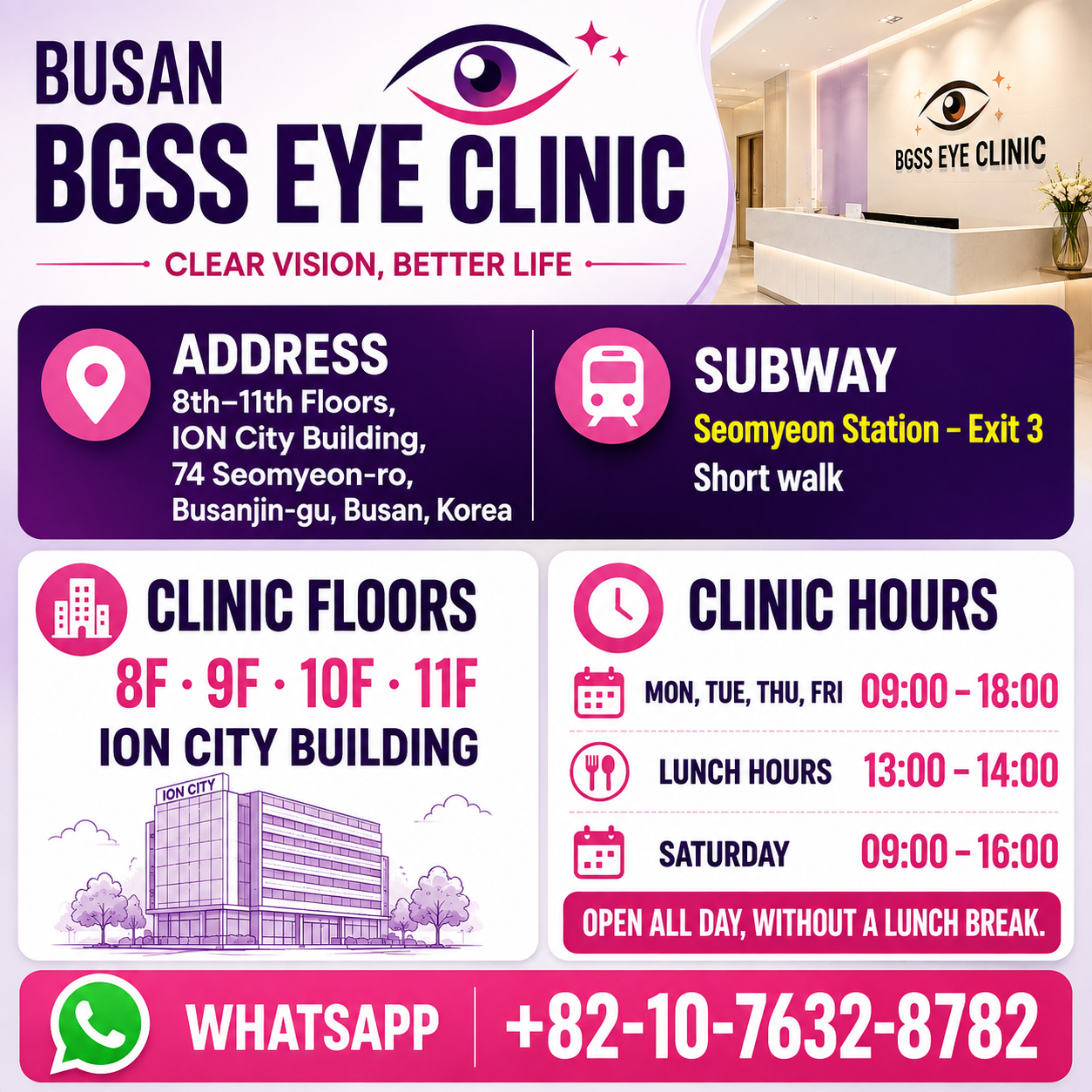
If you are having surgery in Seomyeon, Busan, choosing accommodation with convenient access to the clinic and public transportation can be particularly practical.
How Can International Patients Make Communication Easier?
Communication is especially important when surgery and recovery instructions are involved.
Choose a Clinic With International Patient Support
Ask whether the clinic offers assistance in your preferred language.
Busan Vision Clinic states that it provides English-speaking ophthalmology support and care for international patients.
Understand Your Postoperative Instructions
Before leaving the clinic, make sure you understand:
- Which drops to use
- How frequently to use them
- What activities to avoid
- When your next examination is
- Which symptoms require urgent attention
- Who to contact if you have a problem
What Are the Risks of Having Eye Surgery During a Vacation?
Medical tourism can be convenient, but it has limitations.
Recovery May Not Follow Your Itinerary
You may experience more discomfort or slower visual recovery than expected.
For LASIK, temporary blurry vision, light sensitivity, glare, halos, and dry-eye symptoms can occur during recovery.
You May Need Additional Care
If your ophthalmologist identifies an issue, you may need another appointment or additional treatment.
This is why leaving enough time in Korea is preferable to planning a rushed return home.
Results Are Not Guaranteed
Refractive surgery can reduce dependence on glasses or contact lenses, but it does not guarantee perfect vision.
The FDA notes that some patients may still need glasses or contact lenses and that complications such as dry eye, glare, halos, or other visual symptoms can occur.
How Should You Choose a Korean Eye Clinic?
Price should not be the only consideration.
Look at Surgeon Experience
Ask about the surgeon's experience with the specific procedure and laser platform you are considering.
Review the Diagnostic Process
A good clinic should perform appropriate testing rather than making a surgical recommendation based on a basic vision test.
Ask About Follow-Up
Find out how postoperative care is handled, particularly if you will return to another country after treatment.
The FDA recommends choosing a doctor who is willing to discuss risks, benefits, alternatives, expectations, and long-term follow-up.
Should You Combine Eye Surgery With a Korea Vacation?
It can work well if you prioritize recovery.
Best Approach
Think of the trip as:
Medical treatment first + vacation second.
Not:
Vacation first + surgery squeezed into the schedule.
This simple distinction can make your experience more comfortable and reduce unnecessary pressure.
Who May Benefit From Eye Surgery During a Korea Trip?
Medical tourism may be attractive for people who:
- Are already planning to visit Korea
- Want to reduce dependence on glasses
- Prefer to combine treatment with travel
- Have enough time for recovery
- Can attend postoperative examinations
- Are medically suitable for the procedure
However, anyone considering surgery should first receive an appropriate medical evaluation.
Who Should Be More Cautious?
A tightly scheduled medical vacation may not be appropriate if you:
- Have unstable vision
- Have significant eye disease
- Have substantial dry-eye symptoms
- Cannot take time away from work
- Need to return home immediately
- Cannot attend postoperative appointments
- Have activities planned that conflict with recovery restrictions
The FDA specifically identifies unstable refraction and certain eye conditions as factors that may make refractive surgery unsuitable or require additional evaluation.
Questions to Ask Before Booking Eye Surgery in Korea
Before paying a deposit or booking flights, ask your clinic:
- Which procedure is most appropriate for my eyes?
- What tests are included in the consultation?
- How long should I stop wearing contact lenses?
- Can the examination and surgery be performed during my planned stay?
- How many follow-up visits are required?
- How long should I remain in Korea?
- When can I fly home?
- Which activities should I avoid?
- What happens if I am not a suitable candidate?
- Who will provide follow-up care after I return home?
These questions can help you build a realistic medical itinerary.
A Practical Checklist for Eye Surgery During a Korea Vacation
Before Booking
- Research the procedure
- Choose a qualified ophthalmology clinic
- Ask about international-patient support
- Confirm contact-lens restrictions
- Discuss your medical history
Before Surgery
- Complete the eye examination
- Follow preoperative instructions
- Arrange transportation
- Prepare your medications
- Confirm your follow-up appointment
After Surgery
- Use prescribed eye drops
- Do not rub your eyes
- Follow activity restrictions
- Attend follow-up examinations
- Allow sufficient recovery time
Before Flying Home
- Receive medical clearance when appropriate
- Confirm your medication schedule
- Keep postoperative records
- Know who to contact if symptoms develop
- Arrange follow-up with an eye doctor at home when recommended
Conclusion
Having eye surgery during a Korea vacation can be a practical option for international patients, especially when the trip is planned around the medical procedure rather than trying to fit surgery into an already busy holiday.
Procedures such as SMILE Pro, LASIK, LASEK, and ICL may be available to suitable international patients in Korea. Busan Vision Clinic confirms that international patients can receive consultation, evaluation, and vision correction treatment after a detailed examination.
The key is preparation. Stop contact lenses according to your clinic's instructions, complete a comprehensive eye examination, leave enough time for postoperative care, and avoid activities that could interfere with healing.
Most importantly, remember that recovery is individual. Your ophthalmologist—not your flight schedule or vacation itinerary—should determine when you are ready to travel, sightsee, work, exercise, or return home.
A well-planned medical vacation can give you time to experience Korea while also receiving appropriate eye care, without treating surgery as something that can simply be rushed between tourist attractions.
Frequently Asked Questions
Can I have eye surgery during my Korea vacation?
Yes. International patients can undergo procedures such as SMILE Pro, LASIK, LASEK, and ICL in Korea if they meet the medical requirements. A comprehensive eye examination is necessary before treatment.
How many days should I stay in Korea for eye surgery?
The appropriate stay depends on the procedure, your eye condition, and your recovery. SMILE Pro and LASIK may allow relatively short stays for suitable patients, while LASEK can require more recovery time.
Can tourists get SMILE Pro in Korea?
Yes. Korean eye clinics provide SMILE Pro to international patients who are medically suitable. Busan Vision Clinic specifically states that international patients can undergo consultation and treatment.
Can I go sightseeing after LASIK?
Light activities may be possible once your ophthalmologist approves them. However, avoid strenuous exercise, swimming, eye makeup, and other restricted activities during the early recovery period.
Can I fly home after eye surgery in Korea?
Many patients can eventually fly after uncomplicated eye surgery, but the timing should be determined by the treating ophthalmologist. An early postoperative examination is important before international travel.
Should I stay near my eye clinic after surgery?
Staying nearby can make postoperative appointments and transportation easier, particularly during the first few days.
Can I wear contact lenses before eye surgery in Korea?
You may need to stop wearing them before your examination. The required period depends on the lens type. For LASIK evaluation, the FDA recommends approximately two weeks for soft lenses, three weeks for toric soft or RGP lenses, and four weeks for hard lenses.
Can I use my phone after SMILE Pro or LASIK?
Screen use may be possible, but prolonged viewing can increase dryness and visual fatigue. Take regular breaks and follow your ophthalmologist's instructions.
What if I am not suitable for LASIK?
Your ophthalmologist may discuss alternatives such as SMILE Pro, LASEK, ICL, or continuing with glasses or contact lenses, depending on your eye condition.
Is eye surgery in Korea safe for international patients?
International patients can seek refractive surgery in Korea, but safety depends on appropriate patient selection, qualified medical care, proper testing, informed consent, and postoperative follow-up. No refractive procedure is risk-free, and results cannot be guaranteed.