English-Speaking Eye Clinics in Seomyeon, Busan, Korea
Introduction
For international patients living in or visiting Busan, finding an eye clinic where communication is comfortable can make the healthcare experience much easier. This is especially important when discussing vision problems, diagnostic test results, glasses or contact lens prescriptions, cataract surgery, laser vision correction, or other eye treatments.
English-speaking eye clinics in Seomyeon, Busan, Korea can be particularly useful for international residents, students, expats, medical tourists, and families who prefer to communicate in English.
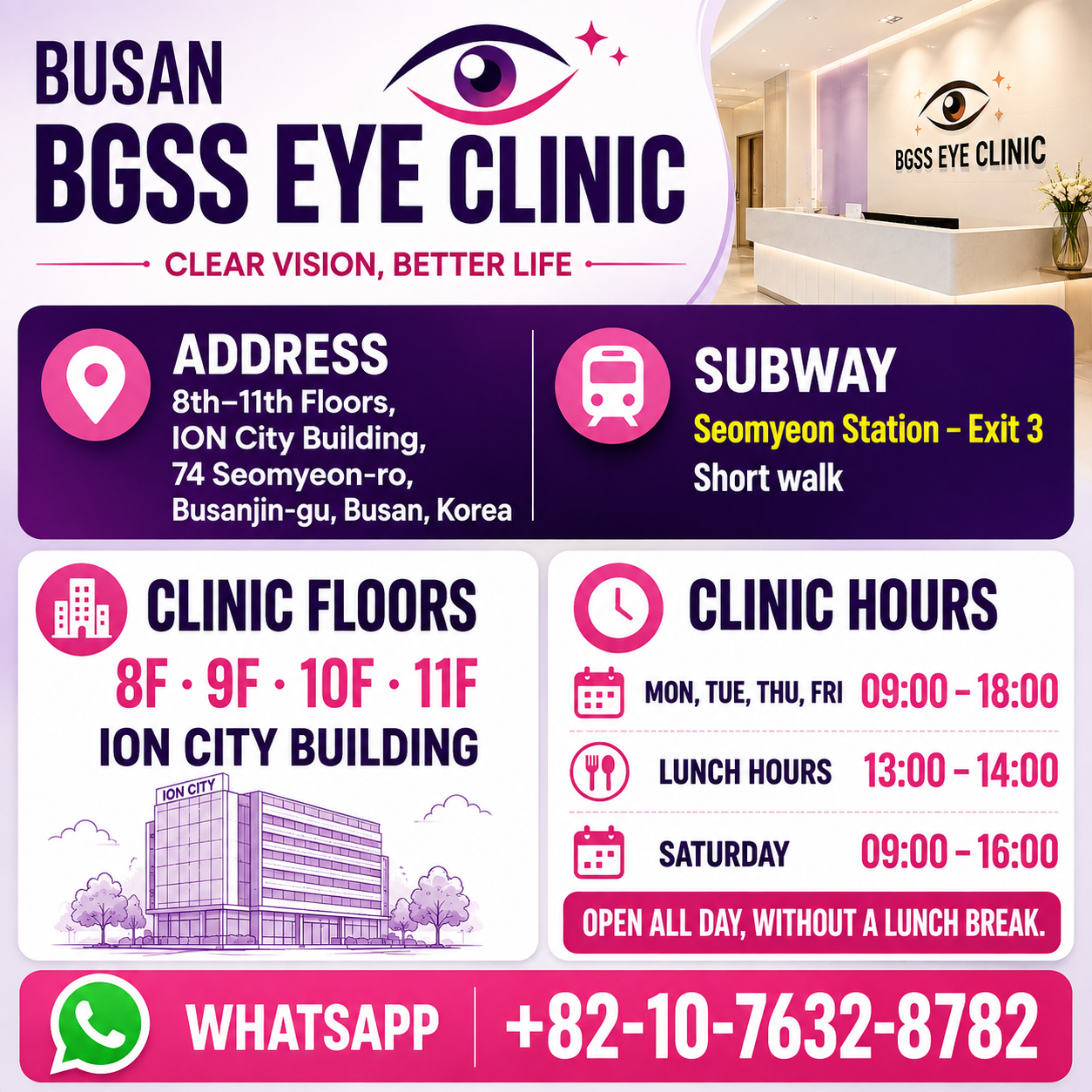
Seomyeon is one of Busan's major commercial and transportation areas, making it a convenient location for patients traveling from different parts of the city. However, choosing an eye clinic should involve more than simply finding a convenient location. Patients should also consider the clinic's ophthalmology services, diagnostic equipment, communication support, appointment process, and follow-up care.
This guide explains what international patients should look for when choosing an English-speaking eye clinic in Seomyeon and how to prepare for an eye examination in Korea.
Why English Communication Matters in Eye Care
Eye Examinations Involve Detailed Information
An eye examination can involve several different measurements and medical terms.
Patients may need to discuss:
- Current vision problems
- Previous eye conditions
- Medications
- Previous eye surgery
- Glasses prescriptions
- Contact lens use
- Family history
- Eye symptoms
- Treatment preferences
Clear communication helps patients understand what is being examined and why.
Understanding Test Results
Eye clinics may perform several diagnostic tests during one visit.
Depending on the patient's condition, these can include:
- Visual acuity testing
- Refraction
- Eye pressure measurement
- Corneal measurements
- OCT imaging
- Retinal examination
- Visual field testing
- Slit-lamp examination
International patients may want explanations of what each test measures and whether further testing is necessary.
Who May Benefit From an English-Speaking Eye Clinic in Seomyeon?
International Residents
Expats living in Busan may need regular eye care for:
- Glasses prescriptions
- Contact lenses
- Dry eye
- Myopia
- Astigmatism
- Eye allergies
- Routine examinations
Having access to English communication can make ongoing care easier.
International Students
Students may need eye examinations because of:
- Increasing myopia
- Digital screen use
- Headaches
- Eye fatigue
- Contact lens use
- School vision requirements
Parents of younger international students may also prefer English communication when discussing their child's examination results.
Medical Tourists
Patients visiting Korea specifically for eye treatment may have limited time in Busan.
For these patients, clear communication before and after treatment is particularly important.
They may need to understand:
- What tests are required
- Whether treatment is appropriate
- How long the appointment takes
- What recovery involves
- What follow-up is needed
- When it is safe to travel
What Eye Services May Be Available in Seomyeon?
Routine Eye Examinations
A routine ophthalmology examination can evaluate overall eye health and identify common refractive errors.
Depending on the patient, it may include vision testing, refraction, eye pressure measurement, and examination of the front and back of the eye.
Myopia and Astigmatism Care
Patients with blurry distance vision may have:
- Myopia
- Astigmatism
- Hyperopia
- Presbyopia
An ophthalmologist can determine the appropriate prescription and discuss whether additional evaluation is necessary.
Dry Eye Evaluation
Dry eye is increasingly common among people who spend long periods using digital devices.
Symptoms can include:
- Burning
- Gritty sensation
- Redness
- Fluctuating vision
- Excessive tearing
- Eye fatigue
A clinic may evaluate the tear film and ocular surface to determine appropriate treatment.
Cataract Evaluation
Patients experiencing gradually worsening vision, glare, or difficulty seeing at night may require a cataract examination.
An ophthalmologist can assess the lens and determine whether cataract surgery should be considered.
Retina and Glaucoma Screening
Patients with risk factors for glaucoma or retinal disease may require additional diagnostic testing.
These evaluations can include:
- Eye pressure testing
- OCT
- Visual field testing
- Dilated retinal examination
The exact tests depend on the patient's symptoms and risk factors.
What Does an English-Speaking Eye Appointment Usually Involve?
Step 1: Registration
At the beginning of the visit, the clinic may collect:
- Personal information
- Medical history
- Previous eye records
- Current prescription
- Insurance information, if applicable
International patients should ask about the required identification and payment methods before visiting.
Step 2: Vision Testing
A technician or eye-care professional may measure visual acuity.
Each eye may be tested separately.
Patients who already wear glasses or contact lenses may be asked to provide their current prescription.
Step 3: Diagnostic Testing
Additional testing depends on the reason for the appointment.
A patient visiting for routine vision correction may need fewer tests than someone being evaluated for glaucoma, cataracts, retinal disease, or another eye condition.
Step 4: Ophthalmologist Consultation
The ophthalmologist reviews the results and discusses:
- Diagnosis
- Treatment options
- Prescription changes
- Further testing
- Follow-up
- Warning signs
This is where English-language communication can be particularly valuable for international patients.
How to Find an English-Speaking Eye Clinic in Seomyeon
Check Language Support Before Booking
The term "English-speaking" can mean different things.
A clinic may have:
- English-speaking doctors
- English-speaking staff
- An interpreter
- English appointment assistance
- English-language documents
- Translation support by phone
Patients should confirm exactly what type of support is available.
Ask About Your Specific Treatment
A clinic may offer English support for general consultations but have different arrangements for specialized procedures.
Before booking, ask whether English support is available for the service you need.
For example:
- Cataract consultation
- ICL consultation
- Retinal examination
- Glaucoma evaluation
- Dry-eye treatment
- Contact lens fitting
- Laser vision correction
Questions to Ask Before Your Appointment
Language and Communication
International patients can ask:
- Is an English-speaking doctor available?
- Is English-speaking staff available?
- Is interpretation available if needed?
- Are examination results available in English?
- Can I communicate in English during follow-up visits?
Medical Services
Patients should also ask:
- Do you provide comprehensive ophthalmology examinations?
- Can you evaluate my specific eye condition?
- What diagnostic tests are available?
- Can you provide an English copy of my prescription?
- Is follow-up care available at the same clinic?
Preparing for an Eye Appointment in Seomyeon
Bring Your Previous Eye Records
If you have previously received eye care in another country, bring:
- Previous prescriptions
- OCT reports
- Visual field results
- Surgical records
- Contact lens information
- Previous diagnosis records
Previous measurements can help the ophthalmologist understand how your eye health has changed.
Bring Your Glasses
If you wear glasses, bring your current pair.
The clinic can compare your existing prescription with the new measurements.
Tell the Doctor About Your Symptoms
Be prepared to explain:
- When symptoms started
- Whether they affect one or both eyes
- Whether symptoms are constant
- What makes them worse
- Whether vision changes suddenly
- Whether pain or redness is present
For international patients, writing down symptoms before the appointment can make communication easier.
Eye Checkups for Expats Living in Busan
Routine Eye Care Matters
Expats should not wait until they have a serious vision problem before having an eye examination.
Routine care can help monitor:
- Prescription changes
- Eye pressure
- Retinal health
- Dry-eye symptoms
- Age-related changes
The recommended examination frequency depends on age, risk factors, and existing eye conditions.
Long-Term Follow-Up
Patients with chronic conditions such as glaucoma, diabetic eye disease, or progressive myopia may need ongoing monitoring.
An English-speaking clinic can make long-term communication easier when patients need repeated examinations.
Eye Care for International Students
Myopia Is Common Among Students
Students who spend significant time reading and using digital devices may experience visual fatigue.
International students should consider an eye examination if they notice:
- Difficulty seeing classroom boards
- Squinting
- Headaches
- Blurred distance vision
- Frequent eye rubbing
- Difficulty concentrating visually
Teenagers who wear contact lenses should also receive appropriate lens fitting and follow-up.
Eye Care for Tourists in Busan
When an Eye Problem Happens During a Trip
Travelers may occasionally develop:
- Eye irritation
- Dry eye
- Contact lens problems
- Eye allergies
- Redness
- Minor eye injuries
An ophthalmology clinic can determine whether symptoms are minor or require more urgent attention.
Bring Travel Insurance Information
International visitors should check their travel insurance coverage before receiving medical care.
Ask the clinic about:
- Consultation fees
- Diagnostic test fees
- Payment methods
- Insurance documentation
- Receipts for reimbursement
Specialized Eye Care in Seomyeon
Cataract Surgery
Patients with cataracts may require a detailed consultation before surgery.
The ophthalmologist may evaluate:
- Cataract severity
- Corneal measurements
- Retinal health
- Eye pressure
- Overall eye health
- Appropriate intraocular lens options
International patients should ask how many follow-up visits are recommended before returning home.
ICL and Refractive Surgery
Patients considering vision correction procedures may need detailed measurements of:
- Corneal thickness
- Corneal shape
- Eye prescription
- Anterior chamber anatomy
- Overall eye health
Not every patient is suitable for every procedure.
Glaucoma Evaluation
Glaucoma can develop without obvious symptoms.
Patients may require:
- Eye pressure measurement
- Optic nerve examination
- OCT
- Visual field testing
Patients with a family history of glaucoma or other risk factors should discuss appropriate screening with an ophthalmologist.
What Makes a Good Eye Clinic for International Patients?
Look Beyond Location
A convenient Seomyeon location is helpful, but patients should also consider:
- Qualified ophthalmology care
- Appropriate diagnostic equipment
- Experience with the required treatment
- Clear communication
- Transparent pricing
- Follow-up arrangements
- Access to medical records
Clear Treatment Explanations
A good consultation should allow patients to understand:
- What condition they have
- Whether treatment is necessary
- What alternatives exist
- What risks and benefits are involved
- What happens next
Patients should feel comfortable asking questions before making treatment decisions.
Understanding Korean Eye-Care Terminology
Common Terms International Patients May Hear
Some useful terms include:
- Ophthalmology — 눈과 관련된 전문 진료
- Myopia — 근시
- Astigmatism — 난시
- Cataract — 백내장
- Glaucoma — 녹내장
- Dry eye — 안구건조증
- Retina — 망막
- Eye pressure — 안압
Having these terms available can help international patients navigate appointments.
When an Eye Problem Is an Emergency
Do Not Wait for a Routine Appointment
Some symptoms require prompt ophthalmic assessment.
Seek urgent eye care for:
- Sudden vision loss
- Sudden flashes of light
- A sudden increase in floaters
- A dark curtain or shadow across vision
- Severe eye pain
- Sudden double vision
- Serious eye injury
- Severe redness with vision changes
These symptoms can sometimes indicate conditions that require rapid treatment.
How International Patients Can Make the Most of Their Appointment
Prepare Questions in Advance
Write down your main concerns before visiting.
For example:
"My distance vision has become blurry over the last six months."
or:
"I have been diagnosed with glaucoma and need an OCT and visual field test."
Clear descriptions can make the consultation more efficient.
Ask for Written Results
International patients may benefit from requesting:
- Diagnosis
- Prescription
- Test results
- Treatment instructions
- Follow-up recommendations
Written records can be particularly useful when continuing care in another country.
Conclusion
Finding English-speaking eye clinics in Seomyeon, Busan, Korea can make eye care more comfortable and understandable for international residents, students, expats, and medical tourists.
English communication is particularly valuable when discussing detailed eye examinations, diagnostic test results, prescriptions, surgical options, and follow-up care. However, language support should be considered alongside medical expertise, diagnostic capabilities, treatment options, and continuity of care.
Before booking an appointment, international patients should confirm what type of English support is available and whether it covers the specific eye service they need. Bringing previous prescriptions and medical records can also help the ophthalmologist understand the patient's history.
Whether you need a routine eye examination, myopia assessment, dry-eye evaluation, glaucoma screening, cataract consultation, retinal examination, or contact lens fitting, choosing a clinic that can communicate clearly with you is an important part of a positive healthcare experience in Korea.
For patients experiencing sudden vision loss, severe eye pain, flashes, a sudden increase in floaters, or other serious visual symptoms, however, urgent eye care should take priority over finding a routine English-speaking appointment.
FAQs About English-Speaking Eye Clinics in Seomyeon
1. Are there English-speaking eye clinics in Seomyeon, Busan?
International patients can find ophthalmology services in Seomyeon and throughout Busan. However, the level of English support varies by clinic, so patients should confirm language availability before booking.
2. What does "English-speaking" mean at an eye clinic?
It can mean an English-speaking ophthalmologist, English-speaking staff, an interpreter, or English-language administrative support. Patients should ask what type of assistance is available.
3. Can international patients get a comprehensive eye examination in Busan?
Yes. International patients can seek ophthalmology examinations in Busan. The exact tests depend on the patient's symptoms, age, medical history, and reason for visiting.
4. Can I get an English copy of my eye prescription?
Many clinics may be able to provide written results or prescriptions, but patients should confirm this before or during their appointment.
5. Can English-speaking eye clinics treat cataracts?
Some ophthalmology clinics provide cataract evaluation and surgery. Patients should confirm whether the clinic offers cataract treatment and English communication for the complete treatment process.
6. Can international students get eye exams in Seomyeon?
Yes. International students can seek eye examinations for myopia, astigmatism, dry eye, contact lens issues, and other vision concerns.
7. Can I get a glaucoma test in Seomyeon?
Eye clinics may provide glaucoma-related examinations such as eye pressure measurement, optic nerve evaluation, OCT, and visual field testing. The appropriate tests depend on individual risk factors.
8. What should I bring to an eye appointment in Korea?
Bring your passport or identification if required, current glasses, contact lens information, previous prescriptions, medical records, and insurance information if applicable.
9. Can tourists visit an eye clinic in Busan?
Yes. Tourists can seek medical eye care when needed. It is advisable to check appointment availability, fees, payment options, and English communication before visiting.
10. What should I ask before choosing an English-speaking eye clinic?
Ask whether an English-speaking doctor or interpreter is available, what tests are offered, whether written results are available in English, and whether follow-up care can be provided.
11. When should I seek emergency eye care instead of a routine clinic appointment?
Sudden vision loss, severe eye pain, sudden flashes or floaters, a curtain-like shadow over vision, serious trauma, or sudden double vision require prompt professional assessment.
12. Is Seomyeon convenient for international patients?
Seomyeon is a major area of Busan with extensive transportation and commercial facilities. Its central location can make it convenient for international residents and visitors, although the most appropriate clinic should be chosen based on the patient's medical needs rather than location alone.