Surgeons Who Wear Glasses: Should They Get SMILE Pro in Korea?
Introduction
Surgeons rely on their vision for some of the most precise and demanding work in medicine. During an operation, even small visual limitations can affect comfort, depth perception, microscope use, instrument handling, and the ability to maintain concentration for long periods.
For surgeons who wear glasses, SMILE Pro in Korea may seem attractive as a way to reduce dependence on corrective lenses. The procedure can correct selected levels of myopia and astigmatism without creating a conventional LASIK flap.
However, being a surgeon does not automatically make someone a good candidate for SMILE Pro.
The more important question is whether the surgeon's eyes, prescription, corneal anatomy, ocular surface, and visual requirements make the procedure appropriate.
For medical professionals, the decision also deserves careful consideration of night vision, contrast sensitivity, dry eye, visual stability, recovery time, and occupational demands.
This guide explains what surgeons should consider before choosing SMILE Pro in Korea and how to compare it with LASIK, PRK, ICL, or continued use of glasses.
Why Surgeons May Consider Vision Correction
Glasses Can Be Inconvenient During Surgery
Surgeons may wear glasses throughout long procedures.
Depending on the surgical specialty, glasses can create practical issues such as:
- Fogging
- Reflections
- Frame discomfort
- Pressure behind the ears
- Interference with surgical eyewear
- Difficulty using certain protective equipment
- Managing glasses during microscope-based procedures
These issues do not necessarily mean glasses are unsuitable.
For some surgeons, however, reducing dependence on glasses may make long operating sessions more comfortable.
Contact Lenses Are Another Option
Some surgeons use contact lenses instead of glasses.
Contact lenses can provide a wide field of clear vision, but long working hours may contribute to:
- Dryness
- Irritation
- Lens discomfort
- Fluctuating vision
- Reduced wearing tolerance
A surgeon who experiences contact-lens problems may consider refractive surgery, but surgery should still be based on medical suitability rather than convenience alone.
What Is SMILE Pro?
A Minimally Invasive Corneal Refractive Procedure
SMILE Pro is an advanced form of small-incision lenticule extraction.
The procedure uses a femtosecond laser to create a small lenticule within the cornea.
The surgeon then removes the lenticule through a small incision, changing the cornea's refractive power.
Unlike LASIK, SMILE does not require creation of a traditional corneal flap.
What Can It Correct?
SMILE-based procedures are primarily used for selected patients with myopia and, depending on the specific technology and indication, astigmatism.
The exact treatment range depends on the patient's prescription, the specific system used, local regulatory approval, and the surgeon's assessment.
A surgeon should therefore undergo a complete examination rather than assuming that a particular prescription automatically qualifies.
Could SMILE Pro Be Useful for Surgeons?
Potential Convenience
For a suitable candidate, reducing dependence on glasses or contact lenses may provide practical advantages.
Potential benefits can include:
- Less dependence on corrective lenses
- No glasses slipping during long procedures
- Reduced contact-lens management
- Greater convenience with protective eyewear
- Easier transitions between clinical and non-clinical environments
However, these are convenience benefits.
The primary objective should be achieving safe, stable, high-quality vision.
Visual Quality Matters More Than Being Glasses-Free
Surgeons Need Reliable Vision
A surgeon may have excellent visual acuity and still experience problems with:
- Glare
- Halos
- Reduced contrast
- Dry eye
- Fluctuating vision
- Night-vision symptoms
These issues can be particularly important for surgeons who perform long procedures or work under intense operating-room lighting.
A refractive-surgery consultation should therefore evaluate more than the standard eye chart.
Depth Perception and Surgical Work
Binocular Vision Is Important
Surgical procedures often require accurate perception of spatial relationships.
Depth perception depends on several factors, including binocular visual function and the brain's processing of information from both eyes.
SMILE Pro does not inherently guarantee better depth perception than glasses.
The goal is to maintain or improve functional visual performance while reducing dependence on correction.
If a surgeon has an existing binocular-vision problem, this should be discussed before surgery.
Microscope-Based Surgeons Need Special Consideration
Ophthalmic and Neurosurgeons
Surgeons who regularly work through an operating microscope may have particularly demanding visual requirements.
Examples can include:
- Ophthalmic surgeons
- Neurosurgeons
- ENT surgeons performing microsurgery
- Plastic surgeons performing fine procedures
- Hand surgeons
- Other microsurgical specialists
These surgeons may want to discuss:
- Intermediate vision
- Depth perception
- Contrast
- Dry eye
- Visual fatigue
- Accommodation
- Pupil size
- Night vision
A procedure that provides excellent unaided distance vision does not necessarily eliminate every visual limitation associated with near or intermediate work.
What About Presbyopia?
Age Matters for Surgeons
SMILE Pro corrects refractive error but does not stop the normal aging process of the natural lens.
As presbyopia develops, near focusing becomes more difficult.
A surgeon may therefore eventually need near correction even after successful distance vision correction.
This is particularly relevant for surgeons who spend many hours reading:
- Surgical notes
- Patient charts
- Instrument displays
- Medication labels
- Digital screens
- Fine-print documentation
If you are approaching presbyopic age, discuss your long-term visual expectations before choosing refractive surgery.
Should Older Surgeons Consider SMILE Pro?
A Complete Lens and Corneal Evaluation Is Important
For an older surgeon, the ophthalmologist should evaluate not only the cornea but also the natural lens.
Early cataract or other lens changes may influence the choice of treatment.
Depending on age and eye health, alternatives may include:
- Glasses
- Contact lenses
- LASIK
- SMILE Pro
- PRK
- ICL
- Lens-based procedures
The most appropriate option depends on the individual eye rather than occupation alone.
What Tests Should Surgeons Have Before SMILE Pro?
Comprehensive Refractive Evaluation
A surgeon considering SMILE Pro may undergo testing such as:
- Visual acuity
- Refraction
- Best-corrected visual acuity
- Corneal topography
- Corneal tomography
- Corneal thickness measurement
- Tear-film evaluation
- Pupil assessment
- Slit-lamp examination
- Eye-pressure measurement
- Retinal examination when appropriate
The exact testing protocol varies by clinic and patient.
Corneal Topography and Tomography
These tests help assess corneal shape and identify irregularities.
This is important because SMILE Pro changes the corneal structure to correct refractive error.
Abnormal corneal anatomy may make a particular refractive procedure unsuitable.
Dry-Eye Evaluation
Surgeons who already experience dry eye should discuss it before surgery.
Ocular-surface problems can affect both comfort and visual quality.
If significant dry eye is present, treatment may be recommended before refractive surgery.
What If a Surgeon Has High Myopia?
High Myopia Requires Careful Planning
Some surgeons have significant myopia because of years of dependence on glasses or contact lenses.
High myopia may influence whether corneal laser surgery is appropriate.
The ophthalmologist may evaluate:
- Corneal thickness
- Corneal shape
- Residual stromal tissue
- Retinal health
- Macular health
- Prescription stability
Depending on the findings, the surgeon may discuss alternatives such as ICL.
SMILE Pro vs LASIK for Surgeons
Both Are Corneal Laser Procedures
LASIK and SMILE Pro can both correct selected refractive errors.
The main difference is how the cornea is treated.
LASIK creates a corneal flap before reshaping the underlying tissue.
SMILE Pro removes a corneal lenticule through a small incision.
The appropriate choice depends on:
- Corneal anatomy
- Prescription
- Dry-eye status
- Lifestyle
- Visual requirements
- Surgeon assessment
There is no universally superior procedure for every surgeon.
SMILE Pro vs PRK for Surgeons
Recovery Time Is a Major Difference
PRK is a surface-ablation procedure and generally involves a slower early recovery than SMILE Pro.
For a surgeon, recovery time may matter because returning to:
- Operating rooms
- Long procedures
- Clinical duties
- Emergency call
- Fine visual tasks
may require dependable visual function.
However, faster recovery should not automatically make SMILE Pro the better choice.
Corneal suitability remains the priority.
SMILE Pro vs ICL for Surgeons
Different Surgical Approaches
SMILE Pro changes the cornea.
ICL places an implantable lens inside the eye while preserving the natural crystalline lens.
ICL may be considered for selected patients with high myopia or corneal characteristics that make laser correction less suitable.
However, ICL is an intraocular procedure and carries different risks.
A surgeon should compare both options with an ophthalmologist who performs the relevant procedures.
What About Night Vision for Surgeons?
Night-Shift Work Can Matter
Some surgeons work overnight or participate in emergency call schedules.
After refractive surgery, some patients experience:
- Glare
- Halos
- Starbursts
- Ghost images
- Fluctuating vision
These symptoms may improve as the eyes heal, but they can persist in some patients.
If you regularly drive at night after hospital shifts, discuss nighttime visual quality during the consultation.
Does SMILE Pro Cause Dry Eye?
Dry Eye Can Occur After Refractive Surgery
SMILE Pro may affect corneal nerves and tear-film function.
Many patients recover well, but temporary or persistent dry-eye symptoms can occur.
Surgeons should pay particular attention if they already experience:
- Burning
- Grittiness
- Redness
- Fluctuating vision
- Contact-lens intolerance
A preoperative ocular-surface assessment can help identify potential problems.
How Long Should Surgeons Take Off Work After SMILE Pro?
Do Not Plan Your Surgery Around a Single Generic Timeline
Visual recovery varies between individuals.
A surgeon may experience relatively rapid visual improvement, but early recovery can still involve:
- Fluctuating vision
- Dryness
- Light sensitivity
- Visual fatigue
- Temporary blur
Returning to a clinical role should depend on the surgeon's actual visual recovery and the treating ophthalmologist's advice.
For surgeons, returning to work is not simply about being able to walk around normally.
They may need reliable vision for:
- Operating microscopes
- Fine instruments
- Patient examination
- Surgical planning
- Electronic medical records
When Should Surgeons Schedule SMILE Pro?
Avoid Major Surgical Commitments Immediately After Surgery
Ideally, refractive surgery should not be scheduled immediately before:
- A major operation
- A long surgical list
- An important conference
- International travel
- Board examinations
- Intensive clinical training
Give yourself enough time for postoperative evaluation and recovery.
If you are an international surgeon traveling to Korea, also allow enough time for follow-up before returning home.
Can Surgeons Drive After SMILE Pro?
Follow Your Ophthalmologist's Advice
Do not drive immediately after surgery unless specifically cleared.
Early postoperative vision can fluctuate, and transportation arrangements are usually preferable for the initial period.
Once visual function has recovered sufficiently, your ophthalmologist can advise when driving is appropriate.
What Medical Records Should Surgeons Bring to Korea?
Previous Eye Records Can Be Useful
International surgeons considering SMILE Pro should bring:
- Current glasses prescription
- Previous prescriptions
- Contact-lens history
- Previous eye examination reports
- Corneal topography if available
- Previous refractive-surgery records
- Dry-eye treatment records
- Medication list
- Relevant medical history
The Korean clinic will still need to perform current testing.
What Should International Surgeons Ask a Korean Eye Clinic?
Confirm the Consultation Process
Before traveling, ask:
- Is an English-speaking consultation available?
- Which preoperative tests are performed?
- Can I send previous eye records in advance?
- How long should I stay in Korea?
- How many postoperative examinations are required?
- Can I receive English copies of my results?
- What happens if my eyes are not suitable for SMILE Pro?
- What alternative procedures are available?
These questions can make medical travel easier to plan.
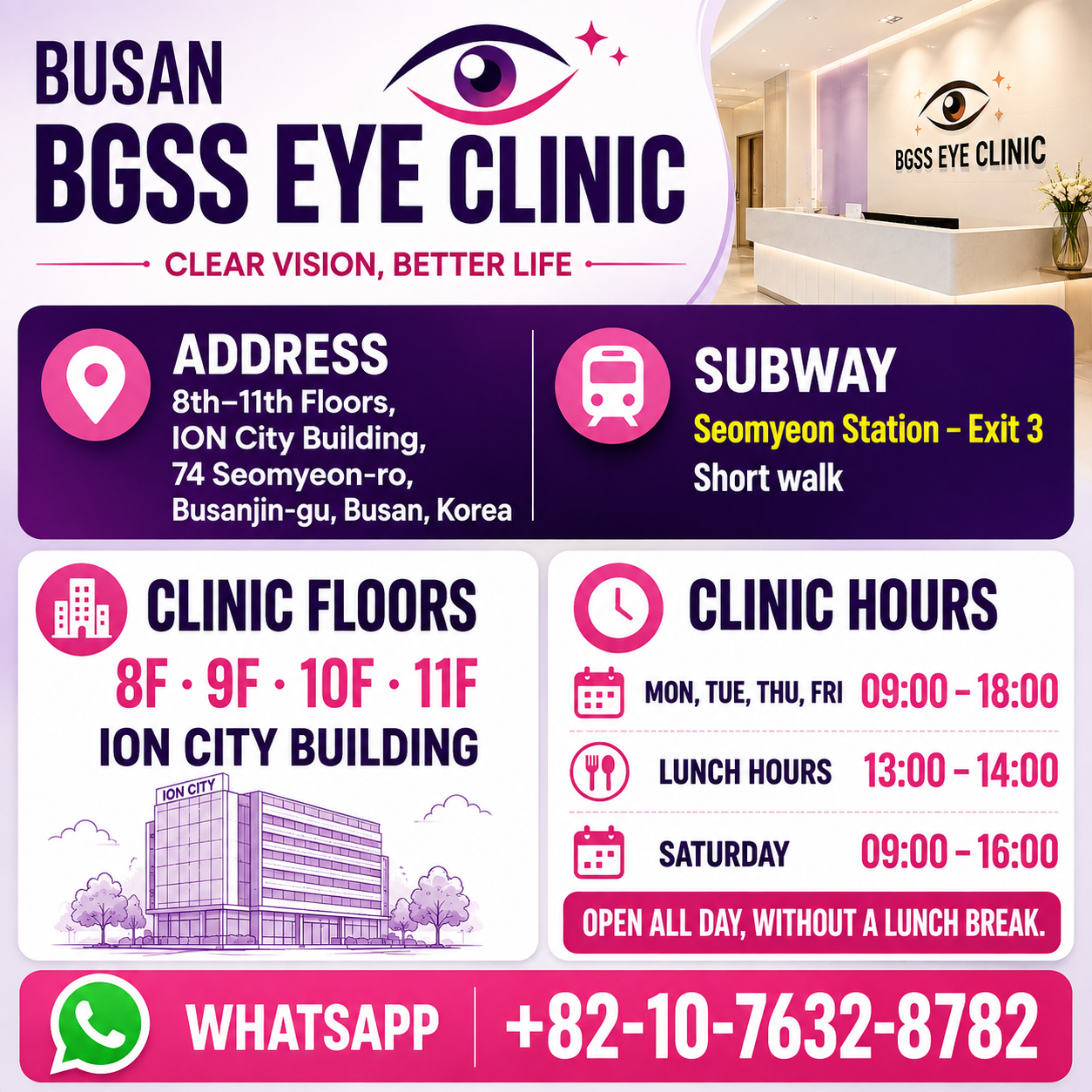
SMILE Pro for Surgeons in Busan, Korea
What Should Surgeons Look For?
If you are searching for SMILE Pro in Busan, consider a clinic that provides comprehensive refractive evaluation rather than simply promoting one procedure.
Useful capabilities may include:
- Corneal topography
- Corneal tomography
- Pachymetry
- Dry-eye assessment
- Detailed refraction
- Pupil evaluation
- Retinal assessment when appropriate
- Postoperative monitoring
The surgeon should explain why SMILE Pro is appropriate for your eyes and discuss alternatives when it is not.
What If SMILE Pro Is Not Appropriate?
There Are Other Options
Not qualifying for SMILE Pro does not mean that vision correction is impossible.
Depending on your eyes, alternatives may include:
- Glasses
- Contact lenses
- LASIK
- PRK
- LASEK
- ICL
The safest option is the one that provides an appropriate balance between visual quality and long-term ocular health.
Should Surgeons Choose Surgery Simply to Avoid Glasses?
Convenience Is Not the Only Consideration
Glasses can be inconvenient, but refractive surgery is an elective procedure for many patients.
Before deciding, ask yourself:
- Is my prescription stable?
- Do glasses interfere with my work?
- Do I tolerate contact lenses?
- Do I have dry eye?
- What are my nighttime visual demands?
- Am I comfortable with the potential risks?
- Do I understand that I may need reading correction later?
A surgeon should choose surgery only after understanding both the benefits and limitations.
Questions Surgeons Should Ask Before SMILE Pro
About Candidacy
- Am I a suitable candidate for SMILE Pro?
- Is my prescription stable?
- Is my cornea healthy?
- Is my corneal thickness adequate?
- Do I have dry eye?
- Is my retina healthy?
About Visual Quality
- What is my expected uncorrected visual acuity?
- Could I experience glare or halos?
- Could contrast sensitivity change?
- How might surgery affect night vision?
About Work and Recovery
- When can I return to operating?
- When can I use a surgical microscope?
- When can I work long shifts?
- When can I drive?
- How many follow-up examinations will I need?
When Should a Surgeon Avoid Rushing Into SMILE Pro?
Unstable Prescription
If the prescription is still changing, waiting may be more appropriate.
Significant Dry Eye
Existing ocular-surface disease may need treatment before surgery.
Abnormal Corneal Shape
Some corneal abnormalities can increase the risks of corneal refractive procedures.
Early Cataract or Lens Changes
For older surgeons, lens changes may influence whether a corneal procedure is the most appropriate long-term solution.
Unrealistic Expectations
Refractive surgery can reduce dependence on glasses, but it cannot guarantee perfect vision under every condition.
A surgeon should understand the realistic outcome before proceeding.
Conclusion
Surgeons who wear glasses may consider SMILE Pro in Korea, but the decision should be based on eye health and visual demands—not simply on the desire to operate without glasses.
SMILE Pro can be an attractive option for appropriately selected patients because it corrects refractive error through a small corneal incision rather than a conventional LASIK flap.
For surgeons, however, visual quality matters enormously. Night vision, contrast sensitivity, dry eye, depth perception, intermediate vision, and postoperative stability may all be relevant to professional work.
A comprehensive preoperative examination should evaluate the cornea, prescription, ocular surface, pupils, eye health, and other factors before treatment is recommended.
Surgeons should also consider their age and long-term visual needs. SMILE Pro corrects refractive error but does not prevent presbyopia or cataract development.
For international surgeons traveling to Korea, it is useful to bring previous prescriptions and eye records, confirm English communication if needed, and plan enough time for postoperative follow-up.
Ultimately, SMILE Pro should be considered as one possible vision-correction option—not as an automatic solution for surgeons who wear glasses. The right decision depends on your individual anatomy, visual requirements, expectations, and the advice of a qualified refractive surgeon.
FAQs About SMILE Pro for Surgeons in Korea
1. Can surgeons get SMILE Pro in Korea?
Potentially, yes. Surgeons can undergo SMILE Pro if they meet the medical criteria for the procedure. Their occupation alone does not determine candidacy.
2. Is SMILE Pro a good option for surgeons who wear glasses?
It can be appropriate for selected surgeons who want to reduce dependence on glasses or contact lenses. However, visual quality, dry eye, corneal anatomy, and occupational demands should be carefully evaluated.
3. Is SMILE Pro better than LASIK for surgeons?
Neither procedure is universally better. The choice depends on corneal anatomy, prescription, ocular-surface health, visual requirements, and the surgeon's assessment.
4. Can SMILE Pro affect a surgeon's night vision?
Some patients may experience glare, halos, starbursts, or other visual symptoms after refractive surgery. These may improve during recovery but can persist in some cases.
5. Can surgeons develop dry eye after SMILE Pro?
Yes. Dry-eye symptoms can occur after refractive surgery. Surgeons with pre-existing dry eye should have their ocular surface carefully evaluated before treatment.
6. How soon can a surgeon return to operating after SMILE Pro?
There is no universal timeframe. Return to surgery should depend on visual recovery, eye healing, postoperative findings, and the treating ophthalmologist's advice.
7. Can older surgeons have SMILE Pro?
Age alone does not determine candidacy, but older patients should be evaluated for presbyopia, cataracts, and other lens-related changes that may influence the choice of vision correction.
8. What if a surgeon is not suitable for SMILE Pro?
Alternatives may include glasses, contact lenses, LASIK, PRK, LASEK, or ICL, depending on the individual's eye anatomy and prescription.
9. Can international surgeons get SMILE Pro in Korea?
International patients can seek refractive-surgery consultations in Korea. They should bring previous eye records, confirm language support, and plan sufficient time for postoperative follow-up.
10. Where can surgeons get SMILE Pro in Busan, Korea?
Surgeons can seek SMILE Pro consultations at ophthalmology clinics in Busan that provide comprehensive refractive evaluations. The clinic should assess candidacy and explain suitable alternatives rather than recommending surgery based solely on occupation.