Frequent Eye Fatigue: Causes & Treatment Options in Korea
Introduction
Frequent eye fatigue is increasingly common among people who spend long hours reading, working on computers, using smartphones, or performing other close-up tasks. The eyes may feel tired, heavy, dry, sore, or difficult to keep focused, particularly toward the end of the day.
For expats, international patients, office workers, students, and travelers in Korea, frequent eye fatigue can interfere with work, study, driving, and everyday activities. While occasional tired eyes are usually not a serious concern, persistent or worsening eye fatigue may sometimes indicate an underlying vision problem or eye condition.
Common contributors include digital eye strain, uncorrected refractive errors, dry eye, poor lighting, prolonged near work, inadequate breaks, and contact-lens use. In some cases, frequent fatigue may be related to binocular vision or focusing problems.
An eye examination in Korea can help determine whether your symptoms are primarily related to lifestyle and screen use or whether another condition needs attention.
What Is Eye Fatigue?
Understanding Visual Fatigue
Eye fatigue, sometimes called asthenopia, describes discomfort or tiredness associated with prolonged visual tasks.
Symptoms can include:
- Tired or heavy eyes
- Aching around the eyes
- Burning or dryness
- Blurred vision
- Difficulty focusing
- Headaches
- Increased sensitivity to light
- Watery eyes
- Feeling that your eyes need to rest
- Difficulty maintaining concentration
Eye fatigue may occur occasionally or become a recurring problem.
Why Are My Eyes Always Tired?
Frequent Eye Fatigue Has Several Possible Causes
Persistent eye fatigue may be associated with:
- Long periods of screen use
- Uncorrected myopia or astigmatism
- Incorrect glasses prescription
- Dry eye
- Poor lighting
- Prolonged reading
- Contact-lens wear
- Poor viewing distance
- Focusing or eye-coordination problems
- Insufficient visual breaks
Identifying the underlying contributor is important because simply reducing screen time may not resolve the problem if an uncorrected vision issue is involved.
Digital Eye Strain
A Common Cause in Modern Workplaces
Digital eye strain can develop when the eyes remain focused on a screen for extended periods.
Computer and smartphone use can contribute to:
- Reduced blinking
- Tear-film instability
- Prolonged near focusing
- Eye muscle fatigue
- Visual discomfort
Symptoms often become more noticeable after several hours of continuous screen use.
Screen Time and Eye Fatigue in Korea
Work and Study Habits Can Affect Your Eyes
Many people in Korea rely heavily on computers, smartphones, tablets, and other digital devices for work, education, communication, and entertainment.
Long periods of uninterrupted screen use can make eye fatigue more noticeable.
Rather than focusing only on total screen time, it is also useful to consider how you use your devices—viewing distance, lighting, font size, posture, blinking frequency, and breaks can all influence visual comfort.
Can Dry Eye Cause Eye Fatigue?
An Unstable Tear Film Can Make Vision Feel Effortful
Dry eye is a common contributor to visual fatigue.
When the tear film becomes unstable, the eye surface may not remain optically smooth. This can cause fluctuating vision and make the eyes feel tired after visual tasks.
Possible symptoms include:
- Dryness
- Burning
- Grittiness
- Fluctuating vision
- Excessive tearing
- Light sensitivity
- Eye fatigue
People who spend many hours on screens may be particularly susceptible to this combination.
Uncorrected Vision Problems
Your Eyes May Be Working Harder Than Necessary
An outdated or incorrect prescription can contribute to eye fatigue.
Possible contributors include:
- Myopia
- Hyperopia
- Astigmatism
- Presbyopia
- An outdated glasses prescription
If your eyes frequently feel tired despite taking breaks, an updated vision assessment may be worthwhile.
Astigmatism and Eye Fatigue
Blurred or Distorted Images Can Increase Visual Effort
Astigmatism can make images appear blurred or distorted at different distances.
Some people compensate without realizing it, but prolonged effort to maintain clear vision may contribute to headaches or eye fatigue.
A refraction test can determine whether astigmatism or another refractive error is affecting your vision.
Presbyopia and Eye Fatigue After Age 40
Near Vision Naturally Changes With Age
Presbyopia is an age-related reduction in the eye's ability to focus clearly on nearby objects.
People may begin noticing:
- Difficulty reading small text
- Needing to hold reading material farther away
- Eye fatigue during close work
- Headaches after reading
- Difficulty focusing between near and far objects
If you are over 40 and developing frequent eye fatigue, an eye examination can help determine whether presbyopia or another vision issue is contributing.
Contact Lenses and Eye Fatigue
Lens Wear Can Increase Ocular Discomfort
Contact lenses can sometimes contribute to dryness and fatigue, especially during long periods of computer use.
You may notice discomfort toward the end of the day.
Factors can include:
- Dry eye
- Excessive wearing time
- Poor lens fit
- Inadequate lens care
- Environmental dryness
If contact lenses repeatedly cause discomfort, an eye professional can assess whether the lenses remain appropriate.
Poor Lighting and Eye Strain
Your Visual Environment Matters
Very bright or very dim lighting can make visual tasks less comfortable.
Glare from windows, overhead lights, or screens may also increase discomfort.
Consider adjusting:
- Screen brightness
- Room lighting
- Screen position
- Window glare
- Text size
The goal is comfortable, even illumination rather than simply making the room as bright as possible.
Viewing Distance and Eye Fatigue
Very Close Screens Increase Near-Focusing Demand
Holding a smartphone extremely close to your face requires sustained near focusing.
For prolonged computer work, maintaining a comfortable viewing distance and enlarging text can reduce unnecessary visual effort.
Good ergonomics are particularly important for people who work at a desk for many hours each day.
Eye Fatigue and Headaches
The Two Symptoms Often Occur Together
Visual fatigue can contribute to headaches, especially after prolonged reading or screen use.
However, recurrent headaches should not automatically be blamed on the eyes.
If headaches are severe, new, frequent, or associated with neurological symptoms, medical evaluation may be appropriate.
Can Lack of Sleep Cause Eye Fatigue?
Rest Matters for Visual Comfort
Poor sleep can make the eyes feel tired, dry, or heavy.
Fatigue may also make it harder to maintain concentration during prolonged visual tasks.
Improving sleep and taking regular visual breaks may help, but persistent symptoms should still be evaluated if they continue despite adequate rest.
Eye Fatigue When Reading
Near Work Can Reveal Focusing Problems
If your eyes become tired quickly while reading, possible contributors include:
- Uncorrected refractive error
- Presbyopia
- Dry eye
- Focusing difficulties
- Eye-coordination problems
- Poor reading conditions
A comprehensive eye examination can help identify the cause.
Eye Fatigue While Driving
Night Driving Can Be Particularly Challenging
Eye fatigue may become more noticeable during long drives or when driving at night.
Glare, reduced contrast, dry eyes, and an outdated prescription can all affect visual comfort.
If you experience significant difficulty seeing while driving, arrange a vision assessment and avoid driving when your vision is not clear or comfortable enough for safe driving.
How Is Frequent Eye Fatigue Evaluated in Korea?
A Comprehensive Eye Examination Can Identify Possible Causes
An ophthalmologist or eye-care professional may evaluate:
- Visual acuity
- Refraction
- Eye alignment
- Focusing ability
- Tear-film and ocular-surface health
- Cornea
- Lens
- Eye pressure
- Retina
The exact tests depend on your symptoms, age, medical history, and examination findings.
Eye Tests That May Be Recommended
Testing Is Individualized
Depending on the situation, your eye-care provider may recommend:
- Visual acuity testing
- Refraction
- Slit-lamp examination
- Dry-eye evaluation
- Eye pressure measurement
- Binocular vision assessment
- Dilated retinal examination
- OCT when clinically indicated
Routine eye fatigue does not automatically require advanced imaging.
Treatment Options for Frequent Eye Fatigue
Treatment Depends on the Cause
There is no single treatment for eye fatigue.
Possible approaches include:
- Updating glasses
- Correcting refractive errors
- Managing dry eye
- Adjusting screen habits
- Taking regular visual breaks
- Improving workspace lighting
- Changing screen position
- Adjusting font size
- Modifying contact-lens use
- Treating an underlying eye condition
A professional assessment can help determine which approach is appropriate.
The 20-20-20 Rule
A Simple Strategy for Screen Users
A commonly recommended approach for digital eye strain is the 20-20-20 rule:
Every 20 minutes, look at something about 20 feet away for approximately 20 seconds.
The goal is to interrupt prolonged near focusing and encourage visual breaks.
It is a practical habit, although it does not replace an eye examination when symptoms are persistent.
Blinking and Eye Comfort
Remember to Blink During Screen Work
People tend to blink less frequently when concentrating on screens.
Consciously blinking more often can help maintain the tear film and reduce dryness.
If dryness remains significant, an eye professional can assess whether additional dry-eye treatment is appropriate.
Artificial Tears for Eye Fatigue
Useful When Dryness Is a Contributor
Lubricating eye drops may help some people whose eye fatigue is associated with dry eye.
The most suitable product depends on the individual's symptoms and contact-lens use.
If you need eye drops frequently or symptoms persist despite using them, consider an eye examination rather than continuously treating the symptom yourself.
Workspace Adjustments
Small Changes Can Improve Comfort
For computer-based work:
- Keep the monitor at a comfortable distance
- Position the screen to reduce glare
- Adjust text size
- Maintain comfortable lighting
- Take regular visual breaks
- Avoid working continuously without blinking
- Keep frequently used materials at a comfortable viewing distance
These changes can reduce unnecessary visual stress.
Eye Fatigue Treatment for Office Workers in Korea
Prevention Is Especially Important During Long Workdays
Office workers may spend much of the day switching between monitors, smartphones, documents, and meetings.
A practical approach is to combine:
- Regular eye examinations
- Appropriate prescription correction
- Screen breaks
- Comfortable workstation setup
- Dry-eye management
- Adequate sleep
If symptoms remain frequent despite these measures, a comprehensive eye examination can help identify another cause.
When Should You See an Eye Doctor in Korea?
Persistent Symptoms Deserve Evaluation
Arrange an eye examination if:
- Eye fatigue occurs almost every day
- Symptoms interfere with work or study
- Vision becomes blurry
- Headaches occur frequently after visual tasks
- You have difficulty focusing
- Your glasses no longer feel effective
- Contact lenses become uncomfortable
- Symptoms continue despite taking breaks
A routine examination can help identify treatable causes.
When Eye Fatigue May Be an Emergency
Certain Symptoms Are Not Typical of Simple Eye Strain
Seek urgent medical attention if eye fatigue is accompanied by:
- Sudden vision loss
- Significant new blurred vision
- Severe eye pain
- New double vision
- A curtain or shadow across vision
- Sudden flashes or many new floaters
- Severe headache with neurological symptoms
- Weakness or numbness
- Facial drooping
- Difficulty speaking
These symptoms require more urgent evaluation than ordinary screen-related fatigue.
Eye Care for Expats and International Patients in Korea
What to Bring to Your Appointment
If you are visiting an eye clinic in Korea, consider bringing:
- Current glasses
- Contact lenses and lens information
- Previous eye examination records
- Medication information
- Details about previous eye surgery
- A description of your symptoms
- Information about how much time you spend on screens
If English-language communication is important, check whether the clinic provides English consultation before booking.
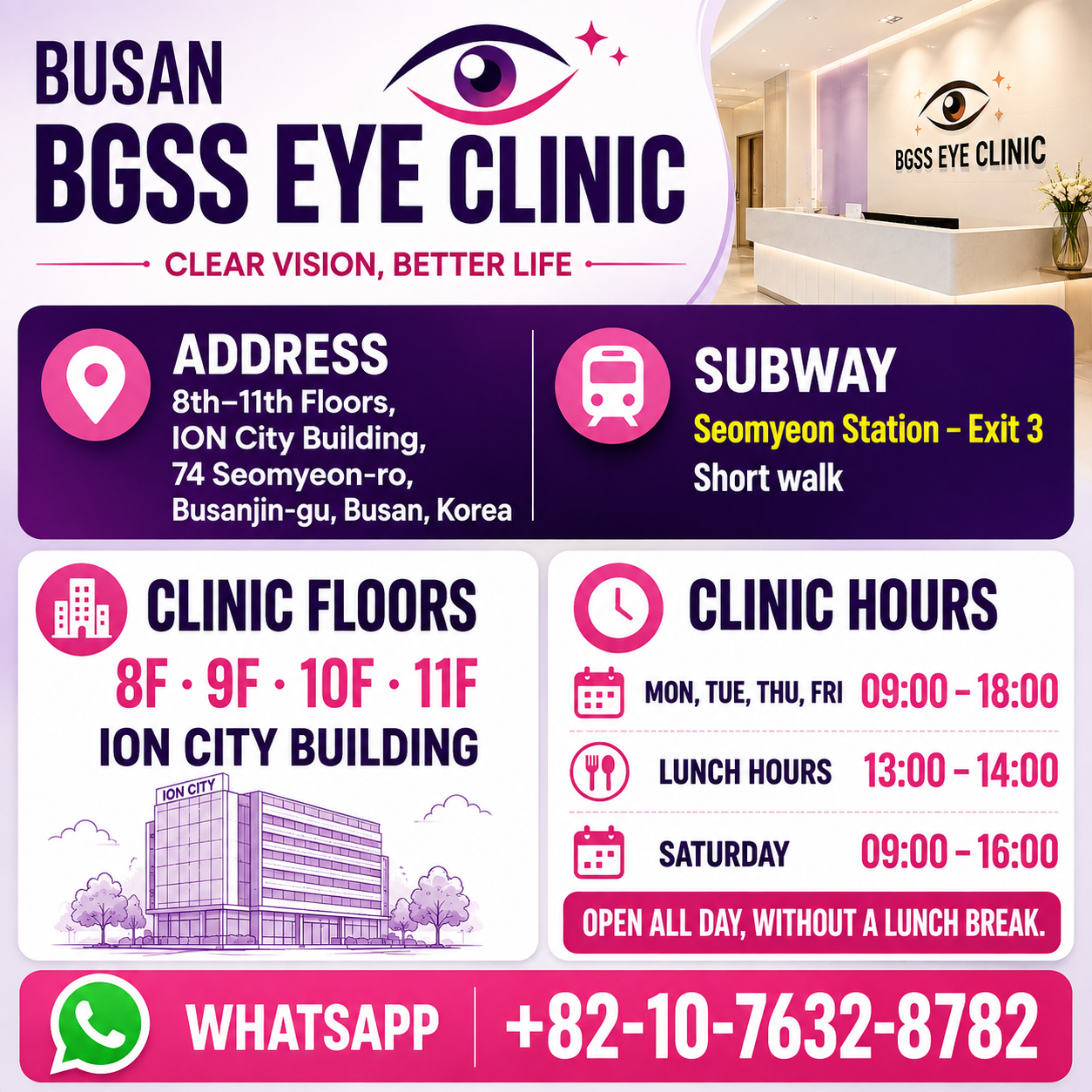
Eye Fatigue Care in Busan
When Local Eye Care May Be Helpful
People living in or visiting Busan can seek professional eye examinations for persistent eye fatigue, dry eye, refractive errors, contact-lens problems, and other vision concerns.
For routine symptoms, an ophthalmology clinic can assess the possible causes.
If fatigue is accompanied by sudden vision changes, severe pain, or neurological symptoms, seek urgent medical care rather than waiting for a routine appointment.
What Not to Do When Your Eyes Are Frequently Tired
Avoid Relying Only on Self-Treatment
Do not assume that persistent eye fatigue is always caused by screens.
Avoid:
- Ignoring repeated vision changes
- Continuing to use an outdated prescription
- Wearing uncomfortable contact lenses for prolonged periods
- Using someone else's prescription eye drops
- Driving when your vision is impaired
- Delaying assessment of severe or sudden symptoms
Lifestyle changes can help, but they should not replace appropriate diagnosis.
Frequent Eye Fatigue: Quick Checklist
Daily Habits That May Help
☐ Take regular screen breaks
☐ Follow the 20-20-20 approach
☐ Blink frequently
☐ Keep screens at a comfortable distance
☐ Adjust text size
☐ Reduce distracting glare
☐ Maintain comfortable lighting
☐ Use appropriate glasses or contact lenses
☐ Get adequate rest
☐ Arrange regular eye examinations
Arrange an Eye Examination If
☐ Eye fatigue occurs frequently
☐ Vision becomes blurry
☐ Headaches repeatedly follow visual tasks
☐ You have difficulty focusing
☐ Contact lenses become uncomfortable
☐ Symptoms persist despite lifestyle changes
☐ Your prescription may be outdated
Questions to Ask an Eye Doctor in Korea
During Your Consultation
Consider asking:
- Could my glasses prescription be causing eye fatigue?
- Do I have dry eye?
- Could my screen habits be contributing?
- Should my contact lenses be changed?
- Do I have astigmatism or presbyopia?
- Is my eye alignment normal?
- Do I need an eye pressure check?
- Do I need a retinal examination?
- Would OCT be useful in my situation?
- How often should I have a comprehensive eye exam?
Conclusion
Frequent eye fatigue is common, particularly among people who spend long hours working on computers, using smartphones, reading, or performing other close-up tasks. Digital eye strain, dry eye, uncorrected vision problems, contact-lens use, poor lighting, and prolonged near work can all contribute.
Simple changes such as regular visual breaks, comfortable screen positioning, appropriate lighting, frequent blinking, and an up-to-date prescription may improve symptoms.
However, persistent or worsening eye fatigue should not automatically be blamed on screen time. An eye examination can identify refractive errors, dry eye, focusing problems, eye-coordination issues, or other conditions that may require treatment.
For expats, international patients, and residents in Korea, professional eye care can help determine the cause and create an appropriate treatment plan.
If eye fatigue is accompanied by sudden vision loss, severe eye pain, new double vision, flashes, a curtain-like shadow, or neurological symptoms, seek urgent medical attention rather than treating it as ordinary eye strain.
FAQs About Frequent Eye Fatigue in Korea
1. Why are my eyes tired all the time?
Frequent eye fatigue can be caused by prolonged screen use, dry eye, an outdated prescription, astigmatism, presbyopia, focusing problems, contact-lens use, or other eye conditions.
2. Can too much screen time cause eye fatigue?
Yes. Extended screen use can contribute to digital eye strain, reduced blinking, dryness, and prolonged near focusing. Taking regular breaks and improving your workstation setup may help.
3. Can dry eye make my eyes feel tired?
Yes. Dryness and tear-film instability can cause burning, fluctuating vision, discomfort, and tired-feeling eyes.
4. Does eye fatigue mean I need glasses?
Not necessarily. However, uncorrected or outdated refractive errors can contribute to visual fatigue. A refraction test can determine whether prescription correction is appropriate.
5. Is eye fatigue common after age 40?
It can become more noticeable because presbyopia gradually affects near focusing ability. An eye examination can determine whether presbyopia is contributing.
6. How can I reduce eye fatigue from computer work?
Take regular visual breaks, follow the 20-20-20 approach, blink frequently, maintain a comfortable viewing distance, adjust screen brightness and text size, and reduce glare.
7. When should I see an eye doctor for tired eyes?
Consider an eye examination when symptoms occur frequently, interfere with daily activities, persist despite lifestyle changes, or occur with blurred vision, headaches, pain, or other visual changes.
8. Can contact lenses cause eye fatigue?
Yes. Contact lenses can contribute to dryness and discomfort, particularly during prolonged screen use or long wearing periods. Persistent discomfort should be evaluated.
9. What tests might an eye doctor perform in Korea?
Depending on your symptoms, testing may include visual acuity, refraction, slit-lamp examination, dry-eye evaluation, eye pressure measurement, eye alignment assessment, retinal examination, or OCT when clinically indicated.
10. Can expats get eye-fatigue treatment in Korea?
Yes. Expats and international patients can seek eye examinations and treatment in Korea. If English-language communication is important, confirm language availability when choosing a clinic.