Glaucoma Screening After Age 40 in Korea: What to Know
Introduction
Glaucoma is one of the most important eye conditions to monitor as you get older because it can gradually damage the optic nerve and cause permanent vision loss. One of the challenges is that early glaucoma often develops without noticeable symptoms, so a person may feel that their vision is completely normal while changes are already occurring.
For people over 40, regular eye examinations can provide an opportunity to identify glaucoma risk factors and detect suspicious changes before significant vision loss develops. The American Academy of Ophthalmology recommends a baseline comprehensive eye examination around age 40, with follow-up determined by individual risk factors.
For international patients, expats, and visitors researching glaucoma screening in Korea, a comprehensive ophthalmic examination can include eye-pressure measurement, optic-nerve evaluation, visual-field testing, and imaging such as OCT when appropriate.
South Korea also has a substantial aging population, making age-related eye health an increasingly important part of preventive care. Earlier Korean population research found glaucoma prevalence was higher among adults over 40 than in the overall adult population.
The important point is that age 40 is not a diagnosis threshold. It is a useful time to establish a baseline and discuss how often your eyes should be monitored based on your personal risk profile.
What Is Glaucoma?
A Disease of the Optic Nerve
Glaucoma refers to a group of eye diseases that can damage the optic nerve, which carries visual information from the eye to the brain.
The damage is often associated with elevated intraocular pressure (IOP), but glaucoma can also occur when eye pressure is within the statistically normal range.
This means that checking eye pressure alone is not enough to rule out glaucoma.
Why Glaucoma Can Be Difficult to Detect Early
Many forms of glaucoma develop slowly.
Peripheral vision may gradually become affected before a person notices an obvious problem. Because everyday activities such as reading or looking straight ahead may remain relatively normal in the early stages, patients can underestimate the importance of routine examinations.
Once glaucoma has caused permanent optic-nerve damage, that damage generally cannot simply be reversed.
This is why early detection and appropriate monitoring matter.
Why Glaucoma Screening Becomes Important After 40
Age Is an Important Risk Factor
The risk of glaucoma generally increases with age.
For this reason, people entering their 40s may benefit from establishing a baseline eye examination, particularly if they have additional risk factors.
A baseline examination gives the ophthalmologist information that can later be compared with future examinations.
A Baseline Helps Detect Change
Glaucoma monitoring is not always about one abnormal test.
Sometimes the most useful information comes from comparing examinations over time.
For example, an ophthalmologist may compare:
- Eye pressure measurements
- Optic-nerve appearance
- OCT images
- Retinal nerve fiber layer measurements
- Visual-field results
- Gonioscopy findings
Changes over time may provide stronger evidence than a single isolated measurement.
Who Should Consider Glaucoma Screening After 40?
Adults With No Known Eye Disease
Even people without symptoms can discuss a baseline comprehensive eye examination around age 40.
This does not mean everyone will require frequent glaucoma testing.
The appropriate follow-up schedule depends on examination findings and risk factors.
People With a Family History of Glaucoma
Having a close relative with glaucoma can increase your risk.
If glaucoma runs in your family, tell your ophthalmologist even if your current vision seems normal.
A family history may justify closer monitoring.
People With High Myopia
High myopia is associated with increased glaucoma risk and can also make interpretation of some optic-nerve findings more complicated.
Patients with significant myopia may therefore benefit from careful optic-nerve assessment and appropriate imaging.
People With Elevated Eye Pressure
High intraocular pressure does not automatically mean that you have glaucoma.
Some people have ocular hypertension without established optic-nerve damage.
However, elevated IOP can increase the risk of developing glaucoma and may require monitoring or treatment depending on the overall risk profile.
People Who Have Used Steroids
Corticosteroids can raise intraocular pressure in susceptible individuals.
Steroids may be prescribed in different forms, including eye drops, inhaled medications, creams, injections, or tablets.
Tell your eye doctor about current and previous steroid use so that your risk can be assessed appropriately.
What Happens During a Glaucoma Screening in Korea?
Medical and Eye History
A glaucoma evaluation generally begins with questions about:
- Your age
- Family history
- Previous eye conditions
- Previous eye surgery
- Current medications
- Steroid use
- Myopia
- Previous eye-pressure measurements
- Other medical conditions
This information helps determine whether you need routine monitoring or a more detailed glaucoma assessment.
Visual Acuity Testing
Your visual acuity may be measured using an eye chart.
This is an important part of a comprehensive eye examination, although normal visual acuity does not rule out early glaucoma.
A patient can have good central vision while early peripheral visual-field changes are developing.
Intraocular Pressure Measurement
Eye pressure, or IOP, is commonly measured during glaucoma assessment.
Applanation tonometry is considered the reference method for measuring IOP.
However, IOP should be interpreted together with the optic nerve, cornea, drainage angle, and visual-field findings.
Optic-Nerve Examination
The optic nerve is carefully examined for signs that may be consistent with glaucoma.
The appearance of the optic nerve can vary naturally between individuals, so an experienced ophthalmologist may consider the overall clinical picture rather than relying on one visual characteristic.
Serial documentation can also help identify changes over time.
What Is an OCT Glaucoma Scan?
Imaging the Optic Nerve and Retinal Nerve Fiber Layer
Optical coherence tomography, commonly called OCT, uses light-based imaging to produce detailed cross-sectional images of ocular structures.
In glaucoma assessment, OCT can help evaluate structures such as the retinal nerve fiber layer and optic nerve.
This can provide objective information that can be compared during future examinations.
OCT Does Not Diagnose Glaucoma by Itself
A common misconception is that an OCT scan alone can confirm or exclude glaucoma.
In reality, OCT findings should be interpreted alongside the clinical examination, eye pressure, visual field, and other relevant information.
This is particularly important in people with high myopia or unusual optic-nerve anatomy.
What Is a Visual Field Test?
Checking Peripheral Vision
A visual-field test measures how well you can detect objects or light stimuli in different parts of your field of vision.
Because glaucoma often affects peripheral vision first, visual-field testing can provide important functional information.
A patient may need to respond whenever a light stimulus is detected while maintaining focus on a central target.
Why Visual Fields Are Important
OCT primarily provides structural information.
Visual-field testing provides functional information about how your vision is performing.
Using both types of information can give the ophthalmologist a more complete picture of possible glaucoma-related changes.
What Is Gonioscopy?
Examining the Drainage Angle
Gonioscopy allows an ophthalmologist to examine the drainage angle of the eye.
This helps determine whether the angle is open or narrow and can be particularly important when evaluating the possibility of angle-closure glaucoma.
The type of glaucoma matters because different forms require different management approaches.
Can You Have Glaucoma With Normal Eye Pressure?
Normal-Tension Glaucoma Is Possible
Yes.
Although elevated IOP is an important glaucoma risk factor, glaucoma can occur even when measured eye pressure falls within a statistically normal range.
This is one reason why a normal pressure reading should not be treated as a guarantee that glaucoma is absent.
Optic-nerve appearance, visual fields, OCT findings, and changes over time remain important.
Is High Eye Pressure the Same as Glaucoma?
Ocular Hypertension Is Different
Not necessarily.
Some people have elevated eye pressure but no detectable glaucomatous optic-nerve or visual-field damage.
This condition is often referred to as ocular hypertension.
However, ocular hypertension can increase the risk of future glaucoma in some individuals, so appropriate follow-up may be recommended.
The decision to observe or treat depends on the patient's overall risk.
How Often Should You Have Glaucoma Screening After 40?
There Is No Single Schedule for Everyone
The appropriate frequency depends on your examination results and risk factors.
Someone with normal findings and no major risk factors may not need the same monitoring schedule as someone with:
- A strong family history
- High myopia
- Elevated IOP
- Suspicious optic-nerve appearance
- Previous glaucoma-related findings
- Long-term steroid exposure
- Other relevant risk factors
A baseline examination around age 40 can help establish an individualized monitoring plan.
Your Follow-Up Schedule May Change
If an examination shows suspicious findings, your ophthalmologist may recommend more frequent testing.
If repeated examinations remain stable, the interval may be adjusted according to your risk.
The important thing is to follow the schedule recommended for your individual situation.
Can Glaucoma Be Prevented?
Early Detection Is More Realistic Than Guaranteed Prevention
There is no simple lifestyle change that guarantees a person will never develop glaucoma.
However, regular eye examinations can help identify elevated risk and detect disease before substantial vision loss occurs.
If glaucoma is diagnosed, appropriate treatment can help lower the risk of further optic-nerve damage.
The key objective is to protect the vision you still have.
What Are the Treatment Options If Screening Finds Glaucoma?
Prescription Eye Drops
Many glaucoma patients are initially treated with prescription medications designed to lower IOP.
Different medications work through different mechanisms.
The appropriate medication depends on the type of glaucoma, pressure level, other eye conditions, and the patient's medical history.
Laser Treatment
Laser procedures may be appropriate for certain types of glaucoma or particular stages of disease.
The specific procedure depends on the glaucoma mechanism.
Laser treatment should therefore be considered only after a detailed evaluation.
Glaucoma Surgery
Patients with glaucoma that is inadequately controlled with medication or laser treatment may require surgery.
Modern glaucoma surgery includes several approaches, and the appropriate option depends on disease severity, anatomy, previous treatment, and the patient's individual circumstances.
Glaucoma Screening for International Patients in Korea
Bring Previous Eye Records
If you are visiting South Korea for eye care, previous records can be extremely useful.
Consider bringing:
- Previous eye-pressure measurements
- OCT reports
- Visual-field reports
- Previous glaucoma diagnoses
- Medication lists
- Previous eye-surgery records
- Glasses prescriptions
- Contact-lens information
If you have been monitored for glaucoma elsewhere, previous images can sometimes help doctors compare changes over time.
Tell the Doctor About Your Family History
Family history is particularly important when discussing glaucoma.
If a parent, sibling, or another close relative has glaucoma, mention it during your consultation.
Even if your own examination is currently normal, this information may influence future monitoring.
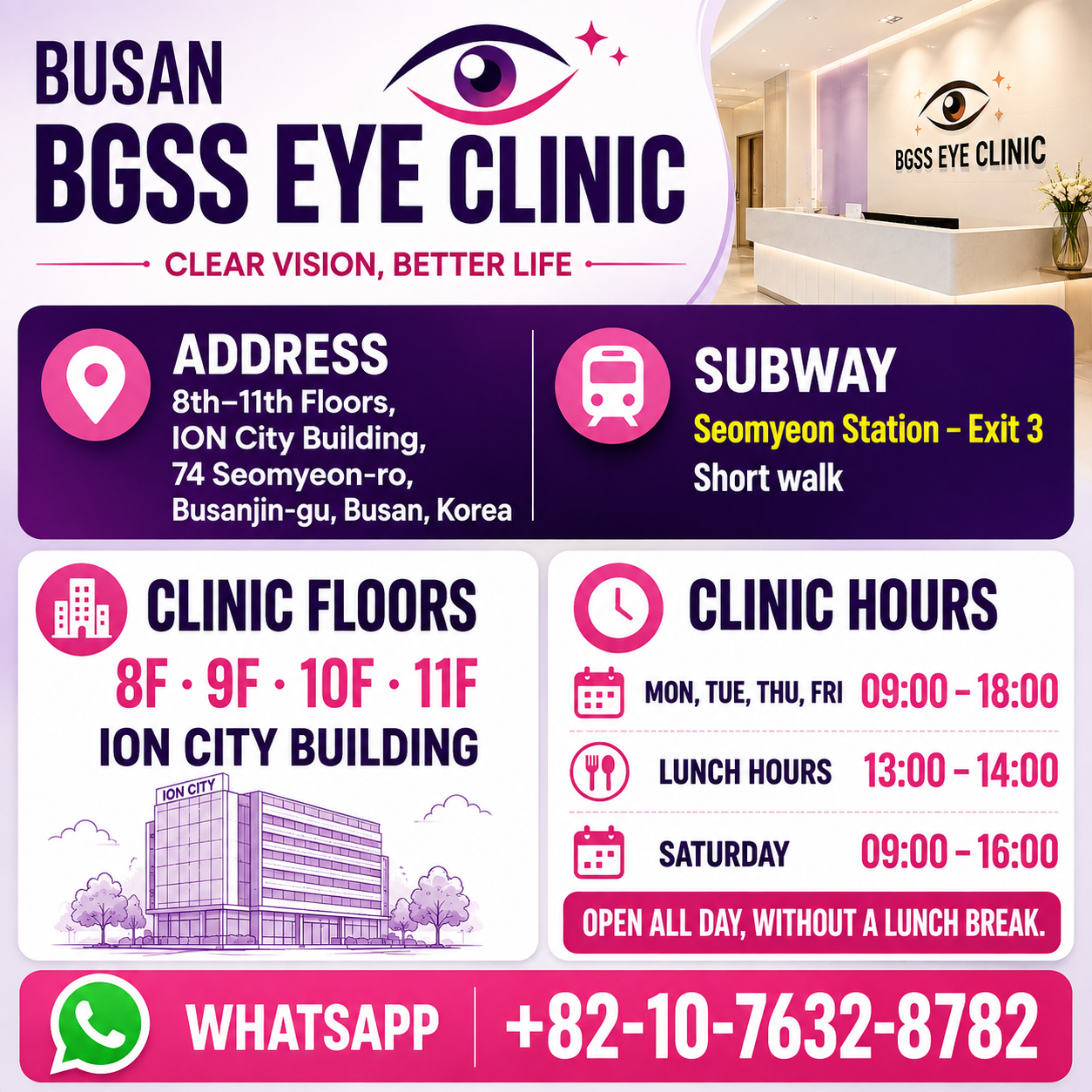
Glaucoma Screening in Busan, Korea
What Patients Can Expect
For patients seeking glaucoma screening in Busan, Korea, a comprehensive eye examination may include eye-pressure measurement, optic-nerve assessment, visual-field testing, and OCT when indicated.
The exact tests depend on your age, symptoms, risk factors, and initial examination findings.
If you are visiting Busan as a medical tourist, allow enough time for any additional testing that may be recommended after the initial assessment.
Why Comprehensive Testing Matters
A single test rarely tells the entire story.
For example:
- Normal IOP does not completely exclude glaucoma.
- An unusual optic nerve does not automatically mean glaucoma.
- An abnormal OCT does not always mean progressive disease.
- A visual-field result can be affected by test reliability.
Combining several pieces of information allows for a more informed assessment.
Questions to Ask During a Glaucoma Screening
Useful Questions for Your Ophthalmologist
Before leaving your appointment, consider asking:
- Is my eye pressure within a healthy range for me?
- Does my optic nerve look normal?
- Do I have any glaucoma risk factors?
- Should I have an OCT scan?
- Do I need a visual-field test?
- Is gonioscopy necessary?
- How often should I return for monitoring?
- Do I have ocular hypertension?
- Does my family history increase my risk?
- Could my previous eye surgery or high myopia affect the examination?
These questions can help you understand your personal risk rather than focusing on a single test result.
Glaucoma Screening and High Myopia
Why High Myopia Deserves Careful Evaluation
People with high myopia may have optic nerves that look different from those of people without significant myopia.
This can make glaucoma assessment more challenging.
Because myopia itself is a glaucoma risk factor, patients with high myopia may benefit from careful structural and functional evaluation.
OCT and visual-field testing may be particularly useful when interpreted alongside a detailed clinical examination.
Glaucoma Screening and Diabetes
Why Medical History Matters
Diabetes is associated with several eye conditions and should be included in a comprehensive eye-health assessment.
Patients with diabetes may require additional retinal evaluation beyond glaucoma screening.
Tell your ophthalmologist about diabetes and other medical conditions so the examination can be tailored appropriately.
Glaucoma Screening After 50 and 60
Risk Generally Increases With Age
Although age 40 is a useful point for establishing a baseline, glaucoma monitoring does not stop there.
As you move through your 50s, 60s, and beyond, the importance of regular eye examinations generally increases because age is an important glaucoma risk factor.
Your examination schedule should be adjusted according to your personal risk and previous findings.
What Symptoms Should Prompt an Eye Examination?
Do Not Wait for Symptoms Alone
Early glaucoma may have no obvious symptoms.
However, you should arrange an eye examination if you notice:
- Gradual changes in peripheral vision
- Unexplained visual difficulties
- Recurrent eye discomfort
- Significant changes in vision
- A family history of glaucoma
- Previously elevated eye pressure
- New concerns after starting steroid medication
Sudden severe eye pain, blurred vision, halos around lights, nausea, or vomiting can occur with acute angle-closure glaucoma and require urgent medical attention.
How to Prepare for a Glaucoma Examination in Korea
Before Your Appointment
You can make your consultation more useful by preparing:
- A list of current medications
- Previous eye-test reports
- Previous OCT images
- Visual-field results
- Details of previous eye surgery
- Family history of glaucoma
- Information about contact-lens use
- Your current glasses prescription
If you are traveling internationally, digital copies of previous medical records can be particularly convenient.
Why Regular Monitoring Matters
Glaucoma Is Often a Long-Term Condition
If glaucoma or a glaucoma-suspect status is identified, follow-up is usually more important than any single examination.
Doctors may monitor whether:
- Eye pressure remains controlled
- The optic nerve is stable
- OCT measurements are changing
- Visual-field defects are progressing
- Treatment remains effective
The purpose of monitoring is to identify meaningful changes early enough to respond appropriately.
Conclusion
Glaucoma screening after age 40 in Korea can be an important part of long-term eye health, particularly for people with additional risk factors.
A baseline comprehensive eye examination around age 40 can establish information that may be compared with future examinations.
Glaucoma cannot be ruled out simply because your vision feels normal or your eye pressure is not elevated. A complete evaluation may include IOP measurement, optic-nerve examination, gonioscopy, visual-field testing, OCT, and other assessments depending on your risk profile.
For international patients and expats in South Korea, bringing previous eye records and explaining family history, high myopia, steroid use, or previous eye conditions can help make the evaluation more informative.
The most important point is simple: do not wait for noticeable vision loss before thinking about glaucoma. Early glaucoma can be difficult to detect without an examination, while established optic-nerve damage is generally permanent.
If you are over 40 and have never had a comprehensive eye examination, discussing a baseline assessment with an ophthalmologist can be a sensible step toward protecting your long-term vision.
FAQs About Glaucoma Screening After Age 40 in Korea
1. Should I have a glaucoma screening after age 40?
A baseline comprehensive eye examination around age 40 is recommended by the American Academy of Ophthalmology, with follow-up based on individual risk factors and examination findings.
2. Can I have glaucoma without symptoms?
Yes. Early glaucoma is often asymptomatic, particularly when it develops gradually. This is why examination and monitoring are important.
3. Is high eye pressure always glaucoma?
No. Some people have elevated IOP without detectable glaucomatous optic-nerve or visual-field damage. This is often called ocular hypertension.
4. Can you have glaucoma with normal eye pressure?
Yes. Normal-tension glaucoma can occur without significantly elevated measured IOP. This is why glaucoma evaluation involves more than an eye-pressure test.
5. Does OCT detect glaucoma?
OCT can provide valuable structural information about the optic nerve and retinal nerve fiber layer. However, it should be interpreted together with clinical examination, visual fields, eye pressure, and other findings.
6. Do I need a visual-field test for glaucoma screening?
It depends on your age, risk factors, symptoms, and examination findings. If glaucoma is suspected, visual-field testing can provide important information about functional vision.
7. Does high myopia increase glaucoma risk?
Yes. Myopia is recognized as a glaucoma risk factor. High myopia can also make optic-nerve assessment more challenging, so careful evaluation may be important.
8. How often should I have glaucoma screening after 40?
There is no universal interval for everyone. Your ophthalmologist may recommend follow-up based on your eye pressure, optic-nerve appearance, family history, myopia, age, and other risk factors.
9. Can glaucoma be cured?
Glaucoma-related optic-nerve damage generally cannot be reversed. Treatment is focused on reducing the risk of further damage and preserving remaining vision.
10. Can international patients get glaucoma screening in Korea?
Yes. International patients can seek ophthalmic evaluation in South Korea. Bringing previous OCT scans, visual-field results, eye-pressure records, medication information, and surgical history can help with assessment and comparison over time.