Eye Surgery for Digital Nomads Living in Korea: Complete Guide
Introduction
For digital nomads living in South Korea, clear vision can be especially important. Working remotely often means spending long hours in front of laptops, phones, tablets, and other digital screens.
If you rely on glasses or contact lenses, vision correction surgery may seem attractive—especially if you plan to stay in Korea for several months.
South Korea offers a wide range of refractive eye procedures, including LASIK, SMILE Pro, PRK, LASEK, and ICL. However, choosing surgery as a digital nomad requires more planning than simply selecting a clinic and booking an appointment.
Your work schedule, screen time, accommodation, follow-up appointments, travel plans, health insurance, language support, and length of stay can all affect the experience.
This guide explains what digital nomads should know before considering eye surgery in Korea and how to plan recovery while continuing remote work.
Why Might Digital Nomads Consider Eye Surgery in Korea?
Reducing Dependence on Glasses or Contacts
One potential benefit of refractive surgery is reduced dependence on corrective lenses.
For someone working remotely and moving between cafes, coworking spaces, apartments, and travel destinations, this can be convenient.
You may spend less time dealing with:
- Glasses
- Contact lenses
- Lens solution
- Replacement lenses
- Fogging glasses
- Carrying backup eyewear
However, surgery should be considered for medical and visual reasons—not simply convenience.
Is South Korea a Good Place for Vision Correction?
Access to Multiple Procedures
Patients in Korea may have access to procedures such as:
- LASIK
- SMILE Pro
- PRK
- LASEK
- ICL
- Other refractive procedures
The most appropriate option depends on your prescription, corneal anatomy, eye health, age, lifestyle, and individual risk factors.
A consultation should determine whether surgery is appropriate before you decide which procedure you want.
What Eye Surgery Options Are Available to Digital Nomads?
LASIK
LASIK reshapes the cornea to correct refractive errors.
It is well established and can provide relatively rapid visual recovery for appropriate candidates.
However, LASIK involves creating a corneal flap, which is an important consideration for people involved in activities with a risk of eye trauma.
SMILE Pro
SMILE Pro uses a small corneal incision to remove a refractive lenticule.
It is often considered by patients seeking laser vision correction with a smaller incision than traditional LASIK.
Recovery can be relatively quick, but individual results vary.
PRK
PRK corrects vision by reshaping the cornea after removing the surface epithelial layer.
It can be an option for selected patients who are not ideal LASIK candidates.
The early recovery period is generally longer than with LASIK or SMILE Pro.
LASEK
LASEK is another surface-based laser procedure.
Like PRK, it generally requires more surface healing than LASIK.
Digital nomads considering LASEK should plan for a longer period of reduced visual productivity.
ICL
ICL involves placing an implantable lens inside the eye while preserving the natural crystalline lens.
It may be considered for selected patients with certain prescriptions or corneal characteristics.
Because it is an intraocular procedure, it has different risks and follow-up requirements from laser eye surgery.
Which Procedure Is Best for a Digital Nomad?
There Is No Universal Best Option
A digital nomad may be tempted to choose the procedure with the fastest advertised recovery.
That is not necessarily the safest or most appropriate approach.
Your ophthalmologist should evaluate:
- Prescription
- Corneal thickness
- Corneal shape
- Tear-film health
- Eye pressure
- Anterior chamber anatomy
- Retinal health
- Age
- Existing eye conditions
The best procedure is the one that is medically appropriate for your eyes and lifestyle.
Why Screen Time Matters After Eye Surgery
Digital Work Can Be Visually Demanding
Remote workers may spend several hours each day looking at screens.
After refractive surgery, temporary symptoms such as:
- Dryness
- Fluctuating vision
- Light sensitivity
- Eye fatigue
- Blurry vision
may make prolonged screen use uncomfortable.
This does not necessarily mean that screens have damaged the surgical result.
However, your eyes may need more frequent breaks during the early recovery period.
Can You Work on a Laptop After Eye Surgery?
Plan for Reduced Screen Time Initially
The exact timeline depends on the procedure and your surgeon's instructions.
Some patients can return to light computer work relatively quickly after certain procedures, while others may need more downtime.
If your job requires continuous screen use, plan for the possibility that you will need:
- Shorter work sessions
- More frequent breaks
- Larger text
- Reduced screen brightness
- Lubricating drops if prescribed or recommended
- More rest
Do not schedule an important work deadline immediately after surgery.
The 20-20-20 Rule for Digital Nomads
Reduce Continuous Near-Work
During screen-based work, many eye-care professionals recommend taking regular visual breaks.
A commonly used approach is the 20-20-20 rule:
Every 20 minutes, look at something about 20 feet away for approximately 20 seconds.
This can reduce continuous near-focus demand and encourage breaks from the screen.
It should not be considered a treatment for postoperative complications.
Can Digital Nomads Work From Cafes After Eye Surgery?
Consider Your Environment
Working in cafes can be convenient, but early postoperative recovery may be more comfortable in a controlled environment.
Potential challenges include:
- Air conditioning
- Fans
- Dry indoor air
- Dust
- Bright lighting
- Long screen sessions
- Crowded environments
If your eyes are irritated, working from a quiet accommodation may be preferable during the earliest recovery period.
What About Coworking Spaces in Korea?
Manage Airflow and Screen Time
Coworking spaces can involve prolonged laptop use and strong air conditioning.
If you develop dry-eye symptoms, avoid sitting directly beneath an air-conditioning vent or fan.
Take regular breaks and follow your eye doctor's recommendations for lubricating drops.
Can You Travel Around Korea After Eye Surgery?
Keep Your Early Recovery Simple
Digital nomads may want to combine surgery with travel to Seoul, Busan, Jeju, or other destinations.
However, immediately after surgery, it is better to prioritize recovery and follow-up.
Long-distance travel can make it more difficult to attend postoperative appointments if your surgeon needs to reassess your eyes.
Should You Stay in One City After Surgery?
Staying Near Your Eye Clinic Can Be Practical
For the early recovery period, staying relatively close to your clinic can make follow-up appointments easier.
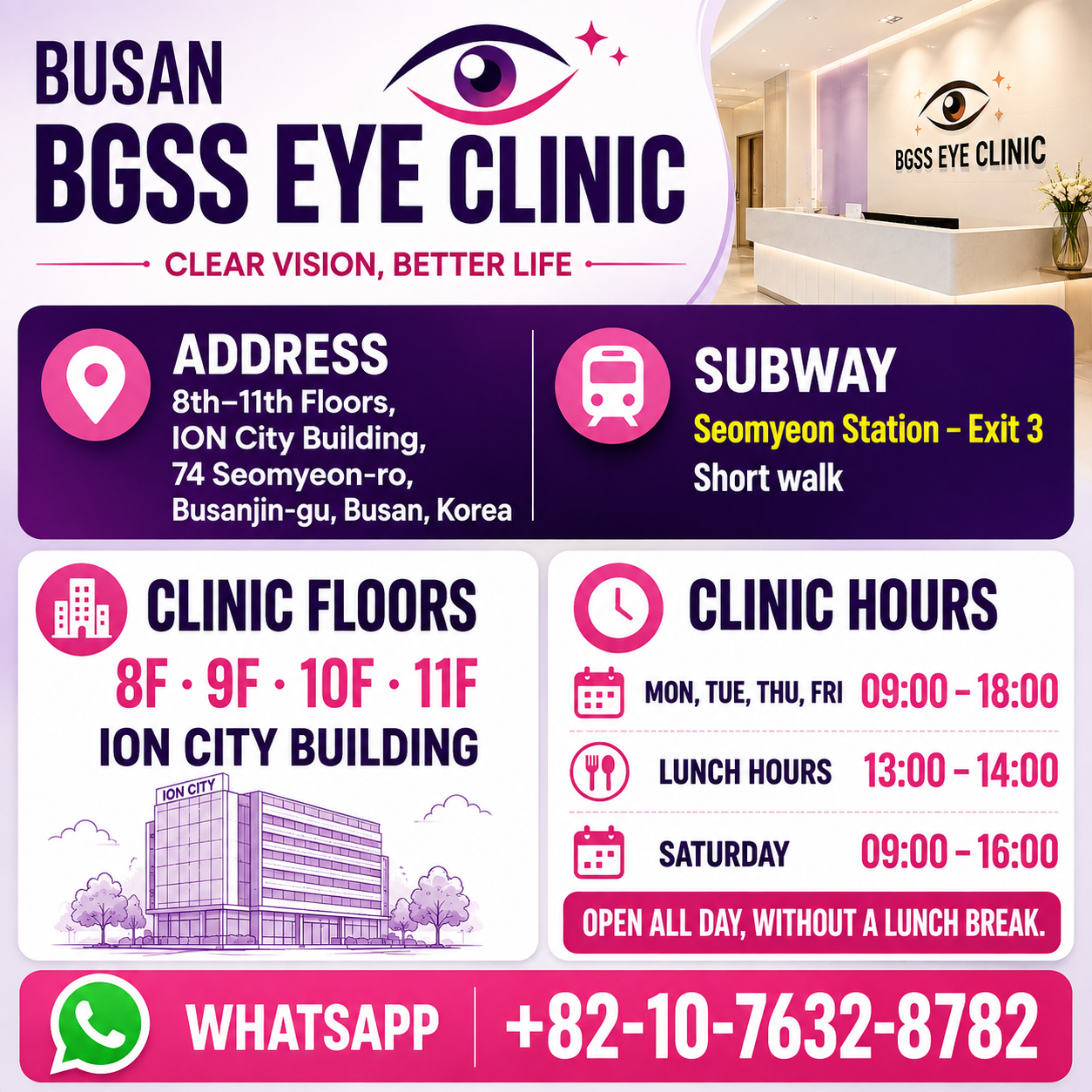
If you have surgery in Busan, consider remaining in the city until your surgeon confirms that you can travel.
This can be especially useful for international patients who do not have an established eye doctor in Korea.
How Long Should Digital Nomads Stay in Korea After Eye Surgery?
Your Procedure Determines the Follow-Up Needs
There is no universal number of days that every patient should remain in Korea.
Your clinic may recommend follow-up at specific intervals depending on the procedure.
Before booking accommodation or onward travel, ask:
- When is my first postoperative check?
- How many follow-ups are needed?
- When can I fly?
- When can I exercise?
- When can I swim?
- What symptoms require urgent care?
Build your travel schedule around those requirements.
What If You Are Working While Recovering?
Tell Your Employer or Clients
If you work remotely for clients in another time zone, schedule some flexibility around your procedure.
Consider avoiding:
- Major presentations
- Important video meetings
- Long coding sessions
- Intensive design work
- Tight project deadlines
during the earliest recovery period.
If your work cannot be interrupted, discuss the expected recovery with your ophthalmologist before booking surgery.
Can Digital Nomads Have Eye Surgery Without Korean Health Insurance?
Ask the Clinic About Self-Pay Treatment
International residents may have different insurance arrangements.
Before treatment, ask the clinic whether the procedure is available on a self-pay basis and what the quoted price includes.
Clarify whether the cost covers:
- Preoperative testing
- Surgery
- Medication
- Postoperative examinations
- Additional tests
- Enhancement procedures, if applicable
Do not assume that every component is included in the advertised price.
How Much Does Eye Surgery Cost in Korea?
Prices Vary by Procedure and Clinic
The cost can depend on:
- Procedure type
- Technology used
- Surgeon
- Clinic
- Diagnostic testing
- Prescription
- Follow-up requirements
- Whether both eyes are treated
- International-patient services
A detailed consultation is the best way to obtain an accurate quotation.
Do not choose a clinic based solely on the lowest price.
How Should Digital Nomads Choose an Eye Clinic in Korea?
Look Beyond Marketing
When comparing clinics, consider:
- Comprehensive preoperative testing
- Surgeon qualifications
- Experience with your procedure
- Equipment
- Postoperative follow-up
- Emergency contact arrangements
- Communication in a language you understand
- Transparent pricing
- Availability of medical records
A good clinic should explain why a particular procedure is appropriate for your eyes.
English-Speaking Eye Clinics in Korea
Communication Matters
If Korean is not your first language, ask whether the clinic provides English-speaking staff or interpreters.
You should be able to understand:
- Your diagnosis
- Surgical options
- Risks
- Medication instructions
- Activity restrictions
- Follow-up schedule
- Emergency symptoms
Do not proceed if you cannot adequately understand the information needed for informed consent.
What Should You Bring to Your Consultation?
Previous Eye Records
If available, bring:
- Current glasses prescription
- Contact lens prescription
- Previous eye examinations
- Previous refractive surgery records
- Corneal scans
- Medication list
- Information about previous eye conditions
This can help the ophthalmologist understand your history.
Should You Stop Wearing Contact Lenses Before Testing?
Contact Lenses Can Affect Measurements
Depending on the type of contact lenses you wear, your clinic may ask you to stop wearing them before your preoperative examination.
Contact lenses can temporarily affect corneal shape.
Follow the exact discontinuation period recommended by your clinic rather than using a generic timeline.
What Happens During the Preoperative Examination?
Comprehensive Testing
A refractive surgery consultation may include:
- Visual acuity
- Refraction
- Corneal topography
- Corneal tomography
- Corneal thickness measurement
- Tear-film evaluation
- Eye pressure measurement
- Pupil measurements
- Retinal examination
Additional tests may be performed depending on your condition.
What Are the Risks Digital Nomads Should Understand?
Surgery Is Not Risk-Free
Possible complications vary by procedure.
Depending on the surgery, risks can include:
- Dry eye
- Glare
- Halos
- Residual refractive error
- Undercorrection
- Overcorrection
- Infection
- Corneal complications
- Need for additional treatment
- Other procedure-specific complications
Your surgeon should discuss the risks that are relevant to your individual eyes.
What If You Develop a Problem After Leaving Korea?
Have a Follow-Up Plan Before Traveling
This is particularly important for digital nomads because they may move frequently.
Before leaving Korea, ask for copies of:
- Surgical records
- Preoperative measurements
- Postoperative examination reports
- Medication information
- Diagnostic images
Also ask what type of ophthalmologist you should see if you develop a problem abroad.
Can You Get Follow-Up Care in Another Country?
Sometimes, But Plan Ahead
Follow-up with another ophthalmologist may be possible if necessary.
However, your original surgeon should provide clear documentation so another doctor understands what procedure was performed and how your eyes were healing.
Do not assume that an overseas clinic will automatically have access to your Korean medical records.
Eye Surgery and Digital Nomad Lifestyle in Busan
Why Busan Can Be Convenient
Busan offers a combination of urban infrastructure, coastal lifestyle, transportation, and access to medical services.
Digital nomads may find it convenient to recover while staying in neighborhoods with:
- Easy transportation
- Nearby accommodation
- Cafes
- Coworking spaces
- Restaurants
- Pharmacies
- Medical facilities
However, convenience should not replace the importance of choosing an appropriately qualified eye-care provider.
What About Seomyeon for Digital Nomads?
A Practical Base for Medical Visits
Seomyeon is a major commercial and transportation area in Busan.
For patients having eye surgery nearby, staying in the area can reduce travel time for postoperative appointments.
This can be especially useful during the early recovery period when minimizing unnecessary travel may be preferable.
Can You Explore Busan After Eye Surgery?
Keep Sightseeing Light Initially
Digital nomads may want to explore Busan immediately after surgery.
However, early recovery should prioritize your surgeon's instructions.
Once permitted, gentle activities may include:
- Short walks
- Quiet indoor activities
- Light sightseeing
Avoid activities involving:
- Water exposure
- Heavy exercise
- Dust
- Eye trauma
- Excessive sun exposure
until your surgeon permits them.
Can You Go to the Beach After Eye Surgery?
Wait for Clearance
Busan's beaches are attractive, but beaches involve:
- Wind
- Sand
- Bright sunlight
- Salt water
These can irritate recovering eyes.
Avoid swimming and direct water exposure until your surgeon gives you permission.
What About Gaming After Eye Surgery?
Screen Breaks Are Important
Digital nomads who are also gamers should expect to reduce gaming time during early recovery.
Long gaming sessions can worsen symptoms such as:
- Dryness
- Eye fatigue
- Blurred vision
- Light sensitivity
Gradually increase screen time according to your comfort and your doctor's recommendations.
Can You Exercise After Eye Surgery?
Return Gradually
Walking may be allowed earlier than strenuous exercise.
Running, weightlifting, swimming, and contact sports may require longer restrictions.
Your procedure and postoperative healing determine when each activity can safely resume.
How Can Digital Nomads Make Recovery Easier?
Create a Recovery-Friendly Workspace
Before surgery:
- Adjust your monitor height.
- Increase text size.
- Reduce unnecessary screen brightness.
- Keep artificial tears available if recommended.
- Position yourself away from direct airflow.
- Arrange flexible work hours.
- Prepare easy meals.
- Keep your clinic contact information accessible.
These simple preparations can make the first days more comfortable.
What Should You Avoid Immediately After Surgery?
Follow Your Clinic's Instructions
Restrictions vary by procedure, but patients may be advised to avoid:
- Eye rubbing
- Swimming
- Hot tubs
- Sauna
- Heavy exercise
- Contact sports
- Dusty environments
- Unapproved eye products
Follow the instructions provided specifically for your procedure.
What Symptoms Require Urgent Eye Care?
Do Not Ignore Significant Changes
Contact your eye clinic promptly if you develop:
- Sudden vision loss
- Significant worsening of vision
- Severe eye pain
- Marked redness
- Significant discharge
- New flashes
- Sudden increase in floaters
- Curtain-like shadow
- Other unexpected visual symptoms
These should not be dismissed as normal screen fatigue.
Questions Digital Nomads Should Ask Before Surgery
Important Questions for Your Korean Eye Clinic
Ask:
- Which procedure is appropriate for my eyes?
- How long should I stay in Korea?
- When can I return to laptop work?
- When can I use my phone normally?
- When can I exercise?
- When can I swim?
- When can I travel outside Korea?
- How many follow-up visits do I need?
- What happens if I develop a problem after leaving Korea?
- Can I receive copies of all my medical records?
Conclusion
Eye surgery can be an attractive option for digital nomads living in Korea who want to reduce their dependence on glasses or contact lenses. However, the decision should be based on eye health, suitability, expectations, and long-term safety, not simply on convenience.
LASIK, SMILE Pro, PRK, LASEK, and ICL have different advantages, limitations, recovery patterns, and risks. A comprehensive examination is necessary to determine which options are appropriate for you.
For digital nomads, recovery planning is particularly important because remote work often involves prolonged screen use. Give yourself enough time to rest, attend postoperative appointments, and gradually return to normal screen-based work.
If you are having surgery in Busan, staying near your clinic during the early recovery period can make follow-up easier. Once medically cleared, you can gradually return to your normal lifestyle, including coworking, sightseeing, exercise, and travel.
Most importantly, do not let your digital-nomad schedule dictate your medical recovery. Your eye health should determine when you return to work, travel, exercise, and other activities.
FAQs About Eye Surgery for Digital Nomads in Korea
1. Can digital nomads get LASIK in Korea?
Yes. International residents and digital nomads can seek refractive surgery in Korea if they meet the medical requirements. A comprehensive examination is necessary before treatment.
2. Which eye surgery is best for digital nomads?
There is no universally best procedure. LASIK, SMILE Pro, PRK, LASEK, and ICL may be appropriate for different patients depending on prescription, corneal anatomy, eye health, age, and lifestyle.
3. Can I work on my laptop after eye surgery?
Many patients can gradually return to screen-based work after certain procedures, but the timing varies. Early recovery may require shorter screen sessions and frequent breaks.
4. How long should I stay in Korea after eye surgery?
The appropriate stay depends on the procedure and your clinic's follow-up schedule. Arrange enough time for postoperative examinations before traveling onward.
5. Can I travel around Korea after eye surgery?
You may eventually be able to travel, but early recovery should prioritize follow-up and rest. Ask your surgeon when it is appropriate to travel.
6. Can I work from a coworking space after LASIK or SMILE Pro?
You may be able to return to a coworking space after your surgeon permits normal activities. Air conditioning, dry air, and prolonged screen use may make early recovery less comfortable.
7. Can I exercise after eye surgery in Korea?
Exercise should be resumed gradually according to your surgeon's instructions. Walking may be permitted before running, weightlifting, swimming, or contact sports.
8. Should digital nomads choose SMILE Pro because they use screens all day?
Screen use alone does not determine whether SMILE Pro is appropriate. Your eye anatomy and prescription are more important factors in choosing a procedure.
9. What should I do if I develop an eye problem after leaving Korea?
Contact your original clinic and seek prompt ophthalmic evaluation locally if necessary. Keep copies of your Korean surgical and postoperative records so another doctor can understand your treatment history.
10. Is Busan a practical place for digital nomads having eye surgery?
Busan can be convenient because it offers medical services, transportation, accommodation, and a large urban environment. However, the most important consideration is choosing a qualified eye-care provider and following the recommended recovery plan.