Busan Eye Clinics Near Medical Tourism Hotels in Seomyeon
Introduction
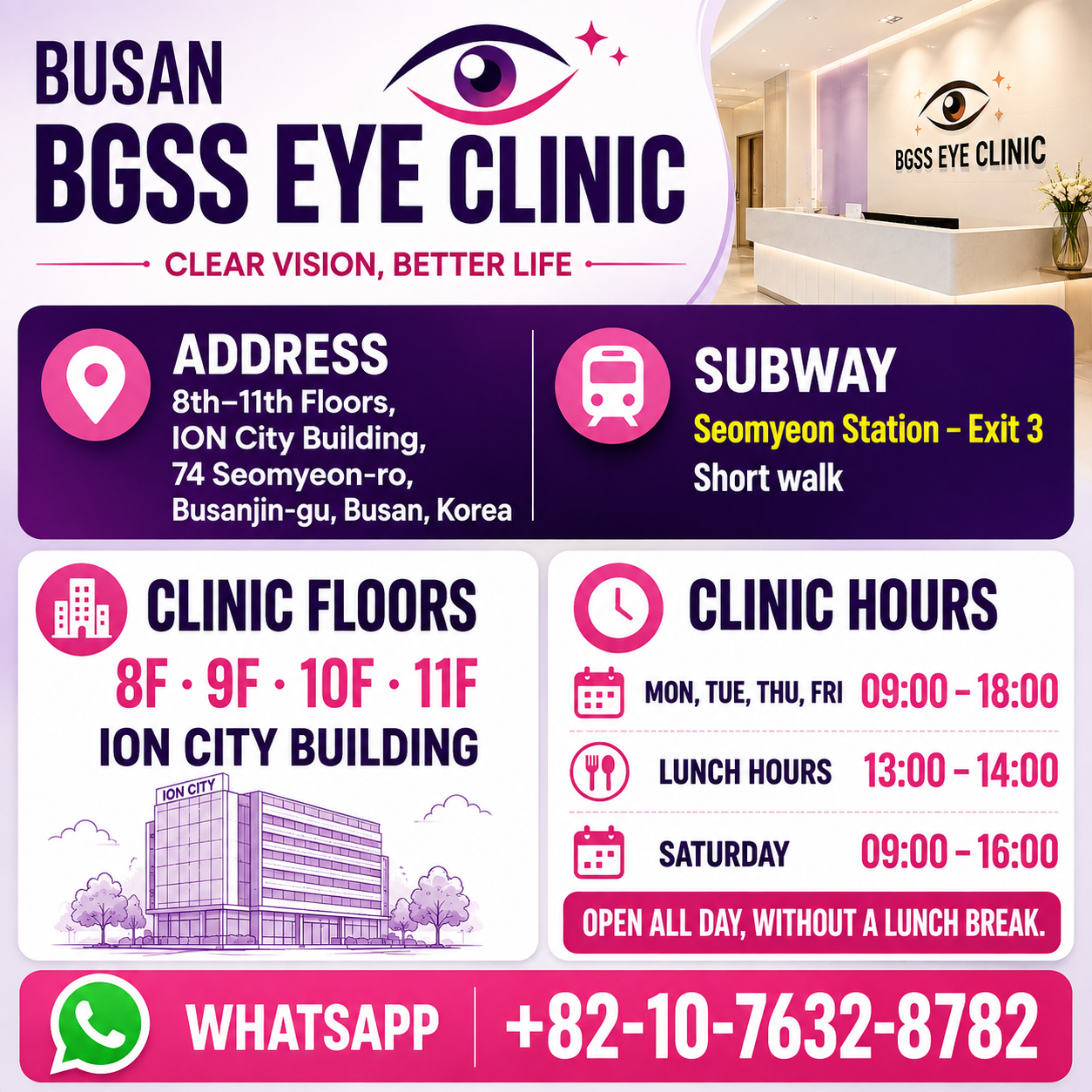
For international patients planning eye care in Busan, staying near an eye clinic can make a medical trip easier to organize. Busan eye clinics near medical tourism hotels in Seomyeon can be particularly convenient for visitors who need consultations, diagnostic testing, vision-correction procedures, cataract evaluation, glaucoma screening, or retinal care.
Seomyeon is a central area of Busan with convenient subway connections, hotels, restaurants, shopping, and access to healthcare services. For medical tourists, this makes it a practical base for combining eye care with accommodation and transportation.
However, the nearest eye clinic is not necessarily the best clinic for your needs.
A good medical-tourism plan should consider the ophthalmologist's qualifications, diagnostic capabilities, procedure availability, English communication, postoperative care, emergency arrangements, and total treatment cost—not just the distance between your hotel and clinic.
This guide explains how to choose an eye clinic near your Seomyeon hotel and how international patients can plan an efficient eye-care itinerary in Busan.
Why Seomyeon Is Popular With Medical Tourists
A Convenient Central Location
Seomyeon is one of Busan's major commercial and transportation areas.
For international visitors, the area can be convenient because it offers access to:
- Subway connections
- Hotels
- Restaurants
- Cafés
- Shopping
- Pharmacies
- Medical services
- Business facilities
Staying in the same general area as your eye clinic can reduce unnecessary travel during your medical trip.
Why Stay Near an Eye Clinic?
Convenience During Multiple Appointments
Some eye treatments require more than one visit.
For example, a medical-tourism itinerary may involve:
Consultation → Diagnostic testing → Treatment → Postoperative examination → Follow-up
If your hotel is close to the clinic, transportation becomes easier.
This can be particularly helpful after eye surgery when temporary blurred vision or light sensitivity may make travel less comfortable.
What Types of Eye Clinics Can Medical Tourists Find in Busan?
General Ophthalmology Clinics
Patients seeking routine eye care may need:
- Visual acuity testing
- Refraction
- Eye pressure measurement
- Slit-lamp examination
- Retinal examination
- Basic eye-health assessment
If you are visiting Korea specifically for preventive care, ask whether a comprehensive eye examination is available.
Vision-Correction Clinics
LASIK, SMILE and SMILE Pro
Medical tourists may travel to Busan for refractive procedures such as:
- LASIK
- PRK
- LASEK
- SMILE
- SMILE Pro
- ICL
Each procedure has different eligibility requirements.
A comprehensive preoperative evaluation should be completed before deciding which procedure is appropriate.
Cataract and IOL Surgery
For International Patients With Cataracts
Patients considering cataract surgery may need a clinic that can provide:
- Cataract assessment
- Biometry
- Corneal measurements
- IOL calculation
- Retinal evaluation
- OCT when clinically appropriate
- Postoperative monitoring
IOL selection should be based on eye health and visual priorities rather than simply choosing the most expensive lens.
Glaucoma Care
Eye Pressure Is Only One Part of the Evaluation
International patients may seek glaucoma testing because of:
- Elevated eye pressure
- Family history
- High myopia
- Suspicious optic nerve findings
- Previous glaucoma diagnosis
A comprehensive evaluation may include:
- Tonometry
- Optic nerve examination
- OCT
- Visual field testing
- Corneal assessment
- Gonioscopy when appropriate
Retina and Diabetic Eye Care
For Patients With Diabetes or Retinal Symptoms
Medical tourists with diabetes, high myopia, previous retinal disease, flashes, or floaters may require retinal evaluation.
Testing can include:
- Dilated retinal examination
- Retinal photography
- OCT
- Other retinal imaging
- Visual field testing when indicated
Sudden flashes, a sudden increase in floaters, a curtain-like shadow, or significant vision loss should be treated as urgent symptoms rather than routine medical-tourism appointments.
What Should You Look for in an Eye Clinic Near Your Hotel?
Diagnostic Capabilities
The clinic should offer the tests relevant to your medical needs.
For refractive surgery, this may include:
- Corneal topography
- Corneal tomography
- Pachymetry
- Refraction
- Tear-film evaluation
- Eye pressure measurement
For retinal or glaucoma concerns, useful capabilities may include:
- OCT
- Retinal imaging
- Visual field testing
- Dilated retinal examination
Not every patient needs every test.
English-Speaking Eye Care in Seomyeon
Confirm Language Support Before Booking
International patients should ask whether English is available throughout the medical process.
Confirm support for:
- Reception
- Medical history
- Diagnostic testing
- Doctor consultation
- Surgery discussion
- Consent forms
- Medication instructions
- Follow-up
An English-language website does not necessarily mean that every part of the appointment will be conducted in English.
For surgery, make sure you understand the diagnosis, treatment plan, alternatives, risks, recovery, and follow-up before consenting.
How to Choose Between Nearby Eye Clinics
Compare Medical Quality, Not Just Distance
If two clinics are both close to your hotel, compare:
- Ophthalmologist qualifications
- Relevant clinical experience
- Diagnostic equipment
- Surgical procedures offered
- IOL options when applicable
- International-patient services
- English communication
- Follow-up arrangements
- Emergency support
- Pricing transparency
A slightly longer taxi ride may be worthwhile if the clinic is better suited to your medical needs.
How Close Should Your Hotel Be?
Walking Distance Is Helpful but Not Essential
You do not necessarily need a hotel directly beside the clinic.
A short subway or taxi journey may be practical.
For postoperative recovery, however, reducing unnecessary travel can be useful.
When selecting accommodation, consider:
- Elevator access
- Quiet rooms
- Comfortable lighting
- Nearby restaurants
- Pharmacy access
- Easy transportation
- Flexible check-in and check-out
Planning a LASIK or SMILE Trip From a Seomyeon Hotel
Do Not Schedule Surgery Immediately After Arrival
A refractive-surgery trip may involve several stages.
A practical sequence can be:
Arrival → Consultation → Diagnostic testing → Eligibility assessment → Surgery → Follow-up → Departure
Contact-lens wearers may need to stop using lenses before certain measurements.
Your clinic should provide specific instructions.
Planning Cataract Surgery Near Seomyeon
Allow Time for IOL Measurements
Cataract surgery requires detailed preoperative planning.
The ophthalmologist may evaluate:
- Cataract severity
- Corneal shape
- Eye length
- Astigmatism
- Retina
- Macula
- IOL power
- Overall eye health
Ask the clinic how many appointments are required before surgery.
Planning Glaucoma Testing During Your Trip
Bring Your Previous Results
If you are traveling to Busan for glaucoma evaluation, bring:
- Previous eye-pressure readings
- OCT scans
- Visual field results
- Optic nerve photographs
- Medication list
- Previous treatment records
Comparing older and newer results can be more informative than relying on a single examination.
Planning Retina Care in Busan
Bring Previous Imaging
Patients with retinal conditions should consider bringing:
- OCT scans
- Fundus photographs
- Retinal specialist reports
- Previous injection records
- Laser-treatment records
- Surgical reports
Tell the ophthalmologist about any recent flashes, floaters, distortion, or vision loss.
How Long Should Medical Tourists Stay in Seomyeon?
Your Treatment Determines the Schedule
There is no universal number of days for every eye procedure.
The required stay depends on:
- Type of treatment
- Preoperative testing
- Surgical protocol
- Early recovery
- Follow-up requirements
- Individual complications or additional testing
Ask the clinic for a recommended timeline before booking flights and hotels.
Can You Explore Seomyeon During Eye Surgery Recovery?
Keep Early Recovery Simple
Seomyeon is known for shopping, restaurants, cafés, and busy streets.
After eye surgery, however, your priorities should be:
- Rest
- Medication
- Eye protection
- Follow-up
- Avoiding restricted activities
Your surgeon may temporarily restrict:
- Swimming
- Sauna or jjimjilbang
- Heavy exercise
- Eye makeup
- Contact-lens use
- Certain screen activities
Follow the specific postoperative instructions provided by your surgeon.
Can You Use the Busan Subway After Eye Surgery?
Safety Comes First
The subway is convenient, but immediately after surgery you may experience:
- Blurred vision
- Light sensitivity
- Tearing
- Visual fluctuations
If your vision is not clear enough to travel safely, arrange a taxi or another suitable transportation option.
Ask your surgeon when independent public transportation is appropriate.
What Should International Patients Bring?
Prepare a Medical Folder
Bring:
- Passport
- Current glasses
- Previous prescriptions
- Contact-lens information
- Previous eye examination reports
- OCT scans
- Retinal photographs
- Visual field results
- Previous eye-surgery records
- Medication list
- Allergy information
Secure digital copies can be useful as a backup.
Can Foreign Patients Get a Medical Tax Refund?
Confirm Current Eligibility
Some eligible foreign visitors may qualify for medical tax-refund arrangements under applicable Korean regulations.
Eligibility may depend on:
- Visitor status
- Clinic participation
- Specific treatment
- Current rules
- Required documentation
Do not assume that every eye examination or procedure qualifies.
Ask the clinic before treatment whether it participates in the current system and what documents you need.
How Much Does Eye Care Cost in Busan?
Prices Depend on the Service
Costs can vary according to:
- Examination type
- Diagnostic testing
- Surgeon
- Procedure
- IOL type
- Medication
- Follow-up
- International-patient services
For surgery, request an itemized quotation before treatment.
Ask specifically whether the quoted amount includes diagnostic tests, medication, and postoperative visits.
When Should Medical Tourists Seek Emergency Eye Care?
Do Not Wait for a Routine Appointment
Seek urgent medical assessment if you experience:
- Sudden vision loss
- New flashes
- Sudden increase in floaters
- Curtain-like shadow
- Severe eye pain
- Significant eye injury
- Chemical exposure
- Sudden double vision with neurological symptoms
These symptoms can indicate conditions requiring time-sensitive treatment.
Questions to Ask an Eye Clinic Before Booking
Important Questions for International Patients
Ask:
- Do you accept international patients?
- Is English consultation available?
- Which eye procedures do you provide?
- What diagnostic tests are included?
- Do you offer OCT?
- Do you provide corneal topography and tomography?
- How many follow-up visits are required?
- Can I receive my medical records in English?
- What happens if I develop a complication after returning home?
- Can you provide documentation for medical tax-refund purposes if applicable?
- How long should I stay in Busan?
- When can I safely fly home?
A Sample Medical Tourism Eye-Care Itinerary
For International Patients Staying in Seomyeon
Day 1 — Arrival
Check into your Seomyeon hotel and rest.
Day 2 — Consultation and Testing
Complete your eye examination and any required diagnostic testing.
Day 3 — Treatment
If you are medically eligible and adequately prepared, undergo the planned procedure.
Day 4 — Early Follow-Up
Attend the recommended postoperative examination.
Following Days — Recovery and Monitoring
Continue medications and follow activity restrictions.
The exact schedule varies by procedure and clinic. Do not treat this example as a medical requirement.
Conclusion
Choosing Busan eye clinics near medical tourism hotels in Seomyeon can make an international eye-care trip more convenient, particularly when you need several appointments or postoperative monitoring.
Seomyeon's central location offers practical advantages for medical tourists, including transportation, hotels, restaurants, and access to healthcare services. However, proximity should not be the deciding factor when selecting an eye clinic.
Whether you are considering LASIK, SMILE, SMILE Pro, ICL, cataract surgery, glaucoma testing, OCT, or retinal care, choose a provider based on appropriate diagnostic capabilities, ophthalmologist qualifications, relevant experience, communication, safety, and follow-up care.
Before traveling, confirm the clinic's exact location, English-language support, appointment schedule, testing requirements, pricing, postoperative plan, and any applicable medical tax-refund documentation.
Most importantly, plan your trip around medical care first and tourism second. A convenient hotel can make the experience easier, but the quality and safety of your eye care should remain the priority.
FAQs About Eye Clinics Near Medical Tourism Hotels in Seomyeon
1. Why should medical tourists stay near an eye clinic in Seomyeon?
Staying nearby can make consultations, diagnostic testing, surgery, and follow-up appointments easier, particularly when temporary blurred vision or light sensitivity makes transportation less convenient.
2. Can foreigners get eye care in Seomyeon?
Yes. International patients and expats can seek ophthalmic care in Busan. Confirm that the clinic accepts international patients and provides the language support you need.
3. Can I get LASIK or SMILE near Seomyeon?
Patients may seek refractive-surgery consultations in Seomyeon and elsewhere in Busan. Eligibility depends on a comprehensive preoperative examination and the procedures offered by the clinic.
4. Can I have cataract surgery in Busan as a medical tourist?
International patients may seek cataract consultations and surgery in Busan. The clinic should perform appropriate preoperative testing and provide postoperative follow-up.
5. Do eye clinics near Seomyeon offer English consultations?
Some clinics may provide English-language services, but availability varies. Confirm English support for the doctor consultation, consent, medications, and follow-up before booking.
6. Can I get glaucoma testing near my hotel?
Some ophthalmology clinics offer glaucoma-related testing, including eye pressure measurement, OCT, optic-nerve assessment, and visual field testing. Confirm the specific services before booking.
7. Can I get an OCT scan in Seomyeon?
OCT may be available at some ophthalmology clinics. Ask whether it is appropriate for your condition and whether the clinic provides the type of OCT examination you need.
8. How long should I stay in Busan for eye surgery?
The appropriate stay depends on the procedure, testing, recovery, and follow-up requirements. Ask your surgeon for an individualized travel timeline before booking.
9. Can I explore Busan after eye surgery?
Some light activities may be possible during recovery, but your surgeon may restrict swimming, sauna, strenuous exercise, makeup, and other activities. Follow the specific postoperative instructions you receive.
10. Can I take the subway after eye surgery?
Your surgeon should advise you. If your vision is blurry or light-sensitive immediately after treatment, independent travel on a busy subway may not be appropriate.
11. Can international patients receive a medical tax refund?
Potentially, depending on current Korean regulations, patient status, provider participation, and the specific medical service. Confirm eligibility and documentation before treatment.
12. What should I do if I develop sudden vision loss while staying in Seomyeon?
Do not wait for a routine clinic appointment. Sudden vision loss requires urgent medical assessment. Seek appropriate emergency or urgent ophthalmic care immediately.