Dry Eye Treatment in Busan, Korea for Digital Workers
Dry Eye Treatment in Busan, Korea for Digital Workers
For people who spend most of the day working on computers, tablets, or smartphones, tired and uncomfortable eyes can become part of everyday life. Burning, gritty sensations, redness, watering, fluctuating vision, and difficulty keeping the eyes open after hours of screen use are common complaints among digital workers.
Long periods of screen use are associated with digital eye strain, and dry eye can be an important part of that problem. When concentrating on a screen, people tend to blink less frequently, which can allow the tear film to evaporate more quickly. The result may be increasing dryness and visual discomfort as the workday continues.
For digital workers searching for dry eye treatment in Busan, Korea, the right approach is usually more than simply buying artificial tears. A proper eye examination can help determine whether the main problem is reduced tear production, excessive evaporation, meibomian gland dysfunction, eyelid inflammation, contact lens use, environmental factors, or a combination of causes.
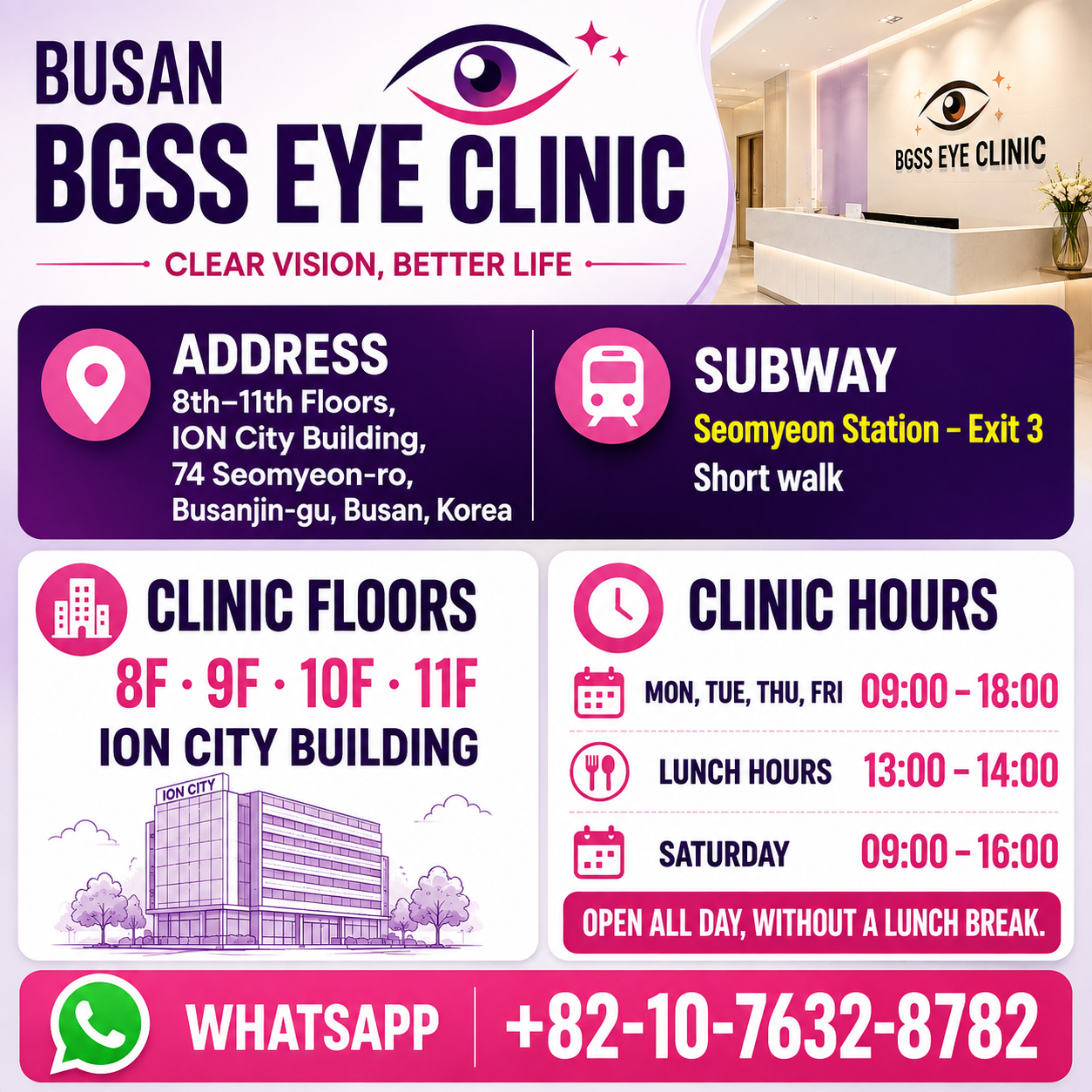
In Busan, ophthalmology centers provide dry-eye evaluation and treatment, including clinics in the Seomyeon area. BGSS Eye Clinic, for example, offers dedicated dry-eye evaluation and treatment and describes eyelid-focused care and IPL as part of its dry-eye program.
Why Digital Workers Develop Dry Eye
Screen Concentration Changes Blinking
One of the biggest problems with prolonged screen use is reduced blinking.
When people concentrate on text, spreadsheets, coding, video editing, gaming, or other digital tasks, their blinking pattern can change. This can increase exposure of the eye surface and contribute to tear-film instability.
The American Academy of Ophthalmology's EyeWiki guidance on digital eye strain recommends conscious blinking, regular breaks, appropriate screen positioning, and attention to the work environment.
Long Workdays Can Make Symptoms Worse
A person may feel comfortable in the morning but develop increasingly uncomfortable eyes throughout the day.
Typical patterns include:
- Mild dryness before work
- Burning after several hours
- Blurry or fluctuating vision in the afternoon
- Redness after prolonged screen use
- Difficulty focusing late in the day
- Increased sensitivity to light
- Excessive watering after the eyes become irritated
This pattern can suggest that the tear film is struggling to remain stable during prolonged visual concentration.
What Is Dry Eye Disease?
More Than Simply Not Having Enough Tears
Dry eye disease can occur when the eyes do not produce enough tears or when tears evaporate too quickly.
Healthy tears provide lubrication, maintain a smooth optical surface, and protect the cornea.
When the tear film becomes unstable, patients may experience both discomfort and changes in visual quality.
Dry eye can be related to several factors, including meibomian gland dysfunction, inflammation, contact lens use, aging, medications, previous eye procedures, and environmental conditions.
Why Digital Workers Need an Individualized Diagnosis
Two people who both complain of "dry eyes" may actually have very different underlying problems.
One person may have mainly evaporative dry eye caused by meibomian gland dysfunction.
Another may have insufficient tear production.
A third may have eyelid inflammation combined with heavy screen exposure.
Treatment is more effective when the underlying cause is identified rather than treating every patient in exactly the same way.
Common Dry Eye Symptoms for Computer Users
Typical Symptoms
Digital workers may notice:
- Burning or stinging
- Gritty or sandy sensation
- Red eyes
- Excessive watering
- Blurred or fluctuating vision
- Eye fatigue
- Heavy eyelids
- Light sensitivity
- Contact lens discomfort
- Difficulty concentrating visually
- Symptoms that worsen toward evening
Interestingly, watery eyes do not necessarily mean the eyes are well lubricated.
Excessive tearing can sometimes occur as a reflex response to an irritated or excessively dry ocular surface.
How Screen Time Affects the Tear Film
Blinking Is Part of Eye Surface Protection
Every blink helps spread the tear film across the cornea.
When blinking becomes less frequent or incomplete, areas of the ocular surface can become exposed for longer periods.
This can increase evaporation and discomfort.
For people who spend eight or more hours looking at screens, improving blinking habits can therefore be an important part of dry-eye management.
Screen Position Also Matters
Your workstation can influence visual comfort.
EyeWiki guidance recommends positioning the monitor so that the user looks slightly downward rather than upward or directly straight ahead. Appropriate lighting, screen contrast, and room humidity can also help reduce discomfort.
What Happens During a Dry Eye Examination in Busan?
Medical and Eye History
An ophthalmologist may first ask about:
- Daily screen time
- Work environment
- Contact lens use
- Previous eye surgery
- Medication use
- Morning versus evening symptoms
- Frequency of artificial tear use
- Previous dry-eye diagnosis
This helps identify possible triggers and risk factors.
Tear Film Assessment
Depending on the clinic and symptoms, the doctor may evaluate tear-film stability and ocular-surface health.
The goal is to understand whether the problem is primarily related to tear quantity, evaporation, inflammation, eyelid function, or a combination.
Meibomian Gland Evaluation
The meibomian glands are located within the eyelids and produce oils that help slow tear evaporation.
If these glands become blocked or dysfunctional, the tears may evaporate too quickly.
Meibomian gland dysfunction is an important contributor to evaporative dry eye and may require eyelid-focused treatment rather than artificial tears alone.
Dry Eye Treatment Options in Busan
Artificial Tears
Artificial tears are often an initial treatment for mild symptoms.
They can temporarily supplement the tear film and reduce irritation.
For people who need frequent drops, an ophthalmologist may recommend an appropriate formulation based on symptoms.
However, artificial tears may not address underlying eyelid inflammation or meibomian gland dysfunction.
Prescribed Anti-Inflammatory Treatment
Inflammation can contribute to chronic dry eye.
When clinically appropriate, an ophthalmologist may prescribe anti-inflammatory eye drops or other medications.
These should be used according to professional instructions because the appropriate medication and duration depend on the individual's condition.
Warm Compresses and Eyelid Hygiene
When meibomian gland dysfunction or eyelid problems contribute to dry eye, warm compresses and eyelid hygiene may be recommended.
The goal is to support normal oil secretion and improve the eyelid environment.
Local Busan ophthalmology guidance also recommends warm compresses, eyelid cleaning, regular blinking, appropriate humidity, and better digital-device habits as part of dry-eye management.
IPL for Selected Patients
Intense pulsed light, or IPL, is offered by some eye clinics as a treatment option for certain types of dry eye, particularly when meibomian gland dysfunction or eyelid-related inflammation is involved.
BGSS Eye Clinic's Busan branch describes an IPL-based dry-eye program alongside eyelid-focused care.
IPL is not appropriate for every dry-eye patient, and it should not be presented as a universal cure.
An ophthalmologist should determine whether it is suitable based on the patient's examination.
Punctal Plugs
Punctal plugs are small devices placed in the tear drainage openings.
They can help retain tears on the eye surface in selected patients with insufficient tear volume.
They are not appropriate for everyone, particularly when significant inflammation or other causes have not been addressed.
Which Dry Eye Treatment Is Best for Digital Workers?
There Is No Single Best Treatment
The most appropriate treatment depends on why the eyes are dry.
A simplified approach may look like this:
Main ProblemPossible ManagementMild drynessArtificial tears and screen habitsReduced blinkingBlink training and regular breaksEvaporative dry eyeMeibomian gland and eyelid careEyelid inflammationLid hygiene and medical treatmentSignificant inflammationDoctor-prescribed therapySelected MGD casesWarm compresses, gland care, possibly IPLReduced tear productionLubrication and selected prescription treatmentsPersistent symptomsComprehensive ophthalmic evaluation
This is a general framework rather than a treatment prescription.
How to Reduce Dry Eye During Screen Work
Use the 20-20-20 Approach
A commonly recommended digital-eye-strain strategy is the 20-20-20 rule:
Every 20 minutes, look at something approximately 20 feet away for at least 20 seconds.
The goal is to interrupt prolonged near-focus and encourage visual relaxation.
Blink More Consciously
During concentrated computer work, consciously blinking more frequently may help maintain the tear film.
Some people benefit from setting a subtle reminder during long work sessions.
Position the Monitor Correctly
Try keeping the screen slightly below eye level rather than above it.
A downward gaze can reduce the exposed surface area of the eye and may improve comfort.
Control Air Conditioning
Air conditioning can make the environment drier and increase tear evaporation.
If possible:
- Avoid direct airflow toward your eyes
- Maintain comfortable room humidity
- Consider a humidifier in particularly dry environments
- Take regular breaks away from the screen
Adjust Screen Brightness
The screen should not appear dramatically brighter than the surrounding room.
Reduce glare and adjust brightness and contrast to a comfortable level.
A matte screen surface or appropriate anti-glare solution may also help some users.
Do Blue-Light Glasses Treat Dry Eye?
Do Not Confuse Eye Strain With Eye-Surface Disease
Blue-light filtering glasses are often marketed to digital workers.
However, there is not strong evidence that special blue-light glasses are necessary to protect the eyes from computer-screen damage. EyeWiki notes that the American Academy of Ophthalmology does not recommend special eyewear for computer use on the basis of screen light damaging the eyes.
If your primary problem is dry eye, addressing blinking, tear-film instability, eyelid disease, workstation conditions, and appropriate medical treatment is generally more relevant.
Can Contact Lenses Make Digital Dry Eye Worse?
Contact Lens Users May Notice More Symptoms
Contact lenses can contribute to discomfort in people who already have dry-eye symptoms.
Long periods of screen work can make the problem more noticeable because reduced blinking can affect the tear film around the lens.
If contact lenses become uncomfortable during computer work, discuss options with an eye-care professional.
Depending on the situation, temporary reduction in lens wear or switching to glasses during long work sessions may be recommended.
Dry Eye After LASIK or SMILE Pro
Previous Eye Surgery Can Be Relevant
Some people experience dry-eye symptoms after refractive surgery.
If you have undergone LASIK, LASEK, SMILE Pro, or another vision-correction procedure and continue to experience dryness, an ophthalmologist can evaluate the ocular surface and tear film.
Do not assume that persistent symptoms are simply something you must tolerate.
The underlying cause should be assessed.
Dry Eye and Digital Workers Over 40
Age Can Add Another Factor
Dry-eye symptoms can become more common with age.
Digital workers in their 40s, 50s, or older may therefore experience several contributing factors simultaneously:
- Prolonged screen exposure
- Reduced blinking
- Meibomian gland dysfunction
- Age-related tear-film changes
- Contact lens use
- Medication effects
- Previous eye surgery
This makes an individualized examination particularly useful when symptoms persist.
When Should a Digital Worker See an Ophthalmologist?
Persistent Symptoms
Consider a professional evaluation if dryness continues despite reasonable workplace adjustments and regular lubrication.
Vision Fluctuations
Blurred or fluctuating vision that repeatedly improves after blinking can occur with tear-film instability.
However, persistent or unexplained vision changes deserve a complete eye examination because dry eye is not the only possible cause.
Pain or Significant Light Sensitivity
Significant eye pain, marked light sensitivity, or substantial redness should not automatically be attributed to computer use.
These symptoms may indicate another eye condition requiring assessment.
Sudden Vision Changes
Sudden vision loss, new flashes, a sudden shower of floaters, or a curtain-like shadow are not typical dry-eye symptoms and require urgent ophthalmic evaluation.
Dry Eye Treatment for International Patients in Busan
Why Busan Can Be Convenient for Medical Tourists
International patients may be able to combine an eye examination with treatment planning during a Korea visit.
For patients staying around Seomyeon, several ophthalmology clinics are located within the Busanjin District.
BGSS Eye Clinic, for example, is located on Seomyeon-ro and provides dry-eye evaluation and treatment as part of its ophthalmology services.
Other ophthalmology providers in Busan include 부산하늘안과의원 and Nunevit Eye Clinic.
Prepare Your Eye History
International patients should bring:
- Previous eye examination reports
- OCT or corneal imaging if available
- Previous surgery records
- Current eye-drop list
- Contact lens information
- Previous dry-eye diagnoses
This can help the doctor understand whether the symptoms are new or longstanding.
Ask About Follow-Up
Dry eye can be a chronic condition rather than a one-time problem.
Before returning home, ask:
- What is causing my symptoms?
- Which treatment should I continue?
- How long should I use the prescribed drops?
- When should I return for reassessment?
- What symptoms require earlier review?
- Can I continue treatment with my local ophthalmologist?
How Long Does Dry Eye Treatment Take?
Treatment Is Often Gradual
There is no universal timeline for dry-eye improvement.
Some patients experience relief relatively quickly after improving lubrication and environmental factors.
Others with meibomian gland dysfunction or significant ocular-surface inflammation may require a longer treatment plan.
The objective is usually to improve ocular-surface health and control the underlying causes rather than simply eliminate symptoms for a few hours.
Can Dry Eye Be Completely Cured?
Management Is Often More Realistic Than a Permanent Cure
Dry eye can have multiple causes, and some contributing factors cannot be completely eliminated.
For a digital worker, it may be unrealistic to stop using computers entirely.
Instead, successful management may involve:
- Better screen habits
- Regular blinking
- Workplace adjustments
- Artificial tears
- Eyelid care
- Medical treatment when appropriate
- Treatment of meibomian gland dysfunction
- Regular follow-up
The goal is comfortable, stable vision and a healthier ocular surface.
A Practical Daily Routine for Digital Workers
Before Work
- Use prescribed or recommended eye drops if needed
- Adjust the monitor position
- Reduce glare
- Check room humidity
- Avoid direct air-conditioning airflow toward the face
During Work
- Blink consciously
- Follow regular visual breaks
- Avoid staring continuously at the screen
- Keep the screen slightly below eye level
- Adjust brightness for comfort
After Work
- Give your eyes a break from additional screen use
- Follow your prescribed eyelid-care routine if applicable
- Remove contact lenses when recommended
- Use prescribed medication according to instructions
Questions to Ask at a Dry Eye Clinic in Busan
Useful Questions for Your Consultation
Before starting treatment, consider asking:
- What type of dry eye do I have?
- Is my problem mainly tear deficiency or evaporation?
- Do I have meibomian gland dysfunction?
- Is there eyelid inflammation?
- Should I use artificial tears regularly?
- Would prescription eye drops help?
- Would eyelid treatment be appropriate?
- Am I a candidate for IPL?
- Should I reduce contact lens use?
- How should I manage screen time?
- When should my eyes be reassessed?
- Could another eye condition be causing my symptoms?
Conclusion
Dry eye treatment in Busan, Korea for digital workers should begin with understanding why the eyes are becoming dry rather than simply treating the sensation of dryness.
Long periods of screen use can contribute to digital eye strain, partly because prolonged concentration can alter blinking behavior. Environmental factors, contact lenses, meibomian gland dysfunction, inflammation, medications, aging, and previous eye procedures can also contribute.
For many digital workers, the first steps are simple but important: blink regularly, take visual breaks, position the monitor appropriately, control room humidity, reduce glare, and avoid direct air-conditioning airflow.
When symptoms persist, an ophthalmology evaluation can determine whether additional treatment is needed. Depending on the underlying problem, treatment may include artificial tears, prescription medication, eyelid hygiene, warm compresses, meibomian gland care, or selected treatments such as IPL.
For international patients staying in Busan, particularly around Seomyeon, dedicated ophthalmology services can provide evaluation and treatment planning without requiring major surgery.
The most important takeaway is that digital eye discomfort should not automatically be dismissed as something you simply have to live with. If dryness, burning, fluctuating vision, or eye fatigue is interfering with work or daily life, a proper eye examination can help identify the cause and create a more appropriate treatment plan.
FAQs About Dry Eye Treatment in Busan for Digital Workers
1. Can long hours on a computer cause dry eyes?
Long periods of screen use can contribute to digital eye strain and may worsen dry-eye symptoms, partly because people tend to blink differently or less frequently during concentrated screen work.
2. What is the best dry eye treatment for digital workers?
There is no single best treatment for everyone. Artificial tears, improved screen habits, eyelid care, prescription medication, and treatments targeting meibomian gland dysfunction may all be appropriate depending on the underlying cause.
3. Can I get dry eye treatment in Busan, Korea?
Yes. Ophthalmology clinics in Busan provide dry-eye evaluation and treatment. Some centers also offer dedicated eyelid-care and IPL programs.
4. Does IPL help dry eye?
IPL may help selected patients, particularly those with certain forms of meibomian gland dysfunction or eyelid-related inflammation. It is not suitable for every patient and should be recommended after an appropriate examination.
5. How can I reduce dry eyes while working on a computer?
Take regular visual breaks, blink consciously, position the monitor slightly below eye level, control glare, maintain comfortable humidity, and avoid direct airflow toward your eyes.
6. Can artificial tears solve digital dry eye?
Artificial tears can relieve symptoms, particularly in mild cases, but they may not address underlying problems such as meibomian gland dysfunction or inflammation.
7. Should I stop wearing contact lenses if my eyes are dry?
Not necessarily, but contact lenses can worsen discomfort in some people with dry eye. An eye-care professional can determine whether you should temporarily reduce lens wear or change your lens routine.
8. Can dry eye cause blurry vision?
Yes. An unstable tear film can cause fluctuating or temporarily blurred vision. However, persistent or significant vision changes should be evaluated because other eye conditions can cause similar symptoms.
9. Is dry eye common among office workers?
Dry-eye symptoms and digital eye strain are common among people who spend prolonged periods using computers and other digital devices. Workplace habits, screen positioning, blinking, lighting, and environmental conditions can all affect comfort.
10. When should a digital worker see an eye doctor?
See an ophthalmologist when dry-eye symptoms persist, interfere with work, cause significant discomfort, or are associated with persistent vision changes. Sudden vision loss, flashes, new floaters, or a curtain-like shadow require urgent eye care rather than routine dry-eye treatment.