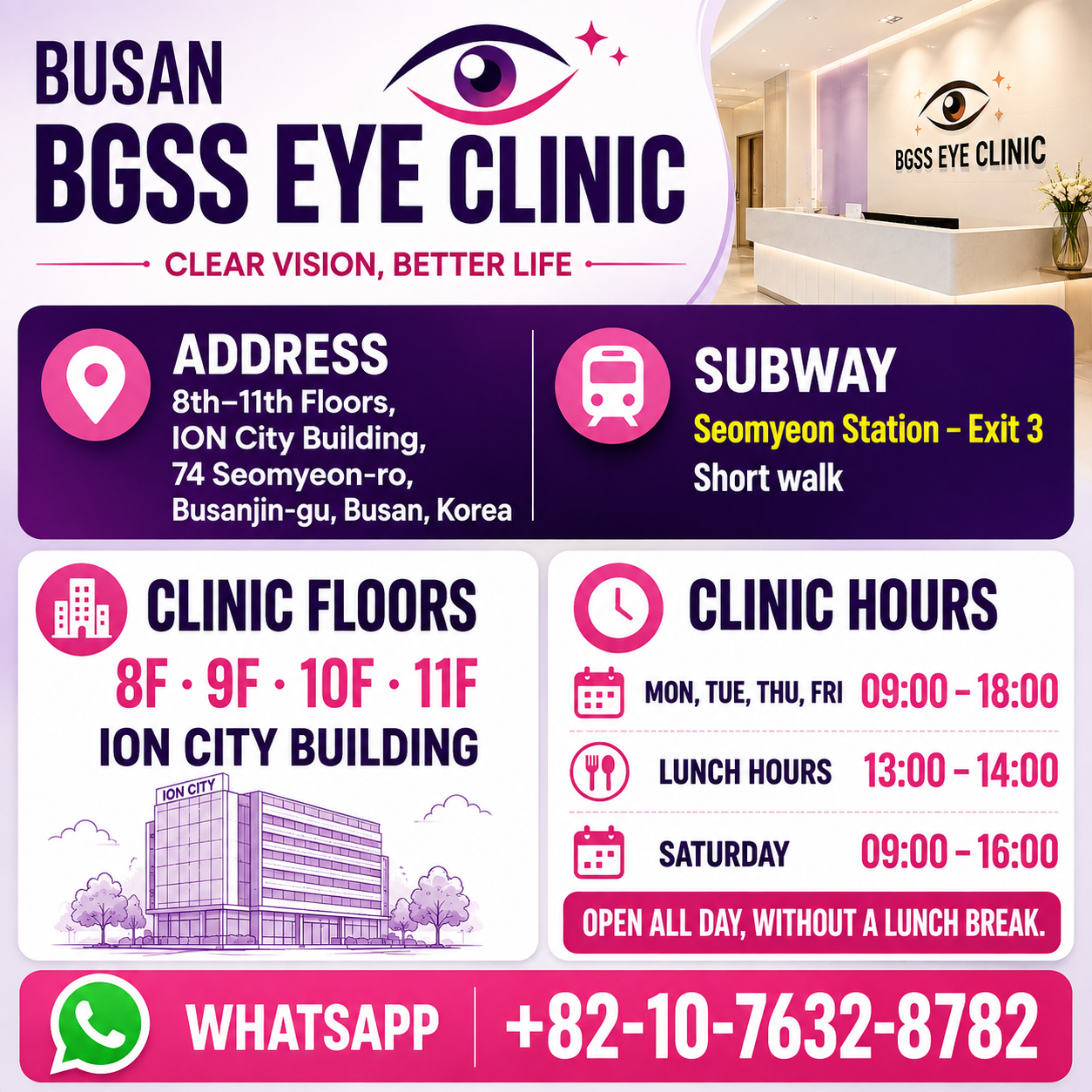
Cataract Surgery in Busan, Korea for International Patients
Cataract Surgery in Busan, Korea for International Patients
Cataracts are one of the most common causes of gradual vision loss, particularly as people get older. Cloudy vision, glare, faded colors, difficulty reading, and problems seeing at night can make everyday activities increasingly frustrating.
For international patients considering treatment abroad, cataract surgery in Busan, Korea can be an option worth exploring. Modern cataract surgery removes the eye's cloudy natural lens and replaces it with an artificial intraocular lens, or IOL. Depending on the patient's eyes and visual goals, lens choices may include monofocal, toric, multifocal, or extended-depth-of-focus lenses.
At a Busan eye clinic, the process should begin with a comprehensive examination rather than immediately choosing a premium lens. Cataract severity, corneal shape, astigmatism, retinal health, existing eye conditions, lifestyle, and expectations all influence which treatment may be appropriate.
For international patients, there is another consideration: surgery is only one part of the experience. Preoperative testing, communication, transportation, postoperative examinations, medication instructions, and planning for the return journey all need to be considered.
What Is Cataract Surgery?
How Cataracts Affect Vision
A cataract occurs when the natural crystalline lens inside the eye becomes cloudy. Instead of transmitting light clearly to the retina, the cloudy lens can scatter and distort light.
Common symptoms include:
- Blurred or cloudy vision
- Increased sensitivity to bright lights
- Glare while driving at night
- Halos around lights
- Faded or yellowish colors
- Difficulty reading
- Frequent prescription changes
- Reduced contrast
- Increasing dependence on brighter lighting
Cataracts usually develop gradually, so many people do not realize how much their vision has changed until the problem begins affecting daily activities.
What Happens During Surgery?
During cataract surgery, the cloudy natural lens is removed and replaced with an artificial intraocular lens.
The IOL remains inside the eye and is intended to provide clear focusing power after the cataract has been removed.
Modern cataract surgery is generally performed through a small incision, and advanced diagnostic systems can help the surgeon plan lens power and treatment details.
The goal is not simply to remove the cataract. It is also to select an IOL that matches the patient's eye and visual priorities.
Why International Patients Consider Cataract Surgery in Busan
Access to Advanced Ophthalmology
Busan has established ophthalmology centers offering cataract treatment alongside other vision-correction procedures. Some clinics provide technologies such as femtosecond-laser-assisted cataract systems and advanced diagnostic imaging.
However, technology alone should not determine where you have surgery.
A patient should look for a clinic that combines appropriate diagnostic testing, experienced ophthalmic care, individualized lens selection, and structured postoperative monitoring.
A Convenient Alternative to Seoul
Some international patients prefer Busan because they want to receive medical care outside the capital.
Busan combines a major healthcare infrastructure with convenient transportation, hotels, restaurants, and tourist facilities. Korea's official tourism organization also lists ophthalmology clinics in Busan that provide foreign-patient support and interpretation services.
For patients who prefer a less Seoul-centered medical trip, Busan can be a practical destination for ophthalmic care.
Who May Need Cataract Surgery?
Symptoms Matter More Than a Specific Age
There is no single age at which everyone should have cataract surgery.
Some people develop visually significant cataracts in their 50s, while others may not need surgery until much later.
The more important question is whether the cataract is interfering with your daily life.
Surgery may be considered when cataracts make it difficult to:
- Drive safely
- Read comfortably
- Work
- Recognize faces
- Use digital devices
- Enjoy hobbies
- Travel independently
- See clearly despite updated glasses
Your ophthalmologist should evaluate whether the cataract is actually responsible for your visual symptoms.
A Cataract Does Not Always Require Immediate Surgery
A mild cataract may not require surgery if your vision remains adequate for your normal activities.
Updating your glasses, improving lighting, reducing glare, and monitoring the cataract may be sufficient for a period of time.
Cataract surgery becomes more relevant when the cataract causes meaningful visual limitations.
What Tests Are Needed Before Cataract Surgery?
Comprehensive Eye Examination
International patients should expect a detailed examination before surgery.
A cataract evaluation may assess:
- Visual acuity
- Refraction
- Cataract severity
- Corneal shape
- Astigmatism
- Eye pressure
- Retinal health
- Macular condition
- Tear-film status
- Natural lens condition
- Overall eye health
A comprehensive examination helps determine whether cataract surgery is appropriate and which IOL options may be suitable.
IOL Power Calculation
One of the most important steps is calculating the appropriate IOL power.
The surgeon uses detailed measurements of the eye to determine the lens power needed to achieve the intended refractive outcome.
This is particularly important when a patient is interested in reducing dependence on glasses.
Previous LASIK, SMILE, or other refractive surgery should also be disclosed because it can affect IOL calculation and surgical planning.
What Types of IOLs Are Available?
Monofocal IOL
A monofocal IOL is designed to provide clear vision at one primary distance.
Many patients choose distance-focused correction and continue using reading glasses for near tasks.
The major advantage is a relatively straightforward visual target with fewer optical compromises than some multifocal designs.
Toric IOL
A toric IOL is designed for patients with significant corneal astigmatism.
Astigmatism can cause blurred or distorted vision even after the cataract has been removed.
A toric lens may help reduce the effect of corneal astigmatism when the patient's measurements indicate that it is appropriate.
Multifocal or Trifocal IOL
Multifocal and trifocal lenses are designed to provide vision at multiple distances.
They may reduce dependence on glasses for:
- Distance
- Intermediate tasks
- Near work
Some premium lenses used in Korea are specifically designed to address distance, intermediate, and near vision.
However, premium lenses are not automatically better for everyone.
Some patients may notice glare, halos, reduced contrast, or other optical effects.
Extended Depth-of-Focus IOL
Extended-depth-of-focus, or EDOF, lenses aim to provide an extended range of vision rather than distinct focal points at only specific distances.
They may be considered for patients who want reduced dependence on glasses while maintaining particular visual priorities.
The best IOL depends on the patient's eye health, lifestyle, visual expectations, and tolerance for potential optical side effects.
How Do You Choose the Right IOL in Busan?
Start With Your Lifestyle
Tell your surgeon how you use your eyes every day.
For example:
If you drive frequently at night:
Ask how the lens may affect glare, halos, and contrast.
If you work on a computer:
Intermediate vision may be especially important.
If you read frequently:
Near vision may have greater importance.
If you travel frequently:
Reducing dependence on glasses may be a priority.
If you already have retinal disease:
Your retinal condition may influence which lens options are appropriate.
Premium Does Not Mean Best for Everyone
A premium IOL can offer useful visual advantages, but it may not be the best choice for every patient.
Patients with certain retinal, corneal, optic-nerve, or ocular-surface conditions may have different considerations.
The right lens is the one that provides an appropriate balance between visual goals, eye health, and optical quality.
Laser-Assisted Cataract Surgery in Busan
What Does Laser-Assisted Mean?
Some Korean eye clinics offer femtosecond-laser-assisted cataract surgery.
The laser can assist with selected surgical steps and provide precise imaging and treatment guidance. BGSS Eye Clinic, for example, lists the CATALYS femtosecond laser among its cataract-surgery technologies.
Laser assistance does not mean that every patient needs laser cataract surgery.
The ophthalmologist should explain whether laser assistance offers a meaningful benefit for your particular case.
Laser Surgery Is Not a Guarantee of Perfect Vision
Patients should be cautious about assuming that more advanced technology automatically guarantees a better visual result.
Cataract outcomes depend on many factors, including:
- Retinal health
- Corneal condition
- IOL selection
- Accurate measurements
- Surgical technique
- Existing eye disease
- Healing
- Patient expectations
Technology is an important tool, but it is only one part of cataract care.
What Is Recovery Like After Cataract Surgery?
Immediately After Surgery
Your vision may be blurry immediately after surgery.
Some patients experience:
- Mild irritation
- Light sensitivity
- Watery eyes
- Temporary blurred vision
- A foreign-body sensation
Your surgeon will provide specific postoperative instructions and medications.
Do not compare your recovery with another patient's timeline because healing can vary.
The First Few Days
Vision often becomes clearer as the eye heals, but the speed of improvement differs among patients.
You may be instructed to:
- Use prescribed eye drops
- Avoid rubbing the eye
- Protect the eye while sleeping if advised
- Avoid swimming temporarily
- Limit strenuous activity initially
- Attend scheduled follow-up examinations
Always follow your surgeon's individual instructions.
Long-Term Recovery
Even after your vision becomes clear, the eye still needs routine ophthalmic care.
Your surgeon may monitor:
- Eye pressure
- Inflammation
- IOL position
- Corneal health
- Retinal health
- Visual acuity
How Long Should International Patients Stay in Busan?
Do Not Plan the Trip Around Surgery Alone
International patients should allow enough time for:
- Initial consultation
- Diagnostic testing
- IOL selection
- Surgery
- Postoperative examination
- Additional assessment if required
A clinic may be able to organize the process efficiently, but the appropriate schedule depends on your individual case.
BGSS Eye Clinic advises international patients to plan enough time for examination, lens consultation, surgery, and follow-up during their stay in Busan.
Ask About Flying After Surgery
Air travel should be discussed directly with your ophthalmologist.
Ask:
- When can I safely fly?
- Do I need an examination before departure?
- What symptoms should delay travel?
- What should I do if my eye becomes painful after I return home?
- Can the clinic provide my medical records?
Do not rely solely on a generic travel schedule.
What Are the Risks of Cataract Surgery?
Potential Complications
Cataract surgery is widely performed, but it is still eye surgery.
Potential complications can include:
- Infection
- Inflammation
- Increased eye pressure
- Retinal problems
- Corneal swelling
- IOL-related complications
- Posterior capsule opacification
- Residual refractive error
- Need for additional treatment
Your personal risk depends on your eye health and the complexity of surgery.
Existing Eye Conditions Matter
Tell your ophthalmologist if you have:
- Glaucoma
- Diabetes
- Retinal disease
- Macular degeneration
- Previous retinal surgery
- Corneal disease
- Severe dry eye
- Previous LASIK or other refractive surgery
These conditions can influence both surgical planning and expected visual outcomes.
Can Cataract Surgery Reduce Dependence on Glasses?
The IOL Choice Makes a Difference
Cataract surgery can potentially reduce dependence on glasses, but the result depends heavily on the IOL selected and the patient's eye.
A monofocal lens generally focuses at one primary distance.
Premium multifocal, trifocal, and EDOF options may provide a broader range of vision for selected patients. BGSS Eye Clinic describes multifocal, toric, and EDOF lenses as options that may be considered according to individual visual needs.
Glasses May Still Be Useful
Even after premium cataract surgery, some patients may occasionally prefer glasses for:
- Fine print
- Prolonged reading
- Night driving
- Specific professional tasks
The goal should be realistic visual independence rather than a guarantee that glasses will never be needed again.
What About Cataract Surgery After Previous LASIK or ICL?
Tell Your Surgeon About Previous Eye Surgery
Previous refractive surgery does not necessarily prevent cataract surgery.
However, it can make preoperative calculations more complex.
If you previously had:
- LASIK
- PRK/LASEK
- SMILE
- ICL
tell your cataract surgeon before testing begins.
Bring previous surgical records whenever possible.
Previous ICL Requires Special Planning
If you already have an ICL and later develop a cataract, the surgeon needs to consider the existing implant as part of the surgical plan.
This is one reason patients should keep permanent records of previous eye procedures.
How Much Does Cataract Surgery Cost in Busan, Korea?
Why Cataract Prices Vary
Cataract surgery pricing can vary significantly depending on:
- Standard versus premium IOL
- Monofocal versus toric lens
- Multifocal or trifocal lens
- EDOF lens
- Laser-assisted surgery
- Diagnostic testing
- Surgical complexity
- Surgeon and facility
- Postoperative care
A premium lens usually costs more than a standard monofocal option.
The most expensive lens is not necessarily the best option for every patient.
International Patients Should Ask What the Price Includes
Before booking surgery, ask whether your quoted price includes:
- Initial examination
- Diagnostic testing
- IOL
- Surgery
- Medication
- Follow-up visits
- Additional testing
- Treatment of postoperative complications
- Interpreter or international-patient coordination
A transparent quotation makes it easier to compare clinics fairly.
Why Choose a Foreigner-Friendly Eye Clinic in Busan?
Communication Is Part of Safe Care
For international patients, understanding your diagnosis and postoperative instructions is essential.
A foreigner-friendly clinic may provide:
- English consultation
- Multilingual support
- Clear explanations of test results
- Written postoperative instructions
- Assistance coordinating appointments
- Guidance for international travel
BGSS Eye Clinic states that it provides international patients with English-speaking support and personalized treatment guidance.
Other Busan ophthalmology clinics also provide foreign-patient coordination and interpretation services.
Bring Your Existing Medical Information
Before traveling to Korea, prepare:
- Previous eye examination records
- Current glasses prescription
- Contact-lens information
- Previous surgical records
- Medication list
- Information about existing eye conditions
- Recent retinal or OCT reports, if available
This can make your consultation more efficient.
Questions to Ask Before Cataract Surgery in Busan
Questions About Your Eyes
Ask:
- How advanced is my cataract?
- Is the cataract the main reason for my vision loss?
- Is my retina healthy?
- Do I have glaucoma or another eye condition?
- Do I have significant astigmatism?
- Are there any conditions that could limit my final vision?
Questions About the IOL
Ask:
- Which IOL do you recommend?
- Why is this lens suitable for me?
- Would a monofocal lens be sufficient?
- Would a toric lens help my astigmatism?
- Am I a suitable candidate for multifocal or EDOF technology?
- What visual side effects might I notice?
- Will I still need reading glasses?
Questions About Your Trip
Ask:
- How many days should I stay in Busan?
- How many follow-up visits are needed?
- When can I fly home?
- What happens if I experience a problem after returning?
- Will I receive a copy of my medical records?
- Who should I contact in an emergency?
These questions can help international patients plan both the medical and practical aspects of treatment.
Cataract Surgery vs Refractive Lens Exchange
They Are Not Always the Same Situation
Cataract surgery is performed when the natural lens has become cloudy enough to cause meaningful visual impairment.
Refractive lens exchange, or lens replacement performed primarily to correct refractive error before a visually significant cataract develops, is a different clinical decision.
Patients considering lens surgery mainly to reduce glasses dependence should discuss whether they actually have a cataract and what alternatives may exist.
This distinction becomes particularly important for younger patients.
When Should You Consider Cataract Surgery in Korea?
When Vision Starts Affecting Your Life
There is no benefit in rushing into surgery simply because a cataract has been detected.
Instead, consider surgery when the cataract is interfering with activities that matter to you.
For example, if you can no longer drive comfortably at night, read easily, work efficiently, or enjoy normal activities despite an appropriate glasses prescription, cataract surgery may become a reasonable discussion.
Your ophthalmologist can determine whether the cataract is sufficiently significant to justify surgery.
Conclusion
Cataract surgery in Busan, Korea, can be an attractive option for international patients who want modern ophthalmic care combined with personalized IOL selection and structured follow-up.
But cataract surgery should never be approached as simply "removing a cloudy lens."
The choice of IOL can have a major effect on your visual experience after surgery. Monofocal, toric, multifocal, trifocal, and EDOF lenses each have different strengths and limitations. Your cornea, retina, astigmatism, lifestyle, age, night-driving needs, and expectations should all be considered before selecting a lens.
For international patients, preparation is equally important. Bring your previous eye records, allow enough time for diagnostic testing and follow-up, and understand what happens if you need medical attention after returning home.
Busan offers access to ophthalmology centers with international-patient support, including clinics that provide interpretation and foreign-patient coordination.
The best cataract treatment is not necessarily the most expensive or technologically advanced option. It is the treatment that is appropriate for your eyes and your long-term visual goals.
A thorough examination and honest discussion with an experienced ophthalmologist should come before any decision about surgery or premium IOL technology.
FAQs About Cataract Surgery in Busan, Korea
1. Can international patients have cataract surgery in Busan, Korea?
Yes. Busan has ophthalmology clinics that provide cataract evaluation and surgery for international patients. Some facilities also provide English or multilingual support and assistance with medical tourism.
2. What types of IOLs are available for cataract surgery in Korea?
Depending on the clinic and your eye condition, options may include monofocal, toric, multifocal, trifocal, and extended-depth-of-focus lenses. The appropriate lens depends on your anatomy and visual goals.
3. Can cataract surgery reduce my need for glasses?
It can. A suitable IOL may reduce dependence on glasses, particularly for selected patients receiving toric, multifocal, trifocal, or EDOF lenses. However, no lens guarantees complete freedom from glasses.
4. Is laser cataract surgery available in Busan?
Some Busan ophthalmology centers offer femtosecond-laser-assisted cataract surgery. Whether laser assistance is appropriate depends on your individual eye condition and surgical plan.
5. How do I choose between a monofocal and premium IOL?
Consider your lifestyle, near and intermediate vision requirements, astigmatism, retinal health, night-driving habits, and tolerance for potential glare or halos. Your surgeon should explain the trade-offs before you decide.
6. How long should I stay in Busan after cataract surgery?
The appropriate stay depends on your individual surgery and recovery. International patients should allow sufficient time for postoperative examination and should ask their surgeon when flying is appropriate.
7. Can I have cataract surgery if I previously had LASIK?
Possibly. Previous LASIK does not automatically prevent cataract surgery, but it can affect IOL power calculations. Tell your cataract surgeon about all previous eye procedures and bring your surgical records if available.
8. Can cataract surgery correct astigmatism?
A toric IOL may help correct certain levels of corneal astigmatism. Your eye measurements determine whether a toric lens is appropriate.
9. What should international patients bring to a Busan cataract consultation?
Bring previous eye records, glasses prescriptions, contact-lens information, medication lists, details of previous eye surgery, and recent diagnostic reports if available.
10. Is cataract surgery in Busan suitable for medical tourists?
It can be, particularly when patients choose a clinic with appropriate diagnostic facilities, experienced ophthalmic care, international-patient support, and a clear postoperative plan. The medical schedule should be arranged before travel rather than treating surgery as a quick tourist activity.