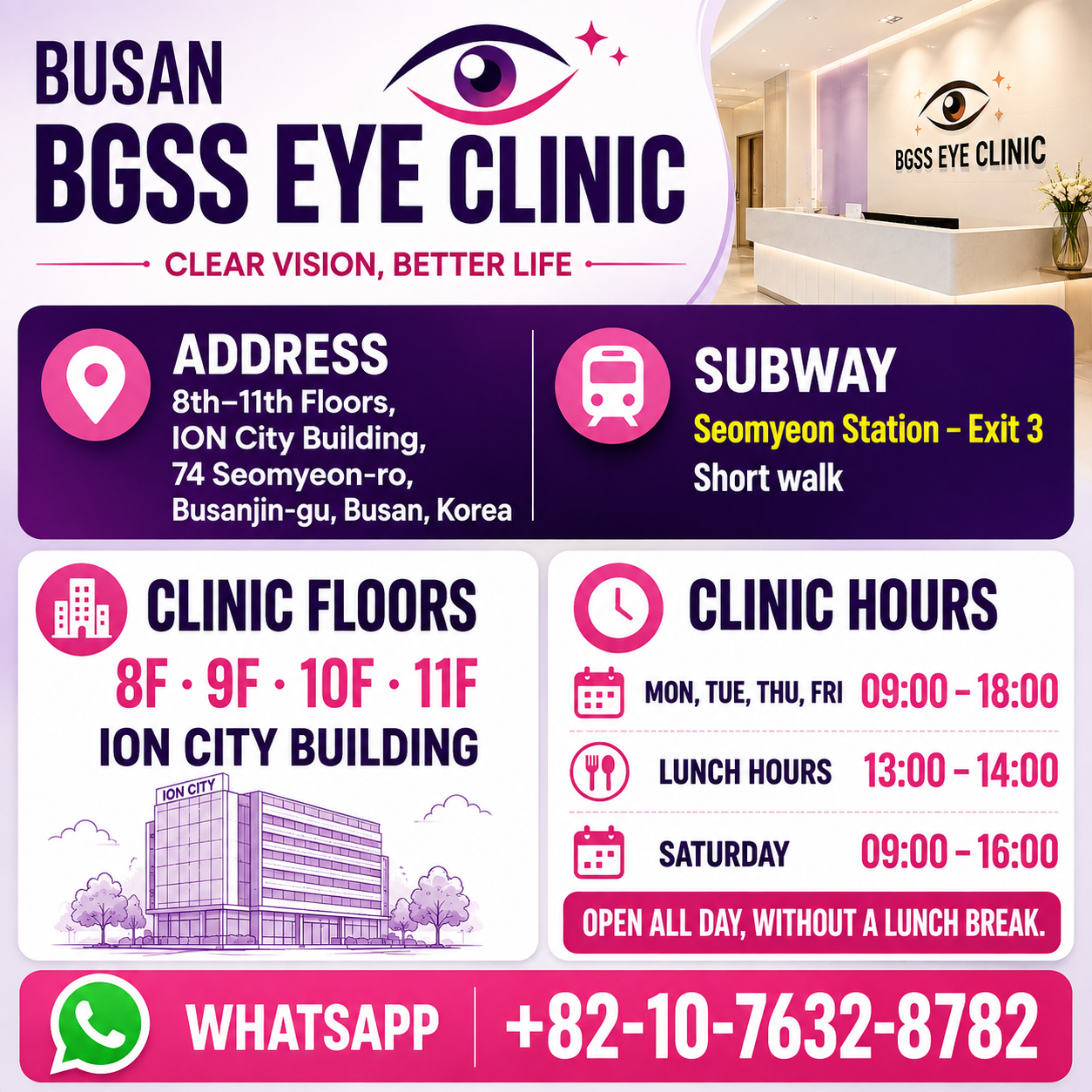
Cataract Surgery Near Seomyeon Station in Busan, Korea
Introduction
If you are searching for cataract surgery near Seomyeon Station in Busan, Korea, location can make eye-care planning easier—particularly for international patients, expats, and medical tourists.
Seomyeon is a major commercial and transportation area in Busan, with convenient subway connections, hotels, restaurants, shopping, and medical services. Staying nearby can make consultations and postoperative appointments easier, especially when you need several visits.
However, the closest cataract clinic is not necessarily the best choice.
Cataract surgery is an intraocular procedure, and choosing a provider should involve more than convenience. The surgeon needs to evaluate the cataract, cornea, retina, optic nerve, eye pressure, overall eye health, and your visual priorities before recommending surgery and an intraocular lens.
This guide explains what patients should know when looking for cataract surgery near Seomyeon Station, what happens during the evaluation, how IOL choices work, and how international patients can plan their Busan stay.
What Is Cataract Surgery?
Replacing the Cloudy Natural Lens
A cataract occurs when the eye's natural crystalline lens becomes cloudy.
It can cause:
- Blurred vision
- Glare
- Halos around lights
- Difficulty seeing at night
- Faded colors
- Reduced contrast
- Increasing dependence on glasses
During cataract surgery, the cloudy natural lens is removed and replaced with an artificial intraocular lens, commonly called an IOL.
The goal is not simply to remove the cataract. The surgeon also considers the patient's visual needs when selecting the appropriate IOL.
Why Consider Cataract Surgery Near Seomyeon Station?
Convenience During Treatment
For patients staying in central Busan, choosing a clinic near Seomyeon Station can simplify transportation.
Potential practical advantages include:
- Easier access to consultations
- Shorter travel time
- Convenient hotel options
- Easier access to restaurants and pharmacies
- Simpler postoperative visits
- Convenient public transportation
This can be particularly helpful for international patients unfamiliar with Busan.
However, medical quality and appropriate postoperative care should remain more important than walking distance.
Who May Need Cataract Surgery?
Symptoms Matter More Than Age Alone
Cataracts become more common with age, but the decision to operate is not based solely on a particular age.
An ophthalmologist may discuss surgery when cataract-related vision changes begin interfering with activities such as:
- Reading
- Driving
- Working
- Recognizing faces
- Using digital devices
- Seeing clearly in low light
- Performing daily activities
The severity of the cataract and the effect on your vision are considered together.
What Happens During a Cataract Consultation?
A Detailed Eye Examination Comes First
Before surgery, your ophthalmologist may evaluate:
- Visual acuity
- Refraction
- Slit-lamp examination
- Cornea
- Natural lens
- Retina
- Macula
- Optic nerve
- Eye pressure
Additional imaging and measurements may be required for IOL planning.
The doctor should also ask about your lifestyle and visual priorities.
Why Is the Retina Checked Before Cataract Surgery?
The Cataract May Not Be the Only Cause of Blurred Vision
A cloudy lens can reduce vision, but retinal or optic-nerve conditions can also affect visual quality.
An ophthalmologist may therefore examine the retina before surgery.
OCT may be recommended when the doctor needs detailed information about the macula or optic nerve.
This can be especially relevant for patients with:
- Diabetes
- High myopia
- Previous retinal disease
- Macular problems
- Glaucoma
Understanding the health of the retina can also help set realistic expectations for postoperative vision.
What Tests Are Needed Before Cataract Surgery?
IOL Planning Requires Accurate Measurements
Preoperative testing may include:
- Visual acuity
- Refraction
- Corneal measurements
- Keratometry
- Biometry
- Eye pressure
- Slit-lamp examination
- Retinal examination
- OCT when indicated
- Other diagnostic imaging
Biometry measures important dimensions of the eye and helps the surgeon calculate an appropriate IOL power.
What Is an IOL?
The Artificial Lens Implanted During Surgery
An intraocular lens replaces the cloudy natural lens removed during cataract surgery.
Different IOL designs may be available depending on the patient's eye health and visual goals.
Options can include:
- Monofocal IOLs
- Toric IOLs
- Multifocal or presbyopia-correcting IOLs
- Other advanced lens designs
Not every lens is suitable for every patient.
Monofocal IOL
A Common Lens Option
A monofocal IOL is designed to provide clear vision at one primary distance, often distance vision.
Patients may still need glasses for reading or other near tasks.
Monofocal lenses can be a straightforward option for patients who prioritize predictable vision at a particular distance.
Toric IOL for Astigmatism
Correcting Corneal Astigmatism
Patients with significant corneal astigmatism may be candidates for a toric IOL.
The lens is designed to reduce the effect of astigmatism after cataract surgery.
Accurate measurements are important because toric IOLs have a specific orientation.
Multifocal and Other Advanced IOLs
Reducing Dependence on Glasses
Some advanced IOL designs are intended to provide useful vision across more than one distance.
However, they may not be appropriate for every patient.
Factors that can influence suitability include:
- Retinal health
- Corneal health
- Glaucoma
- Dry eye
- Visual expectations
- Existing eye disease
Some patients may also notice optical phenomena such as halos or glare.
The surgeon should explain the potential advantages and trade-offs before you choose an advanced IOL.
Cataract Surgery for Patients With Diabetes
Retinal Health Is Especially Important
Diabetes can affect the retina and macula.
Before cataract surgery, the ophthalmologist may evaluate whether diabetic retinal disease or diabetic macular edema is present.
OCT may be useful when macular involvement is suspected or when detailed retinal assessment is appropriate.
Cataract surgery planning should consider both the lens and the retina.
Cataract Surgery for Patients With Glaucoma
Eye Pressure and Optic Nerve Health Matter
Patients with glaucoma may require additional evaluation before cataract surgery.
The ophthalmologist may review:
- Eye pressure
- Optic nerve status
- Visual field
- OCT
- Glaucoma medications
The surgeon can then determine how cataract surgery fits into the overall management of the eye.
Cataract Surgery for High Myopia
Retinal Evaluation May Be Particularly Important
High myopia can be associated with retinal and macular changes.
If you have significant myopia, tell your surgeon about your previous retinal examinations and bring relevant OCT scans or retinal photographs when available.
Can Cataract Surgery Be Done on Both Eyes?
The Timing Depends on the Patient and Surgeon
Cataract surgery can sometimes be performed on both eyes during the same day in selected settings.
Other surgeons prefer to operate on one eye first and schedule the second eye separately.
The decision may depend on:
- Eye health
- Cataract severity
- Surgical complexity
- General health
- Surgeon protocol
- Infection-control considerations
International patients should ask how many visits and how much time in Korea are expected before booking travel.
How Long Does Cataract Surgery Take?
The Surgical Procedure Is Usually Relatively Short
Cataract surgery itself may not take very long, but the total appointment involves preparation, surgery, recovery observation, and postoperative instructions.
Your clinic should tell you how long to allow for the complete visit.
The exact surgical technique and anesthesia approach vary.
What Is Recovery Like?
Vision May Improve Gradually
Many patients experience improvement relatively soon after uncomplicated cataract surgery, but the recovery process continues after the operation.
Your surgeon will provide instructions regarding:
- Prescription eye drops
- Eye protection
- Showering
- Exercise
- Swimming
- Makeup
- Driving
- Air travel
- Follow-up appointments
Do not assume that improved vision means the eye is fully healed.
How Long Should You Stay in Busan After Cataract Surgery?
Plan Around Follow-Up Care
International patients should allow enough time for postoperative assessment.
Your stay may need to include:
- Initial consultation
- Preoperative measurements
- Surgery
- Early postoperative examination
- Additional follow-up when required
The recommended schedule depends on the procedure and your recovery.
Ask your surgeon before booking a return flight.
Can You Stay Near Seomyeon Station During Recovery?
A Convenient Base for Medical Tourists
Staying near Seomyeon Station can make postoperative travel easier.
When selecting accommodation, consider:
- Short travel time to the clinic
- Elevator access
- Quiet rooms
- Easy access to food
- Pharmacy availability
- Transportation options
- Flexible check-in and check-out
You may not need to stay immediately beside the clinic, but avoiding unnecessary long journeys can make the recovery period easier.
Can You Use the Busan Subway After Cataract Surgery?
Ask Your Surgeon About Transportation
Public transportation may be convenient, but immediately after surgery your vision may be blurry or your eyes may be light-sensitive.
If your vision is impaired, arrange safe transportation instead of navigating a busy subway station alone.
Your surgeon should advise when normal transportation is appropriate.
Can You Go Shopping in Seomyeon After Surgery?
Recovery Should Come First
Seomyeon offers extensive shopping, restaurants, and entertainment.
However, the early postoperative period should prioritize:
- Rest
- Medication
- Follow-up
- Eye protection
- Avoiding activities restricted by your surgeon
Do not plan a full day of sightseeing immediately after surgery simply because the clinic is located near shopping areas.
Can You Fly Home After Cataract Surgery?
Your Surgeon Should Confirm Travel Readiness
Many patients can travel after appropriate postoperative assessment, but timing varies.
Before leaving Korea, ask:
- When can I fly?
- Do I need another examination?
- What medications should I continue?
- What symptoms require urgent care?
- Can my home ophthalmologist continue follow-up?
Your surgeon should determine when you are medically ready to travel.
English Cataract Consultations Near Seomyeon
Confirm Language Support Before Booking
International patients may prefer English-language communication.
Ask whether English is available for:
- Doctor consultation
- Diagnostic testing
- IOL discussion
- Consent forms
- Medication instructions
- Postoperative follow-up
Do not assume that English is available at every stage simply because a clinic has an English-language website.
Before consenting to surgery, make sure you understand:
- Diagnosis
- Recommended IOL
- Alternatives
- Risks
- Expected visual outcome
- Recovery
- Follow-up
How Much Does Cataract Surgery Cost Near Seomyeon?
Ask for an Itemized Quote
The total cost can vary depending on:
- Surgeon
- Clinic
- IOL type
- Diagnostic testing
- Surgical fees
- Medication
- Follow-up
- Treatment of additional eye conditions
Advanced IOLs may cost more than standard monofocal lenses.
Ask the clinic whether the quoted price includes all preoperative and postoperative services.
Can International Patients Get a Medical Tax Refund?
Confirm Current Eligibility
Some eligible foreign visitors may qualify for applicable medical tax-refund arrangements.
Eligibility can depend on:
- Visitor status
- Clinic participation
- Specific medical service
- Current Korean regulations
- Required documentation
Do not assume cataract surgery automatically qualifies.
Ask the clinic before treatment whether it participates in the current system and what documentation you would need.
What Should International Patients Bring?
Previous Eye Records Can Help
Bring:
- Current glasses
- Previous prescriptions
- Previous eye examination reports
- OCT scans
- Retinal photographs
- Visual field reports when relevant
- Previous cataract or eye-surgery records
- Medication list
- Allergy information
Previous records can help the Korean ophthalmologist understand your eye history.
What If You Have Previous Eye Surgery?
Tell the Surgeon Everything
Previous LASIK, PRK, SMILE, ICL, retinal surgery, glaucoma surgery, or other eye procedures can affect cataract-surgery planning.
Bring surgical reports and implant information when available.
The surgeon may need additional measurements or may adjust the IOL calculation based on your previous surgery.
Questions to Ask Before Cataract Surgery Near Seomyeon
Important Questions for Patients
Ask:
- How advanced is my cataract?
- Is the cataract the main cause of my vision loss?
- Is my retina healthy?
- Do I need an OCT scan?
- Which IOL do you recommend?
- Why is that IOL appropriate for me?
- Do I have astigmatism that requires a toric IOL?
- Are advanced IOLs suitable for my eyes?
- What are the risks and expected benefits?
- How many follow-up visits will I need?
- How long should I stay in Busan?
- When can I safely fly home?
What Symptoms Require Urgent Attention After Surgery?
Do Not Ignore Unexpected Changes
Contact your surgical team promptly if you develop:
- Increasing eye pain
- Significant redness
- Worsening vision
- Discharge
- Severe light sensitivity
- Sudden flashes
- Sudden increase in floaters
- Other unexpected visual changes
Severe or rapidly worsening symptoms require urgent medical assessment.
How to Choose a Cataract Clinic Near Seomyeon
Look Beyond Location
When comparing clinics, consider:
- Ophthalmologist qualifications
- Cataract-surgery experience
- Diagnostic equipment
- IOL options
- Retinal assessment
- English communication
- Postoperative monitoring
- Transparent pricing
- Emergency arrangements
- Access to follow-up care
The best cataract clinic is not necessarily the one closest to Seomyeon Station.
Conclusion
Searching for cataract surgery near Seomyeon Station in Busan, Korea can be a practical starting point for patients who want convenient access to consultations and follow-up care.
Seomyeon's central location can make accommodation and transportation easier for international patients, but the clinic's medical capabilities, surgeon experience, diagnostic testing, IOL selection, communication, and postoperative care should carry more weight than proximity alone.
Before surgery, a comprehensive examination should evaluate the cataract and overall eye health, including the cornea, retina, macula, optic nerve, and eye pressure when appropriate. IOL selection should be based on your visual needs and ocular health rather than simply choosing the most advanced or expensive lens.
For international patients, plan enough time in Busan for preoperative testing, surgery, early follow-up, and any additional examinations that may be required.
Most importantly, choose a cataract surgeon based on medical suitability, safety, surgical expertise, appropriate IOL planning, and follow-up—not simply distance from Seomyeon Station.
FAQs About Cataract Surgery Near Seomyeon Station
1. Can foreigners have cataract surgery near Seomyeon Station?
International patients may seek cataract consultations and surgery in Busan. Confirm that the clinic accepts international patients and provides the language support you need.
2. What tests are needed before cataract surgery?
Testing may include visual acuity, refraction, slit-lamp examination, corneal measurements, biometry, eye pressure measurement, retinal examination, and OCT when clinically indicated.
3. How do I choose an IOL?
The appropriate IOL depends on your eye health, astigmatism, lifestyle, visual priorities, and the surgeon's assessment. Discuss the benefits and limitations of each option.
4. Can cataract surgery correct astigmatism?
A toric IOL may reduce certain types of corneal astigmatism in appropriately selected patients.
5. Can cataract surgery be performed on both eyes on the same day?
In selected settings, bilateral same-day cataract surgery may be offered. Other surgeons prefer separate procedures. Ask your surgeon which approach is appropriate for you.
6. How long should I stay in Busan after cataract surgery?
The recommended stay depends on your surgery and follow-up schedule. Allow enough time for the surgeon to assess your early recovery before you return home.
7. Can I stay near Seomyeon Station during recovery?
Yes. Staying nearby can make transportation to postoperative appointments more convenient. Choose accommodation based on accessibility and comfort.
8. Can I take the subway after cataract surgery?
Your surgeon should advise you. Immediately after surgery, temporary blurry vision or light sensitivity may make busy public transportation less comfortable or safe.
9. Can I fly home after cataract surgery in Korea?
Travel timing depends on your procedure and postoperative condition. Ask your surgeon when you are medically cleared to fly and whether an examination is required before departure.
10. How much does cataract surgery near Seomyeon cost?
Prices vary according to the clinic, surgeon, IOL, diagnostic testing, medication, and follow-up. Request an itemized quotation before treatment.
11. Can cataract surgery qualify for a medical tax refund in Korea?
Eligibility depends on current Korean regulations, patient status, provider participation, and the specific billing arrangement. Confirm directly with the clinic before treatment.
12. What should international patients bring?
Bring your previous eye examinations, prescriptions, OCT or retinal scans, medication list, allergy information, and previous eye-surgery records when available.